

Topically applied CBD may help reduce certain signs of skin aging thanks to its antioxidant and anti-inflammatory properties. The available data is still preliminary, but it consistently points to genuine moisturizing effects. It is not a substitute for conventional dermatological treatments. To get the most out of it, choose a product with clearly labeled spectrum and concentration, test it on a small area, and wait several weeks before assessing its effect on wrinkles.
In short:
- Topical CBD works primarily by regulating inflammation, neutralizing free radicals, and strengthening the skin barrier to slow down the aging process.
- Current scientific evidence primarily shows immediate benefits in terms of skin hydration and comfort, but is still insufficient to confirm a long-term anti-wrinkle effect.
- The recommended concentration ranges from 1% for sensitive skin, 5 to 10% for regular use, and more than 10% for specific needs, depending on skin tolerance.
- Product quality—including the spectrum, certificate of analysis, INCI composition, and any certifications—is essential to ensuring effectiveness and safety.
- CBD does not replace active ingredients such as retinol or vitamin C, but it can complement an anti-aging routine by soothing the skin and boosting hydration.
Table of Contents
- Anti-Aging CBD: How Does It Actually Work on the Skin?
- What Do Studies Really Say About CBD and Skin Aging?
- Oil, serum, or cream: Which anti-aging CBD product should you choose?
- How can you tell if a CBD anti-aging product is good?
- CBD, Safety, and the Legal Framework: What You Need to Know Before Using It
- Transparency and Traceability: The Role of Laboratory Testing
- CBD, retinol, vitamin C, or hyaluronic acid: Which active ingredient should you choose?
- In what cases is anti-aging CBD not suitable?
- User Experience: Incorporating CBD into Your Anti-Aging Routine
- Want to try a reliable and traceable CBD product?
- Sources
- Frequently Asked Questions
Anti-Aging CBD: How Does It Actually Work on the Skin?
Cannabidiol does not penetrate the skin to affect the entire body. It remains localized to the area of application, which explains why CBD cosmetics do not produce any psychoactive effects, even in full-spectrum formulations. This targeted action, documented in a scientific review dedicated to the topical applications of cannabidiol, involves three complementary mechanisms.
- Regulation of local inflammation: CBD interacts with skin receptors involved in inflammatory responses, thereby reducing redness and chronic irritation that accelerate visible aging.
- Antioxidant action: Cannabidiol neutralizes some of the free radicals responsible for the breakdown of collagen and elastin, two proteins whose loss leads to sagging skin.
- Strengthening the hydrolipid barrier: CBD promotes the production of skin lipids, which reduces transepidermal water loss and helps keep the skin better hydrated over time, according to detailed explanations provided by 1753 Skincare.
These three factors work in synergy rather than in isolation. Better-hydrated, less-inflamed skin naturally appears smoother, which explains the growing interest in CBD for wrinkles and fine lines, even though its mechanism of action is primarily preventive and restorative, not corrective.
What Do Studies Really Say About CBD and Skin Aging?
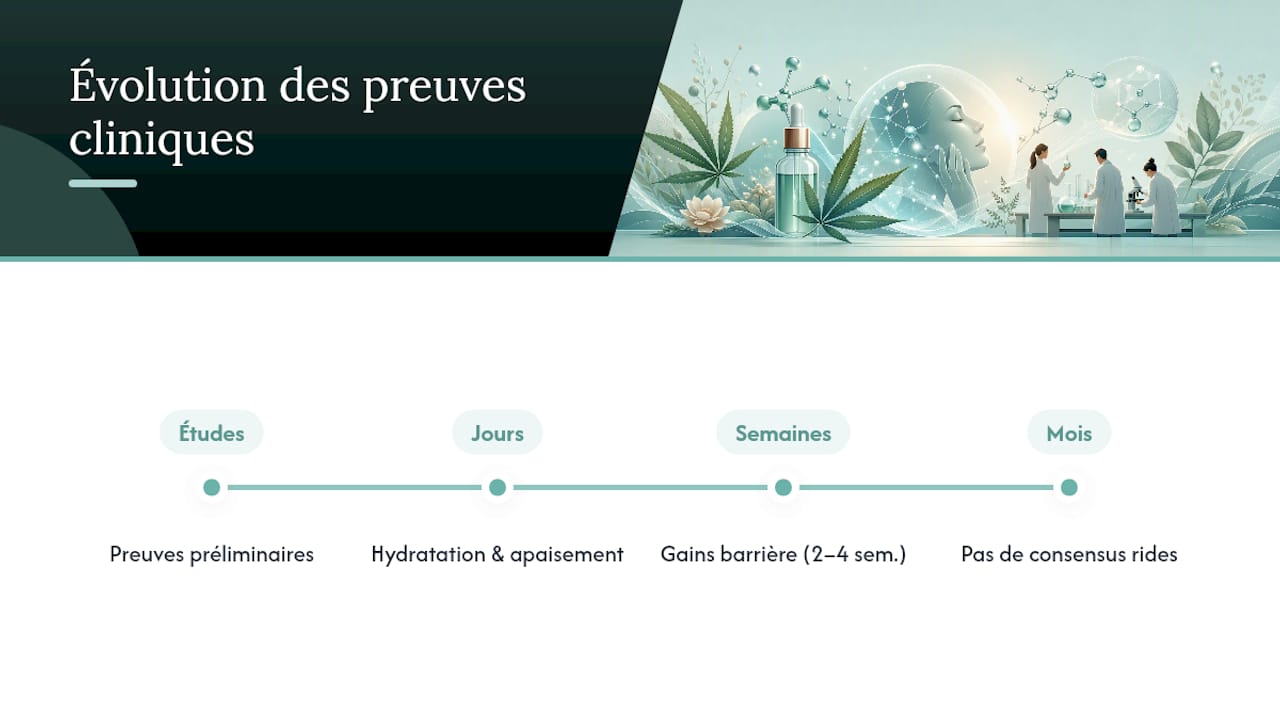
The scientific evidence on cannabidiol and skin aging is still in its preliminary stages, but it is not merely anecdotal. The review published on PMC cites several studies showing that topical CBD may be beneficial for skin hydration and soothing, though it has not yet demonstrated a long-term anti-wrinkle effect as measured by large-scale randomized trials.
What current data suggests: CBD-based formulations often improve the skin’s comfort and suppleness within the first few days of use, a finding confirmed by several user reviews on the subject. Improvements in the skin barrier, meanwhile, tend to become apparent after two to four weeks of regular use, according to observations reported by 1753 Skincare.
What is still missing is a strong clinical consensus on the visible reduction of wrinkles after several months of use. Popular science articles, such as the one published by L’Info Durable, highlight this same gap between actual antioxidant potential and direct clinical evidence, which remains limited. In other words: moisturizing and soothing effects are well-documented, but the anti-wrinkle effect itself has yet to be confirmed over the long term.
Oil, serum, or cream: Which anti-aging CBD product should you choose?
The format is almost as important as the concentration. A rich, occlusive CBD oil for the skin is ideal for evening use to lock in moisture overnight, especially for mature skin or skin prone to dryness. A serum, which has a lighter texture, absorbs quickly and can easily be layered under sunscreen first thing in the morning. Cream, on the other hand, remains the most versatile format for daily use, morning and night.
The CBD concentration is also worth considering, even though it isn't the only factor:
- Low (1–3%): Suitable for sensitive skin or first-time use, to assess skin tolerance.
- Medium (5–10%): the most common concentration for regular anti-aging use, a benchmark found on many product labels on the market.
- High (greater than 10%): intended for skin that is accustomed to such products; often formulated for specific needs rather than for general daily use.
CBD never works alone in a good formula. Hyaluronic acid locks in moisture on the skin’s surface, vitamin E enhances the antioxidant effect, and ceramides strengthen the skin barrier—which cannabidiol already helps to reinforce. A well-formulated CBD anti-aging cream typically combines two or three of these active ingredients rather than relying solely on CBD.
How can you tell if a CBD anti-aging product is good?
Before adding a CBD product to your routine, there are four simple steps you can take to avoid unpleasant surprises.
- Identify the product’s spectrum. An isolate contains only pure CBD; a broad-spectrum product includes other cannabinoids but no THC; and a full-spectrum product retains all of the compounds found in hemp to potentially produce the entourage effect, as explained in the guide on CBD spectra.
- Ask for the certificate of analysis (COA). This independent document confirms the actual CBD content, the absence of heavy metals and residual solvents, and a THC level that complies with regulations.
- Read the INCI list. A high-quality carrier oil (jojoba, hemp, argan) and well-tolerated preservatives are just as important as the CBD itself in determining the final result.
- Look for dermatological labels and test results. An organic certification or a published skin tolerance test provides an additional guarantee, though it does not replace the COA.
Pro tip: Always do a 48-hour patch test in the crook of your elbow before applying a new CBD product to your face, and start with a low concentration if your skin is sensitive to active ingredients.
CBD, Safety, and the Legal Framework: What You Need to Know Before Using It
Topical CBD is generally well tolerated, but skin reactions are still possible, especially in cases of sensitive skin or if the carrier oil causes an allergic reaction. Testing the product on a small area first is the best way to prevent irritation or redness.
- Check for interactions. If you are taking systemic medications (such as anticoagulants or certain drugs metabolized by the liver), consult a healthcare professional before adding CBD to your routine, even when used topically.
- Comply with French law. A CBD cosmetic product is legal as long as its THC content complies with the current regulatory threshold; always check the labeling and the COA rather than relying solely on marketing claims.
- Pay close attention to your skin’s reactions. If you experience any persistent redness, tightness, or burning sensation, stop using the product immediately, regardless of its spectrum or concentration.
Transparency and Traceability: The Role of Laboratory Testing
A clear COA remains the best safeguard against mislabeled or contaminated products. This document must specify the exact CBD content, the absence of heavy metals and solvents, and a compliant THC level. A leading expert in the field of quality emphasizes that requesting a recent and comprehensive COA should be a standard practice before purchasing any CBD product—just as one would check the ingredients of a conventional cream. A responsible seller applies this approach across its entire product line: hemp traceability, independent lab testing, and detailed product information sheets—all with a focus on transparency rather than marketing claims.
CBD, retinol, vitamin C, or hyaluronic acid: Which active ingredient should you choose?
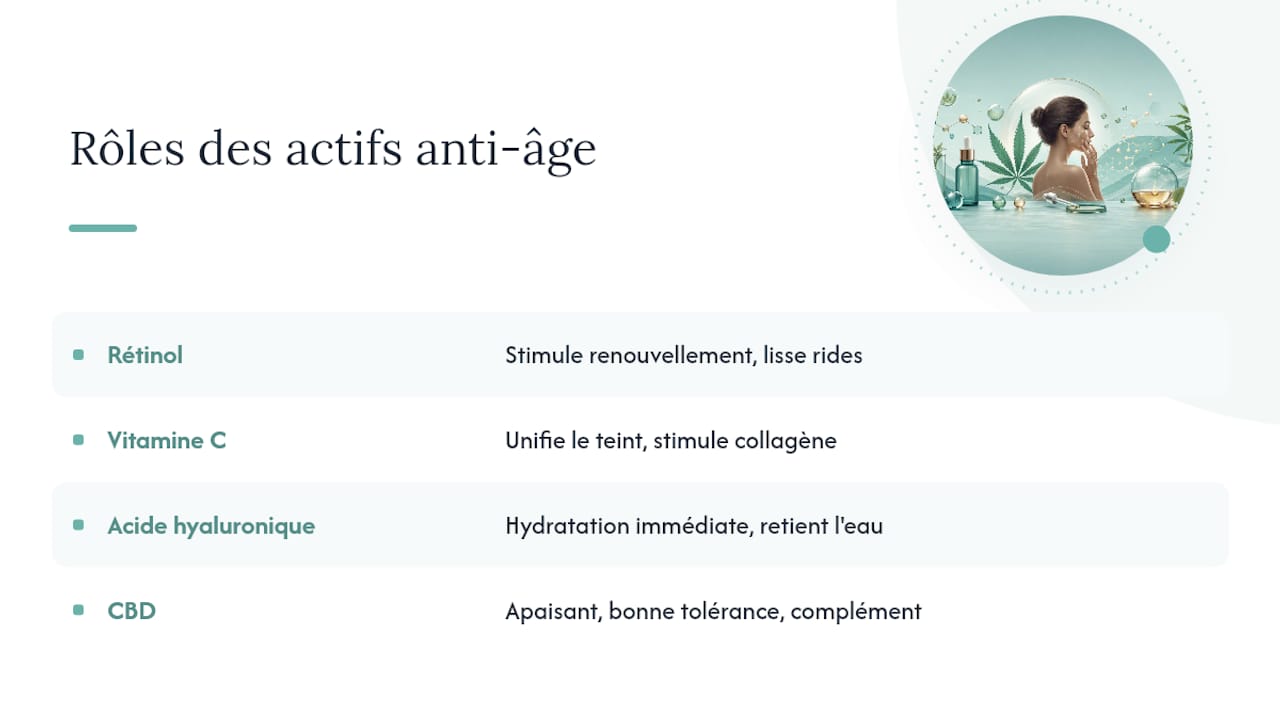
These ingredients aren’t in the same league, and comparing them doesn’t really make sense. Retinol remains the most well-documented active ingredient for stimulating cell turnover and smoothing out deep wrinkles, but it often irritates sensitive skin and requires careful sun protection. Vitamin C combats dark spots and stimulates collagen synthesis, often resulting in a visible brightening effect within a few weeks, although it remains difficult to stabilize in formulations. Hyaluronic acid, on the other hand, acts solely to provide immediate hydration by retaining water in the superficial layers of the skin, without directly influencing collagen production.
CBD plays a different role: it’s more soothing and protective than exfoliating or stimulating. It doesn’t replace retinol for reducing deep wrinkles, nor does it replace vitamin C for evening out skin tone. Its value lies in its good skin tolerance and its ability to soothe the irritation that retinol or exfoliating acids can cause. Many consumers use it as a complement—in the evening after applying a retinol serum, for example—rather than as a substitute. This approach of complementarity, rather than competition between active ingredients, is consistent with observed trends in the use of cannabidiol-based cosmetics.
In what cases is anti-aging CBD not suitable?
Topical CBD does not affect all skin types in the same way, and caution is advised in certain situations. Very sensitive skin or skin that has already been weakened by dermatological treatment (such as a recent chemical peel or prescribed retinoids) may react poorly to the addition of a new active ingredient, even one known to be soothing. In this case, it’s best to wait several weeks after the end of treatment before introducing CBD.
Pregnant or breastfeeding women should avoid CBD products, as there is insufficient data on their safety in this specific context, and should consult a healthcare professional before using them.
Another limitation lies in the expectations themselves. CBD does not fill in deep wrinkles or replace medical treatments for advanced skin aging (such as laser treatments, injections, or high-dose prescription retinoids). It acts as a supplement, not a cure. Finally, the highly variable quality of products on the market remains the main practical limitation: poorly extracted CBD, one that is underdosed, or combined with a comedogenic carrier oil, can negate any expected benefits or even aggravate certain skin problems, such as acne in oily skin types.
User Experience: Incorporating CBD into Your Anti-Aging Routine
My advice: Introduce CBD gradually—one application per day for the first week, then morning and night if your skin tolerates it well. Pair it with sunscreen in the morning and a targeted skincare treatment at night, rather than relying solely on a single product. Keep an eye on how your skin reacts during the first few days, and keep the COA for the product you choose—you’ll need it if any questions arise later.
— Steven
Want to try a reliable and traceable CBD product?
Pure-extract-cbd offers a selection of CBD beauty products and oils made from organic hemp, each accompanied by a certificate of analysis to verify concentration and the absence of contaminants.

Unlike products sold without clear information, each item we offer comes with a detailed product sheet and a viewable COA, along with fast shipping and discreet packaging. If you’re still unsure about which spectrum or concentration is best for your skin, our guide on how to choose a CBD oil explains the factors to consider before purchasing. Browse the complete catalog to find the oil or serum that fits your routine, and place your first order with confidence.
Sources
- Can CBD rehydrate the skin?
- CBD for Dry Skin – Deep Hydration from Within – 1753 SKINCARE
- CBD: A Natural Anti-Wrinkle Treatment?
Frequently Asked Questions
Will CBD be banned in France in 2026?
No, there is no indication that CBD will be banned in France anytime soon: the current legal framework allows it to be sold as long as the THC content complies with the regulatory threshold. Always check the product’s labeling and COA rather than relying on rumors of a ban.
What do customers say about CBD for osteoarthritis?
User reviews often mention relief from joint pain associated with osteoarthritis, though this does not pertain to the anti-aging topical use discussed here. These testimonials are individual observations, not clinically validated evidence on a large scale.
What are the benefits of CBD for the skin?
Topical CBD primarily offers soothing, antioxidant, and moisturizing benefits, which are helpful for treating redness and dry skin, as detailed in this analysis of CBD’s moisturizing effects. These benefits of CBD for the skin are most noticeable in terms of short-term comfort; its effects on wrinkles require several weeks of regular use.
How long does it take to see anti-aging effects from CBD?
Comfort and hydration often improve within a few days, while improvements in the skin barrier typically become apparent after two to four weeks of use, according to observations reported by 1753 Skincare. A visible reduction in fine lines generally requires several months of continuous use.
Can CBD replace retinol for anti-aging?
No, CBD does not have the same function as retinol: it soothes and hydrates, whereas retinol stimulates cell turnover to smooth out established wrinkles. The two active ingredients often complement each other rather than being substitutes for one another.



