
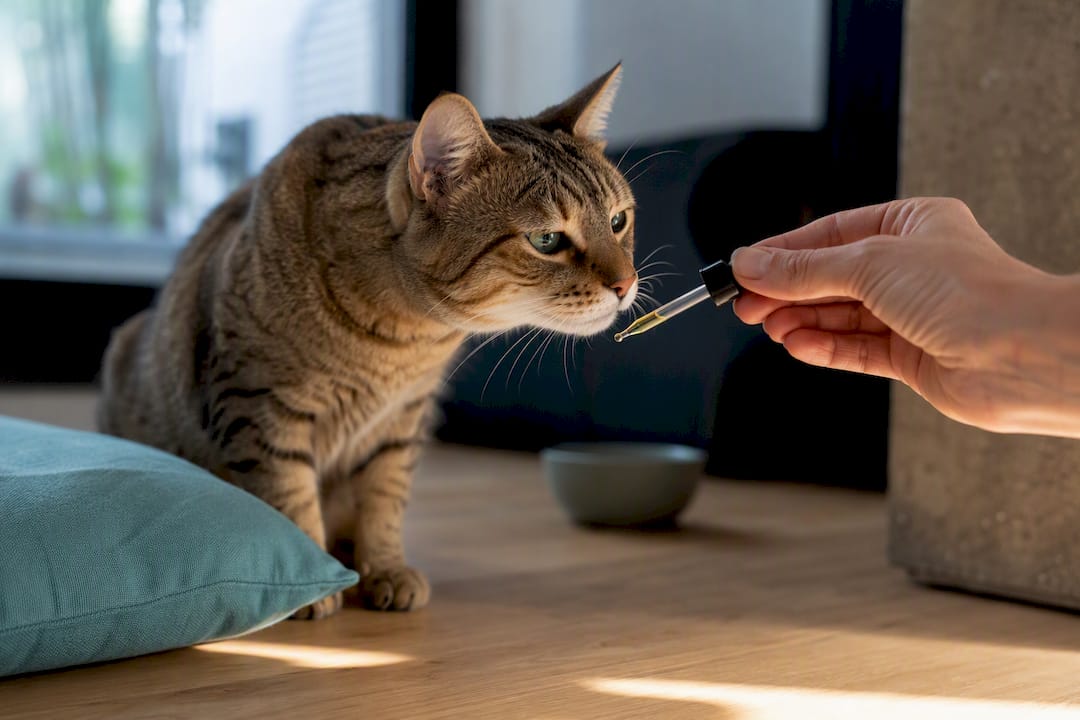
Yes, CBD can help calm some stressed cats, but its effects vary greatly from one animal to another and are still based on preliminary scientific data. Before using it, it’s best to choose a lab-tested product specifically formulated for animals and to consult a veterinarian, especially if your cat is already on medication.
In short:
- CBD may reduce anxiety in cats, but its effectiveness varies from cat to cat and has not yet been fully confirmed by in-depth studies.
- It is essential to choose a product that has been laboratory-tested and is specifically formulated for animals, and to discuss this with a veterinarian.
- Treatment should be started at a low dose and gradually increased over several weeks to assess tolerance and efficacy.
- The primary recommended form of administration is oil, often flavored with salmon or fish, to make it easier to take.
- CBD is generally safe when taken at the recommended dose, but caution is advised for young people, pregnant women, and animals with chronic illnesses.
Table of Contents
- What benefits can CBD offer a stressed cat?
- What types of products are suitable for cats?
- Safety, Side Effects, and Contraindications in Cats
- Dosage and Practical Administration Guidelines for a Stressed Cat
- When and Why to See a Veterinarian
- How do you choose a safe and suitable product?
- The Author's Perspective: Practical Advice and Observed Limitations
- Pure Extract CBD, an option designed to help with your cat's stress
- Sources
What benefits can CBD offer a stressed cat?
Cannabidiol acts on the endocannabinoid system, a network of receptors found in both cats and humans that regulates, among other things, mood, pain, and sleep. In theory, CBD modulates this system without causing any psychoactive effects, unlike THC. It is this presumed action that explains the growing interest in its use to treat stress in cats.
A review published in *Frontiers in Veterinary Science* reports that CBD may modulate certain anxiety-related behaviors in animals, while noting that the data remain limited and that large-scale controlled clinical trials are still lacking. This distinction is important: most of the positive feedback regarding stress in cats currently comes from owner testimonials and product descriptions, not from rigorous clinical trials conducted specifically on cats.
There are several signs that can help you determine whether CBD is having a real effect on your cat:
- Less agitated behavior, with less running away or hiding when there are noises or visitors.
- An appetite that is stabilizing—one that is often disrupted during periods of stress in cats.
- More restful sleep, without repeated, jolted awakenings.
- A reduction in compulsive behaviors such as excessive licking or urine marking.
What types of products are suitable for cats?
Not all forms of CBD are equally suitable for use with cats. Cats are sensitive to smells and textures, which makes the choice of format almost as important as the dosage itself.
- Pet oil: This is often the most precise way to adjust the dose drop by drop, especially when mixed with a palatable base such assalmon oil, which significantly improves the product’s acceptance.
- CBD treats: convenient and reassuring, but they come in fixed doses that are less easily adjustable than oil in drops.
- Flavored oils: Familiar flavors for cats, such as fish, make administration much easier without causing additional stress.
- Products to avoid: any product containing THC or terpenes intended for human use, which may be toxic to a cat’s liver.
To administer the oil without causing the cat to resist, apply it directly to the paw—which the cat will lick instinctively—or mix it with a small amount of wet food rather than the entire bowl.
Safety, Side Effects, and Contraindications in Cats
CBD is generally well tolerated by cats at the recommended doses, but some adverse effects have been documented and warrant close monitoring. Unusual drowsiness, diarrhea, or temporary vomiting are among the most commonly reported reactions, particularly during the first few days of use.
The liver plays a central role in CBD metabolism, which raises concerns for cats that already have liver or kidney disease. CBD can also interact with certain medications metabolized by the same liver enzymes, increasing the risk of side effects if your cat is on long-term medication.
Certain groups of people require extra caution:
- Kittens, whose endocannabinoid system is still developing.
- Pregnant or nursing cats, due to a lack of sufficient safety data.
- Cats with pre-existing liver or kidney disorders.
- Animals already receiving regular medication.
Pro tip: If you notice severe lethargy, repeated vomiting, or a loss of appetite after introducing CBD, stop administering it immediately and contact your veterinarian rather than waiting for the symptoms to worsen.
Dosage and Practical Administration Guidelines for a Stressed Cat
The basic rule for a stressed cat is to start with a low dose and increase it very gradually, while observing the animal’s behavior day by day. An internal review on CBD and stress emphasizes this gradual approach as the most cautious method for assessing each cat’s individual tolerance.
Here is a reasonable testing method, provided purely for illustrative purposes and not as a guideline:
- Week 1: Start with the minimum dose indicated on the product label, based on your cat's weight, once a day.
- Week 2: If no side effects occur and the desired effect has not yet been achieved, increase the dose very slightly according to the manufacturer's recommendations.
- Weeks 3 and 4: Monitor stress indicators (appetite, sleep, behavior) to determine whether the current dose is sufficient or needs to be adjusted.
- After four weeks: If no improvement is evident, it is likely that the product or dosage is not suitable for this particular cat.
This two- to four-week trial protocol helps distinguish a real effect from mere coincidence. Never exceed the maximum doses recommended by the manufacturer, and consult your veterinarian before starting, especially if your cat is already on medication. The practical guide to using CBD oil details this approach of gradual increase, which can be adapted for cats with the approval of a professional.
When and Why to See a Veterinarian
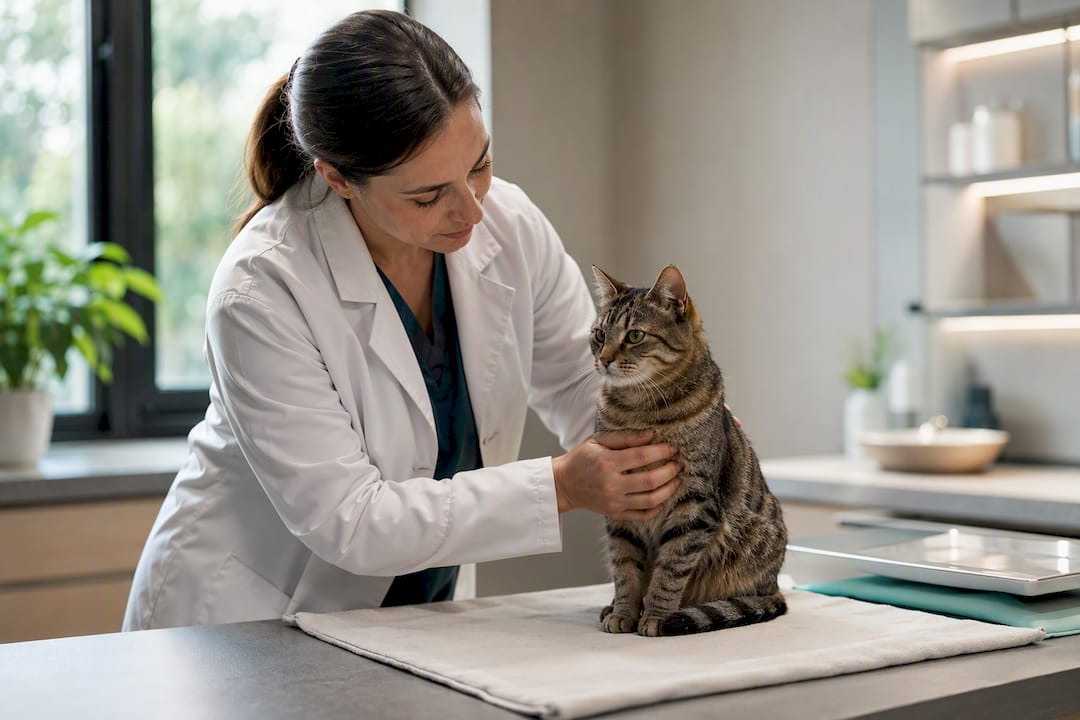
Certain symptoms should always prompt a visit to a healthcare provider, without waiting to see the effects of CBD: rapid weight loss, new aggression, prolonged isolation, or digestive problems that persist for more than forty-eight hours.
Before your visit, please have the following information ready for your veterinarian:
- Your cat's exact weight and age.
- A list of medications or supplements already being taken.
- How long ago did the signs of stress first appear?
- Recent changes in the cat's environment (moving, a new pet, a prolonged absence).
A liver function test may be recommended if long-term CBD treatment is being considered, particularly for older cats or those already being treated for a chronic condition.
How do you choose a safe and suitable product?
Product quality is almost as important to effectiveness as dosage. CBD that is poorly formulated or incorrectly dosed can negate any benefits—or even pose an unnecessary risk to your cat.
- Insist on a certificate of analysis (COA) issued by an independent laboratory that confirms the actual CBD concentration and the absence of contaminants.
- Make sure the product is specifically formulated for animals, with the absence of THC clearly indicated on the label and the COA.
- Check the concentration in mg/mL and the batch traceability—both of which must be listed on the packaging or product information sheet.
- Look for transparent brands that publish their batch analyses and provide a direct point of contact to answer questions about dosage.
Pro tip: Be wary of products that only list a CBD percentage without third-party testing results: this figure alone does not guarantee purity or the absence of THC.
The Author's Perspective: Practical Advice and Observed Limitations
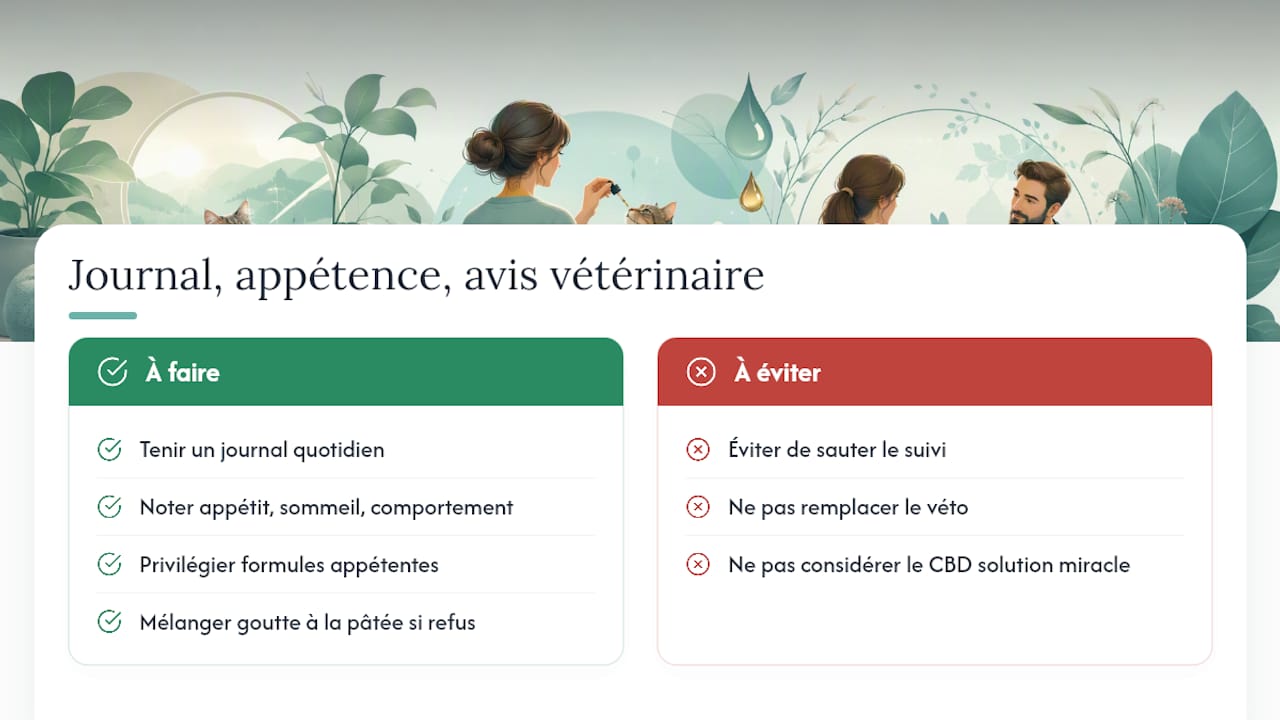
One thing stands out on this topic: the cat owners who have the most success with CBD trials are those who keep a simple journal—one line per day about their cat’s appetite, sleep, and behavior. Without this record, it becomes nearly impossible to distinguish real progress from a favorable impression.
Palatable formulations, such as those based on salmon oil, also make a real difference: a cat that refuses the dropper will have no trouble swallowing a drop mixed into its wet food. That said, no format or brand can replace veterinary advice when stress persists or worsens. CBD remains a supplementary tool, not a miracle cure.
— Steven
Pure Extract CBD, an option designed to help with your cat's stress
A line of products designed specifically for pets, created to meet the specific needs of stressed cats: THC-free oils, tested by independent laboratories, and available in palatable forms that make daily administration easy.

Each product comes with its own certificate of analysis, allowing you to verify the actual concentration and the absence of contaminants yourself before making a purchase. Customer service can also help you determine the appropriate dosage based on your cat’s weight and profile. If you’d like to compare the available sizes and start a trial safely, visit the Pure Extract CBD store to see which pet oils are currently in stock.
Sources
This article is based on a review in *Frontiers in Veterinary Science* on CBD and anxiety in animals, as well as specialized product descriptions such as the one from CBDouce. For more information, see also the guide on the benefits of CBD oil.
This article is intended to provide general information and is not a substitute for the advice of a qualified healthcare professional. Consult a qualified healthcare professional about your specific situation before taking any action based on this content.
- Frontiers in Veterinary Science — Cannabidiol and Anxiety-Related Effects in Animals (2023)
- CBDouce — CBD Oil for Pets (Product Sheet)



