
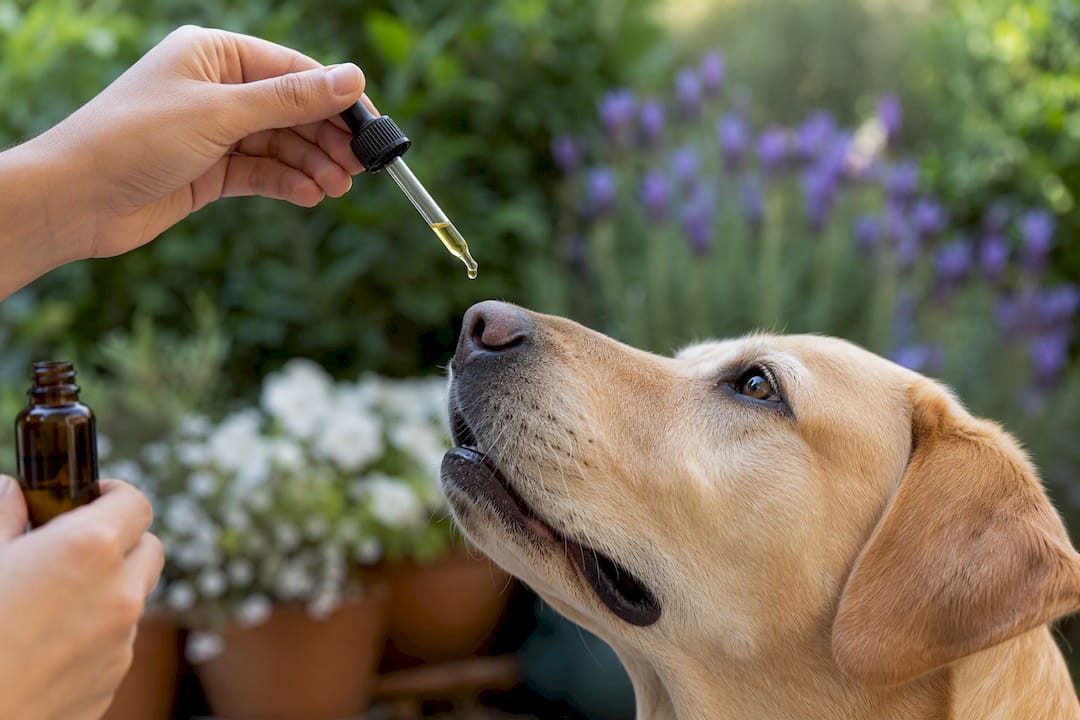
Start with 1 to 2 mg of CBD per kilogram per dose, taking one to two doses daily depending on your goal. Some pet owners occasionally increase the dose to up to 4 mg/kg in cases of severe stress, but always after a period of observation. This mg/kg guideline forms the basis for all CBD dosage calculations for dogs: without it, converting to drops or milliliters makes no sense.
The most commonly cited rule of thumb is to start with 1–2 mg per kilogram, adjusting the dose later based on the animal’s response. Two dogs of the same weight do not necessarily react the same way: the endocannabinoid system varies from one individual to another, which explains why the recommended dose is only a starting point.
- General guideline: 1 to 2 mg/kg per dose.
- One-time dose: up to 4 mg/kg in cases of severe stress, under close observation.
- Usual frequency: 1 to 2 doses per day, taken in divided doses if the total dose is high.
Key takeaway: Many pet owners who are new to giving CBD to their dogs underestimate the importance of converting the dose to milligrams before using the dropper, which throws off all subsequent calculations. Always convert your dog’s weight to milligrams before thinking in terms of drops, observe your dog’s behavior for several days, and consult a veterinarian if you have any doubts or if your dog is currently undergoing treatment.
Key Points
| Point | Details |
|---|---|
| Starting Point | Start with 1–2 mg/kg per dose, up to 4 mg/kg as needed, depending on the situation. |
| Convert before measuring | Always calculate the total mg (weight × mg/kg) before converting it to drops according to the label. |
| Adjust to the lens | Anxiety, pain, and sleep each require different dosing schedules and regimens. |
| Titrate Gradually | Increase the dose gradually every 3 to 7 days, noting your pet's behavior, appetite, and sleep patterns. |
| Check the quality | Always ask for a certificate of analysis (COA) before making a purchase, such as those provided by Pure-extract-cbd for its line of CBD products. |
Table of Contents
- How do you calculate the CBD dosage for a dog based on its weight?
- What is the recommended CBD dose depending on the goal: anxiety, pain, or sleep?
- Sublingual or mixed with food: Which method should you choose?
- How can I gradually increase the dose safely?
- What are the side effects and precautions to be aware of?
- Isolate, broad-spectrum, or full-spectrum: Which formulation should you choose?
- Why should you check the lab results before buying?
- What Most Guides on CBD for Dogs Fail to Mention
- Pure-extract-cbd: Precisely Measured Oils for Your Dog
- Frequently Asked Questions About CBD Dosage for Dogs
- Sources
How do you calculate the CBD dosage for a dog based on its weight?
The calculation is based on a simple formula: dog’s weight (kg) × target dose (mg/kg) = total dose in mg. Once you have this number, you need to convert it to drops based on the bottle’s concentration—a step that many owners skip, relying instead on a rough estimate.
Read the label before measuring out the dosage
Each bottle of CBD oil typically lists three pieces of information: the total amount of CBD in mg, the bottle’s volume in ml, and sometimes the number of drops per ml. A 10-ml bottle containing 500 mg of CBD therefore has 50 mg per ml. If the bottle dispenses about 20 drops per ml, each drop provides about 2.5 mg of CBD. It is this calculation—not a generic figure—that should guide CBD dosing for beginners.
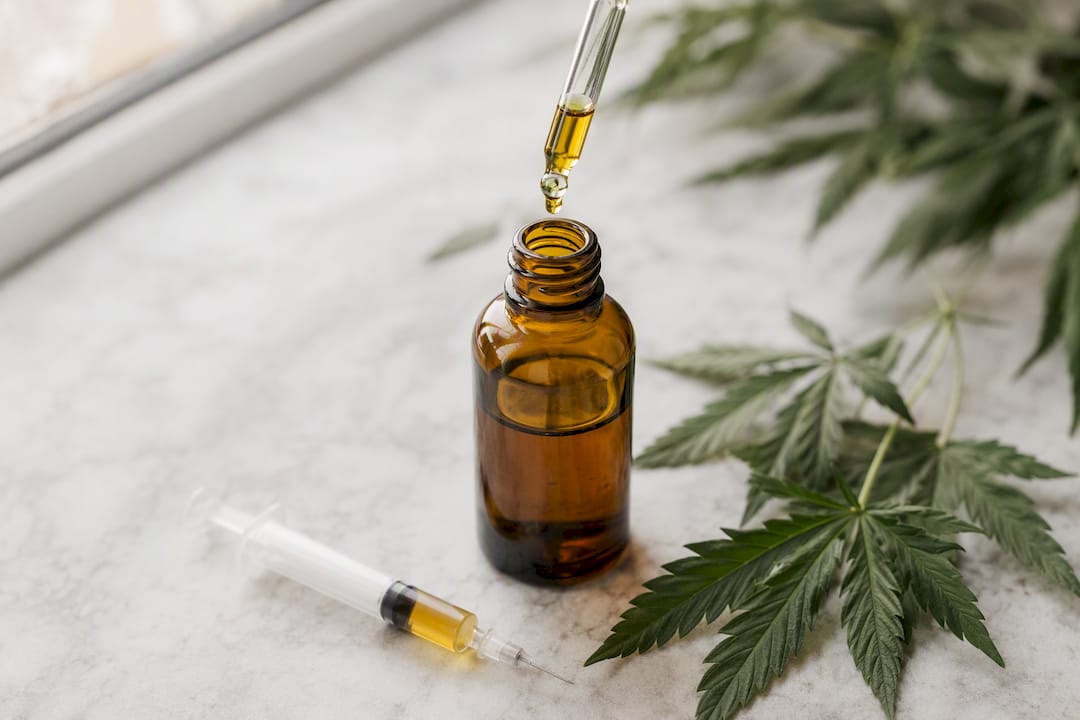
A 5% oil generally delivers about 2.5 mg per drop, while a 10% oil doubles that amount to about 5 mg per drop, according to the standard guidelines typically used for converting drops to milligrams. These values are only approximate: the only reliable reference is the information printed on the label of your own bottle.
Specific Examples by Dog Weight
Let's take a 10-kg dog, with a starting dose of 1.5 mg/kg. The calculation yields 15 mg of CBD per dose.
For a 25-kg dog with a target dose of 2 mg/kg, the total dose increases to 50 mg.
Online calculators convert the weight into milligrams (mg) based on a mild, standard, or strong dosage level, and then automatically convert it into the number of drops based on the mg per drop specified on the product label. These tools are useful for verifying a calculation, but should never replace direct observation of your dog.
This table provides a starting point for standard CBD dosing based on weight. It does not replace an individual calculation based on the actual label on your bottle, as the concentration may vary slightly from batch to batch.
- Always round to the nearest drop; never round down to the lower half for a therapeutic dose.
- If the calculation results in too many drops for a single dose, use a higher concentration or split the dose.
- Write down the calculation somewhere: weight, target dose, total mg, number of drops. This saves you from having to redo the calculation for each bottle.
What is the recommended CBD dose depending on the goal: anxiety, pain, or sleep?
The CBD dosage for anxious dogs is not determined in the same way as when it’s used for mobility or sleep. The desired outcome determines both the starting dose and how it should be distributed throughout the day.
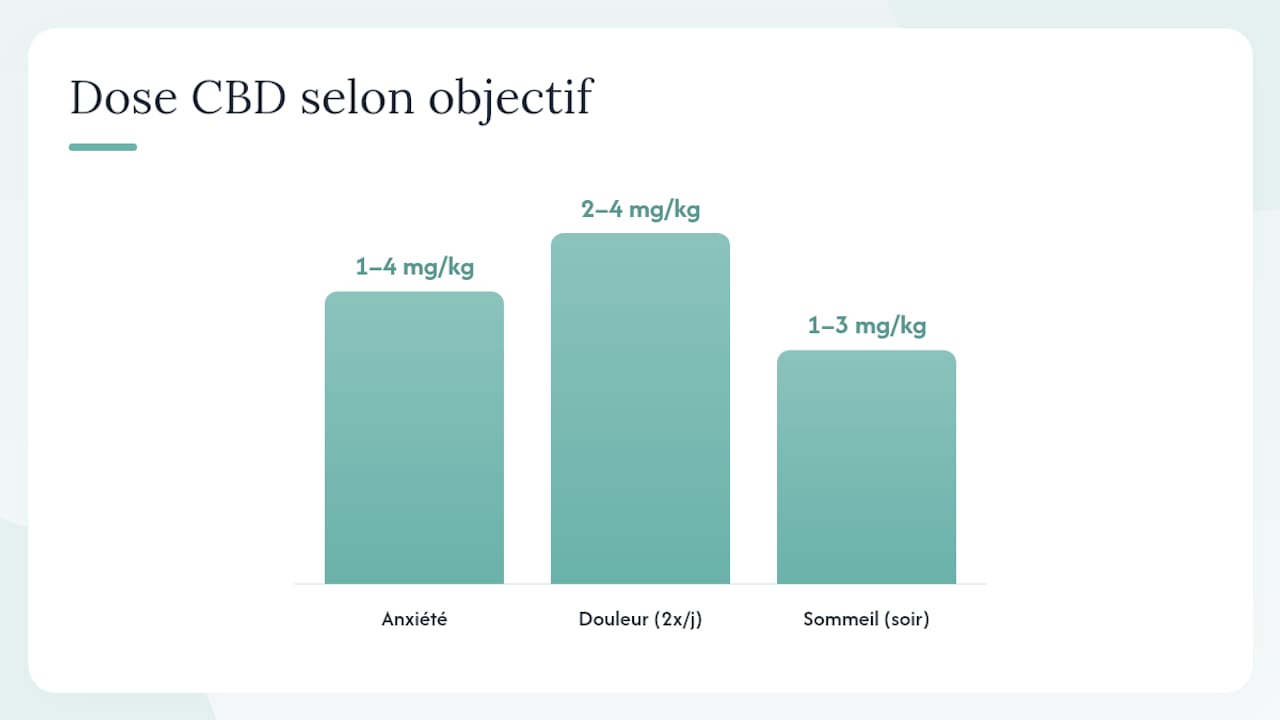
For anxiety, a dose range of 1 to 2 mg/kg per administration is often used as a starting point, with a gradual increase to 3 or 4 mg/kg if the effect remains insufficient after several days of observation. Administering the dose approximately 30 to 45 minutes before a known anxiety-inducing event (a visit to the vet, fireworks, a car ride) generally yields better results than administering it at the very moment the stress occurs.
For pain and mobility issues, the doses used tend to be higher, often between 2 and 4 mg/kg, divided into two daily doses rather than a single large dose. Dividing the dose between morning and evening maintains a more stable concentration in the body, which is better suited for chronic discomfort than for occasional stress.
For sleep, administering the dose in the evening, about an hour before bedtime, remains the most common practice. The recommended dosage depends mainly on the dog’s response during the first few nights: some dogs respond to as little as 1 mg/kg, while others need closer to 2 to 3 mg/kg to see a noticeable improvement in sleep quality.
Pro tip: Keep a separate journal for each goal if you’re trying CBD both for anxiety and for mobility. The two uses require different dosing schedules, and mixing your observations makes it hard to track your progress.
Epilepsy and seizures warrant a special caution. Unlike in previous cases, the dosage should never be adjusted on your own at home. The antiepileptic drugs that dogs with epilepsy often take are metabolized by the liver, just like CBD, which creates a risk of interaction that only a veterinarian can properly assess. Never self-prescribe CBD for a dog on anticonvulsant medication without prior medical approval.
- Anxiety: 1 to 2 mg/kg, up to 3–4 mg/kg if necessary, taken in advance.
- Pain or mobility: 2 to 4 mg/kg, divided into morning and evening doses.
- Sleep: Take a single dose in the evening; adjust the dose based on your response.
- Seizures or epilepsy: veterinary supervision is required; never self-administer medication.
Sublingual or mixed with food: Which method should you choose?
The choice of administration method directly affects how long it takes for the medication to take effect, and therefore how each dose should be scheduled.
- The sublingual route involves placing the oil directly under the dog’s tongue using the pipette. The oil is then absorbed through the oral mucosa, which generally speeds up the effect compared to when it passes entirely through the digestive system. This method is ideal when a rapid response is desired, such as before a stressful trip.
- Mixing it with food remains the most practical solution for a dog that is reluctant or wary of the dropper. The downside is that the CBD then passes through the entire digestive system before being absorbed, which delays the onset of the effect and may slightly reduce the amount that is actually absorbed.
- The frequency of dosing follows the same principle as the chosen dosage: once or twice a day in most cases, with doses split between morning and evening when the total daily dose is high. This prevents a single spike in concentration and spreads the effect throughout the day.
For a dog that consistently refuses the dropper, there are a few tips to minimize product waste: place the oil on a small portion of highly palatable food rather than in the entire bowl, or apply it to a soft treat that the dog swallows quickly without chewing for long. The question of whether to use CBD oil or CBD treats for dogs is often resolved as follows: oil offers greater dosing precision thanks to the graduated dropper, while treats make administration easier but make fine-tuning the dose more difficult. The practical guide to CBD oil use details the most effective administration techniques based on the animal’s temperament.
How can I gradually increase the dose safely?
Gradual titration remains the safest method for determining the effective dose without exceeding what your dog actually needs. The key is to increase the dose in small increments; never start with a high dose right from the first day.
- Week 1: Start with the low dose, 1 mg/kg per dose, once a day. Wait 48 to 72 hours before making any adjustments, to allow the dog’s body time to fully respond.
- Week 2: If no noticeable effects occur and no adverse signs are observed, gradually increase the dose—for example, to 1.5 mg/kg—while maintaining the same dosing schedule.
- Weeks 3 and 4: Continue increasing the intensity in stages every 3 to 7 days until you achieve the desired effect, without exceeding the recommended ranges based on your goal.
A gradual titration protocol combined with regular monitoring remains the most well-documented method for adjusting the dose on a case-by-case basis. Each day, record your dog’s general behavior, mobility, appetite, and sleep quality in a notebook or app. This simple log allows you to quickly determine whether a given dose level is working or if you need to reduce it.
Pro tip: Stop increasing the dose immediately if you notice severe drowsiness, digestive problems, or an unusual loss of appetite. Go back to the previous dose for a few days, and if the symptoms persist, consult your veterinarian.
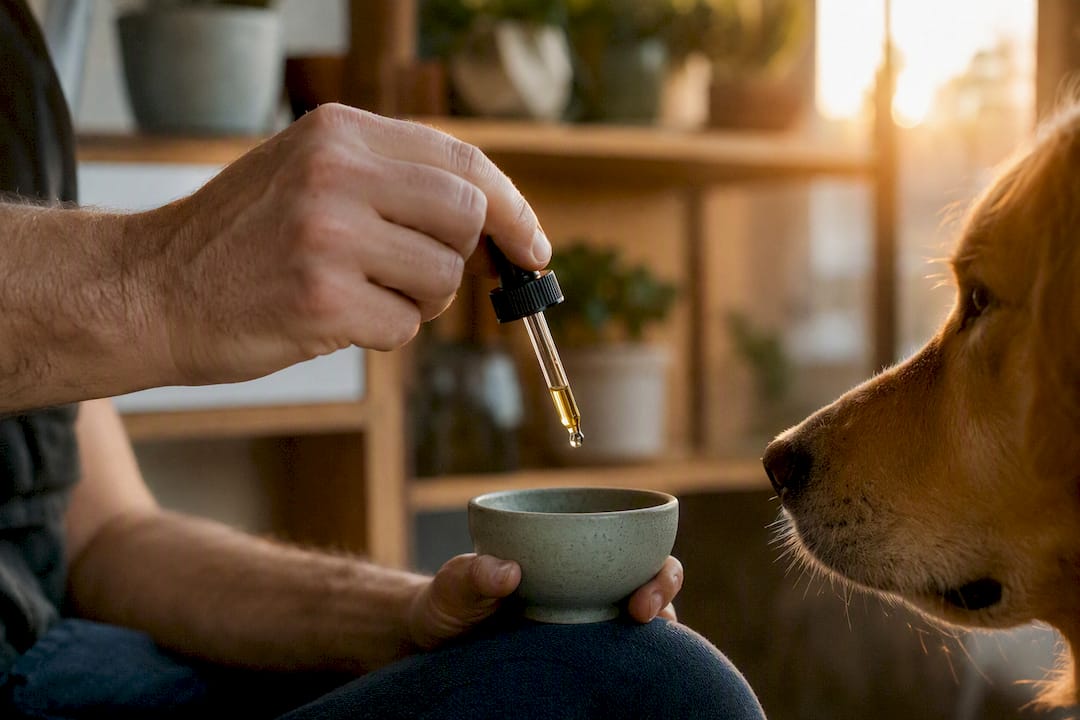
What are the side effects and precautions to be aware of?
CBD is generally well tolerated by dogs, but certain effects should be monitored before and during any dose adjustment, as detailed in the section on the effects, benefits, and safety of CBD. Drowsiness and mild digestive issues (loose stools, changes in appetite) are among the most commonly reported reactions, especially when the dose is increased too quickly.
Drug interactions are the most serious concern. CBD is metabolized by the liver using the same enzymes as many veterinary medications, including antiepileptic drugs and certain anti-inflammatory drugs. A dog already on long-term medication must always consult a veterinarian before starting CBD, regardless of the intended dose.
Certain situations call for extra caution: growing puppies, pregnant or nursing female dogs, and dogs with liver failure. In all three cases, the lack of solid data on long-term safety means you should not proceed without medical supervision, regardless of the initial dosage you plan to use.
Before making any purchase, always check the product’s certificate of analysis (COA). This document, provided by an independent laboratory, confirms the actual CBD content listed on the label and the absence of detectable THC above legal thresholds. A bottle without an accessible COA does not allow for any reliable calculation, since all CBD dosing for animals relies on the consistency between the label and the actual contents.
- Possible side effects: drowsiness, digestive problems, changes in appetite.
- Interactions to watch for: liver medications, antiepileptic drugs, and anti-inflammatory drugs.
- High-risk cases: puppies, pregnancy, liver failure.
- Mandatory verification: certificate of analysis (COA) and THC content prior to any use.
To learn more about recognizing signs of poor tolerance, the page on CBD-related side effects details the reactions to watch for in both animals and humans.
Isolate, broad-spectrum, or full-spectrum: Which formulation should you choose?
The choice of formulation directly affects the safety margin and perceived effectiveness.CBD isolate contains only the pure CBD molecule, with no traces of THC: it’s the safest option for a sensitive dog or for a first-time trial. Broad-spectrum products retain other cannabinoids and terpenes while excluding THC, allowing you to benefit from the entourage effect without any psychoactive risk. Full-spectrum products contain traces of THC, generally below the legal threshold, which theoretically poses a greater risk for an animal sensitive to psychoactive effects, even at very low doses.
- Isolate: maximum safety, no trace of THC, suitable for sensitive dogs.
- Broad-spectrum: THC-free entourage effect, a good compromise for most dogs.
- Full spectrum: may contain traces of THC; intended only for dogs with no known sensitivity.
- Always check to make sure the product comes with a graduated pipette and that the label is fully legible before purchasing.
The guide to choosing the right CBD oil details the selection criteria based on the animal's sensitivity and weight.
Why should you check the lab results before buying?
The reliability of a CBD oil product depends entirely on whether what is written on the label matches what is actually in the bottle. That is why the certificate of analysis (COA) issued by an independent third-party laboratory is the only verifiable guarantee of the CBD concentration and the absence of THC above legal limits.
- Independent laboratory test results are available for each product, confirming the stated cannabinoid content.
- Legal compliance of products sold in France and Europe.
- A product line offering a variety of strengths and formulations, making it easy to adjust the dosage based on the dog's weight.
- Educational resources are available to learn more about the use of CBD in animals, such as this article on the benefits of CBD for dogs.
These factors provide a solid foundation, but each individual situation (the dog’s health, current treatments, and any specific sensitivities) should be evaluated with a veterinarian before introducing CBD into your pet’s routine.
What Most Guides on CBD for Dogs Fail to Mention
Most articles on the subject limit themselves to the mg/kg range, as if providing a single figure were enough to ensure safe use. This is a fundamental mistake: the real risk does not stem from choosing between 1 mg/kg or 2 mg/kg, but from the lack of a rigorous conversion between that figure and the actual number of drops administered. Two bottles labeled with similar percentages may deliver very different amounts of CBD per drop.
Gradual titration is often presented as a simple precautionary recommendation. I see it more as the most useful diagnostic tool available to a pet owner: it’s by observing the changes day by day that you can determine whether CBD is truly having an effect on your dog’s anxiety or mobility, or whether the perceived effect is mainly due to other factors.
The top priority, therefore, remains choosing a product whose actual concentration can be verified by a certificate of analysis, even before discussing the mg/kg value to be applied. Without this foundation, any dosage calculation remains an approximation.
Pure-extract-cbd: Precisely Measured Oils for Your Dog
Finding a CBD oil whose actual concentration matches the label exactly remains the main obstacle to reliable dosing—far more so than the specific mg/kg figure itself. Pure-extract-cbd offers a range of CBD oils derived from organic hemp, each accompanied by an independent laboratory analysis certificate, allowing you to calculate a precise dose from the very first bottle without having to guess the actual cannabinoid content.

The store offers several concentrations suitable for both small and large dogs, with graduated droppers that make it easy to convert milligrams to drops, as mentioned earlier in this article. For owners who prefer a simpler administration method, the line also includes infused products in addition to traditional oils. Check out the complete CBD product catalog to compare the available concentrations and choose the one that best suits your dog’s weight and needs.
Frequently Asked Questions About CBD Dosage for Dogs
The number of drops depends on both the dog's weight and the concentration of the bottle. Always check the mg per drop listed on your own bottle before relying on a general example.
What is the recommended starting dose of CBD for a dog?
A starting CBD dose is generally 1 mg/kg per dose, once daily, for 48 to 72 hours before making any adjustments.
Can CBD help an anxious dog calm down?
The CBD dosage for anxious dogs is often between 1 and 2 mg/kg, administered about 30 to 45 minutes before a specific stressful event. Some dogs may require a higher dose, up to 3 or 4 mg/kg, but any increase should be gradual and monitored.
Should CBD be given with or without food?
Direct sublingual administration generally produces a faster effect than mixing it with food, since it bypasses the digestive system entirely. Mixing it with food, however, remains a practical solution for dogs that refuse the dropper.
When is it absolutely necessary to consult a veterinarian before giving CBD?
A veterinary consultation is required before use in puppies, pregnant dogs, dogs with liver failure, or animals already taking medications metabolized by the liver—particularly antiepileptic drugs. In cases of seizures or epilepsy, CBD should never be administered without medical supervision.
Sources
- CBD Dosage for Dogs: A Simple and Safe Guide Based on Weight – Pilepoil24
- CBD Oil Dosage Calculator for Dogs | mg Based on Weight – CalculatorLib
- CBD for Dogs: A Comprehensive Guide, Veterinary Advice, Dosage, and Effects
- CBD for Dogs | Benefits, Effects, Dosage, and Veterinary Advice – LivVet



