Mixing CBD and alcohol can increase drowsiness, reduce alertness, and cause significant drug interactions. This combination is not harmless. Before consuming them together, several precautions should be taken:
- Do not drive or operate machinery after combining these two substances.
- Avoid using this combination if you are taking certain medications (anticoagulants, antidepressants, antiepileptics).
- Consult a healthcare professional if you have a history of liver disease or a chronic condition.
- Check the certificate of analysis (COA) for any CBD product to rule out the risk of THC contamination.
The Drug Administration explicitly recommends caution when using this medication in conjunction with other substances or medical treatments.
Key Points
Combining CBD with alcohol increases sedation, can alter drug metabolism via CYP450, and should never be used in an attempt to lower blood alcohol levels.
| Point | Details |
|---|---|
| Potentiated sedation | This combination increases drowsiness and impairs alertness; do not drive afterward. |
| Drug Interactions | CBD inhibits CYP450 enzymes and may alter the effects of anticoagulants, antiepileptic drugs, and antidepressants. |
| Blood Alcohol Concentration Not Reduced | A study involving 10 participants found a decrease in blood alcohol concentration, but no change in behavioral effects. |
| Check the COA | All CBD products must include a third-party certificate of analysis covering THC, solvents, heavy metals, and pesticides. |
| Pure CBD Extract | Offers organic CBD products with available COAs that comply with French and European standards. |
Table of Contents
- How do CBD and alcohol interact in the body?
- What immediate effects can be observed when the two are combined?
- Does CBD actually affect blood alcohol levels?
- Medium- and Long-Term Risks: Drug Interactions and the Liver
- In what situations should this combination be avoided at all costs?
- How can you check the quality of a CBD product in France?
- What are the French authorities and international organizations saying?
- Practical Tips for Reducing Risks
- What Key Studies on the Subject Say
- Prudence, Quality, and Responsibility: An Editorial Perspective
- CBD products with verifiable lab test results
- Sources
How do CBD and alcohol interact in the body?
Alcohol is a central nervous system depressant: in small doses, it can produce a mild sense of euphoria; in higher doses, it slows cognitive and motor functions. Cannabidiol (CBD), on the other hand, interacts with the endocannabinoid system and has an anxiolytic and potentially sedative effect, without producing any psychoactive effects in the strict sense of the term.
The most concerning point of overlap involves the liver. Both substances are metabolized by cytochrome P450 (CYP450) enzymes, particularly CYP2C19 and CYP3A4. Pharmacology reviews available on NCBI document this mechanism: CBD can inhibit these enzymes, which slows the breakdown of other molecules, including alcohol itself and many medications. As a result, plasma concentrations of these substances may rise beyond what would occur if taken alone.
👉 Important note: The combined effect is not simply the sum of the two substances. Enzyme inhibition can alter the duration and intensity of each substance’s effects in ways that vary unpredictably from person to person.
What immediate effects can be observed when the two are combined?
The short-term effects of combining cannabidiol and alcohol are primarily felt in the central nervous system. Drowsiness is exacerbated: while alcohol alone would cause mild fatigue, the addition of CBD can significantly intensify this effect. Motor skills and decision-making are affected more markedly than when either substance is taken alone.
Symptoms frequently reported with this combination include:
- Dizziness and a heavy feeling in the head.
- Nausea, especially at high doses.
- Excessive drowsiness, which can be difficult to predict depending on the form of CBD consumed (oil, flower, capsule).
- Decreased concentration and reaction time.
- In some cases, mild hypotension (low blood pressure).
To learn more about the possible side effects of CBD, a cautious approach is always recommended.
Pro tip: If you want to test your tolerance to any of these substances, start with very small doses in a safe environment, and make sure you don’t have any risky activities planned for the next few hours. Wait at least two hours before assessing the actual effect, as CBD oil in particular can be slow to absorb.
Does CBD actually affect blood alcohol levels?
This is one of the most frequently asked questions, and the scientific answer is nuanced. A double-blind, crossover human study published on PubMed found that combining 200 mg of CBD with alcohol (1 g/kg of body weight) reduced the measured blood alcohol level compared to alcohol alone, without significantly altering behavioral or motor effects. The trial involved 10 volunteers (6 men, 4 women).
⚠️ Warning: The 200-mg dose used in this study is much higher than the doses commonly consumed in France (typically 10–50 mg per dose). The results therefore cannot be directly applied to typical usage. Most importantly, a decrease in the measured level does not mean that the effects of alcohol are reduced: the behavioral effects remained similar in the study.
Never consider CBD as a way to lower your blood alcohol level or to “sober up.” This belief has no scientific basis and is potentially dangerous.
Medium- and Long-Term Risks: Drug Interactions and the Liver
Beyond the immediate effects, the regular combination of CBD and alcohol raises concerns about liver health and chronic interactions. Pharmacology reviews available on NCBI note that CBD is generally well tolerated, but that its interaction with CYP450 enzymes can alter the pharmacokinetics of many common medications.
The treatments most commonly affected by these interactions include:
- Anticoagulants (warfarin, rivaroxaban): risk of increased anticoagulant effect.
- Antiepileptic drugs (valproate, carbamazepine): changes in plasma concentrations.
- Antidepressants and anxiolytics (SSRIs, benzodiazepines): potentiation of sedative effects.
- Immunosuppressants: altered hepatic metabolism.
“Patients on long-term medication should always inform their doctor of any CBD use, as interactions via the CYP450 system can alter the efficacy or toxicity of their medications.” This recommendation stems directly from clinical pharmacology data documented in the scientific literature.
People with pre-existing liver dysfunction are a particularly vulnerable population. Alcohol itself is hepatotoxic when taken in repeated doses; when combined with CBD, which is metabolized by the same organ, the burden on the liver may be increased. Longitudinal data on long-term combined use remain insufficient, which justifies regular medical monitoring for anyone who regularly uses both substances.
In what situations should this combination be avoided at all costs?
There are certain situations in which combining CBD and alcohol is particularly discouraged, or even dangerous:
- Driving or operating machinery: The drowsiness and reduced alertness caused by these two substances pose a risk of serious accidents.
- Pregnancy and breastfeeding: There are no safety data to support the use of CBD during these periods; alcohol is strictly contraindicated.
- Treatment with anticoagulants, psychotropic drugs, or antiepileptic drugs: the risk of drug interactions has been documented and may have serious clinical consequences.
- History of liver failure: the dual metabolic burden on the liver increases the risk of toxicity.
- History of alcohol dependence: This condition may complicate treatment monitoring and withdrawal strategies.
- High-risk sports or professional activities: Any activity requiring maximum alertness is incompatible with wearing the suit.
How can you check the quality of a CBD product in France?
The quality of the CBD product used directly determines the level of risk. Tests have revealed the presence of traces of THC, residual solvents, heavy metals, or pesticides in some products on the market, which can lead to unexpected effects or a positive doping test. For athletes subject to WADA regulations, this risk is particularly real.
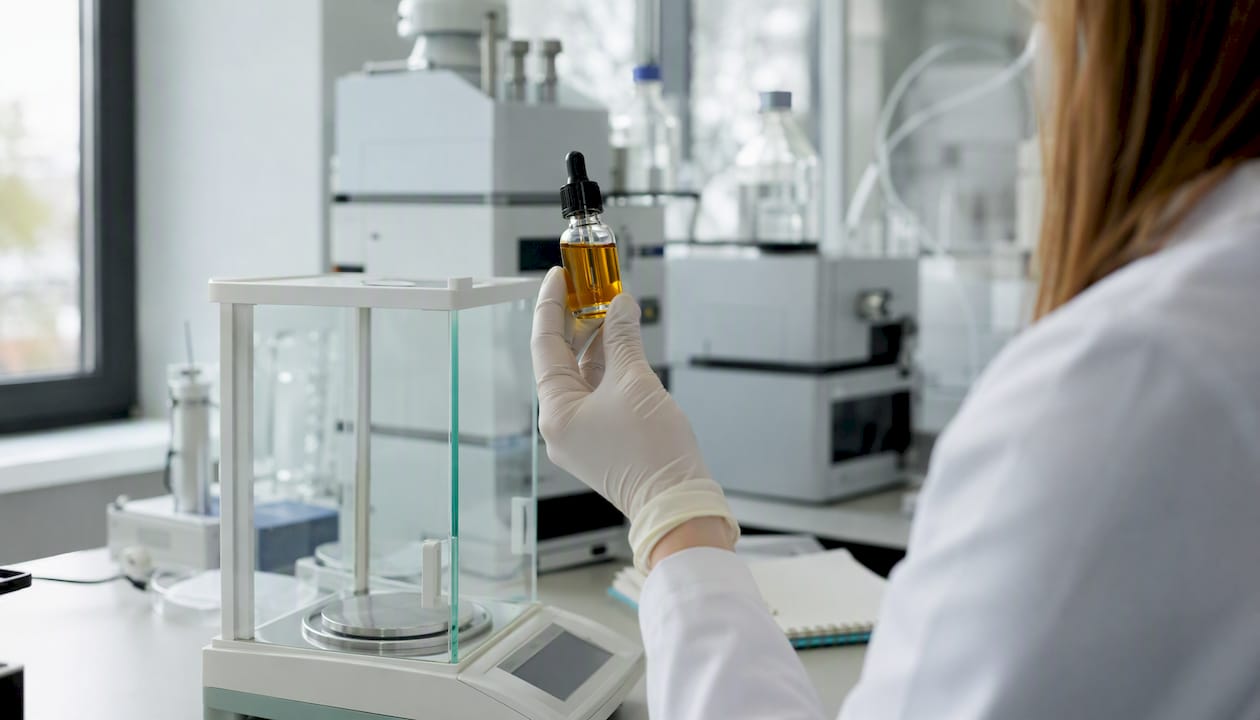
A certificate of analysis (COA) issued by an independent third-party laboratory must include the following information:
| Parameter Analyzed | What it guarantees |
|---|---|
| Complete Cannabinoid Profile | CBD, THC, CBG, CBN, and Other Cannabinoid Levels |
| Residual solvents | No hazardous extraction residues |
| Heavy Metals | Compliance with Regulatory Thresholds (Lead, Cadmium, Mercury, Arsenic) |
| Pesticides | Absence of pesticide residues |
| Method of Analysis | HPLC or GC-MS for reliable results |
For more information on this topic, the guide on pesticides, heavy metals, and solvents in CBD explains how to interpret each parameter in a COA.
Pro tip: When reviewing a COA, always check the limit of detection (LOD) and the limit of quantification (LOQ) for THC. A COA that does not include these technical values is insufficient.
What are the French authorities and international organizations saying?
The official website drogues.gouv.fr serves as the national reference for the legal status of substances and safety recommendations, particularly regarding their combined use with other substances or medications.
Internationally, WADA removed CBD from its list of prohibited substances in 2018. THC and other cannabinoids, however, remain prohibited in competition, with specific threshold rules. For athletes, this distinction is crucial: consuming legal CBD does not guarantee the absence of THC in the body if the product is contaminated.
👉 For athletes:UK Anti-Doping (UKAD) reminds athletes that even though CBD is not banned by WADA, the vast majority of CBD products on the market may contain THC or other banned cannabinoids. The principle of strict athlete liability applies: a positive test result remains the athlete’s responsibility, regardless of the source of contamination. WADA’s explanatory list specifies that the only way to eliminate any risk of an adverse analytical finding (AAF) is to avoid consuming cannabis-derived products.
Practical Tips for Reducing Risks
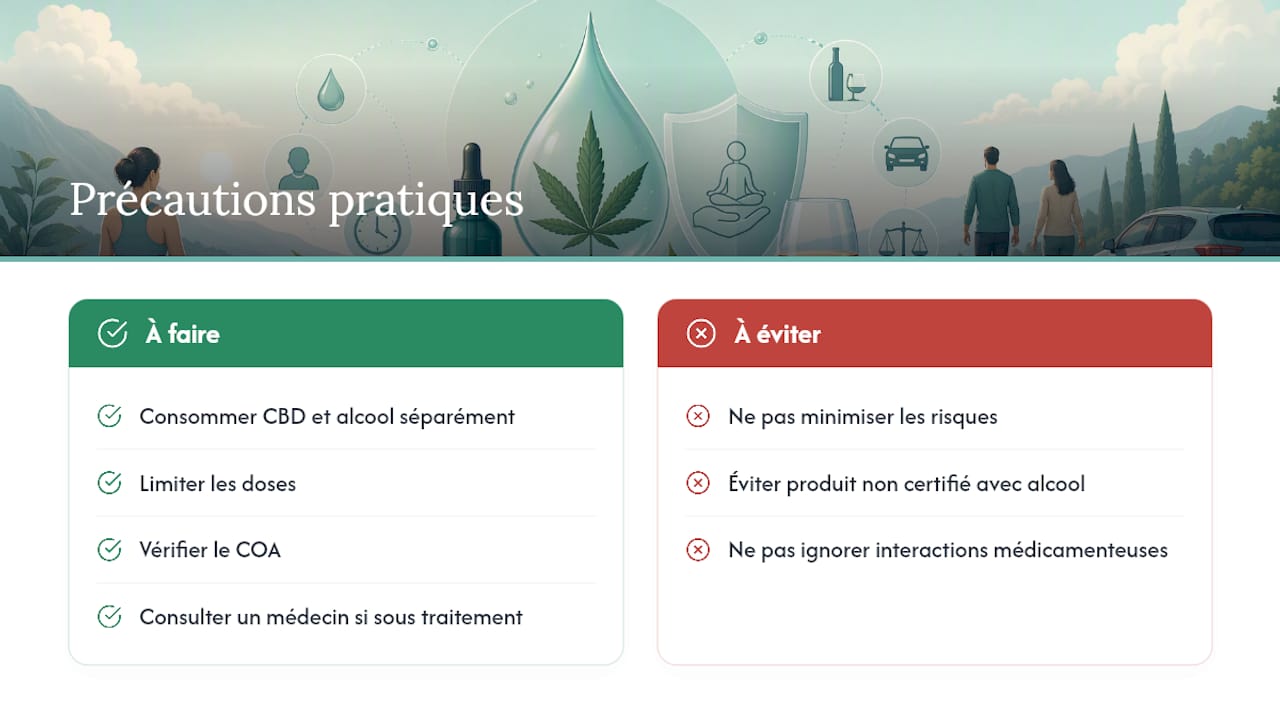
Here are the specific steps to follow to minimize risks when using CBD while drinking alcohol:
- Start with low doses of CBD and do not increase the dose until you have assessed your individual tolerance over several days.
- Space out your doses: If you’re taking CBD oil, wait at least 4 to 6 hours before drinking alcohol—or vice versa. The oil may be absorbed slowly and over an extended period.
- Never drive after combining these two substances, even in small doses.
- Tell your doctor about any CBD use if you are taking medication, before combining anything.
- Check the COA for your CBD product before purchasing to ensure that the THC content is below the legal limit and that there are no contaminants.
- Watch for warning signs: excessive drowsiness, confusion, persistent nausea, palpitations, or general malaise after taking the combination.
- If severe symptoms occur (loss of consciousness, difficulty breathing, severe confusion), call 15 (SAMU) or dial 112 to reach 15 immediately.
For advice on the form of CBD best suited to your situation, keep in mind that the differences between oil, flowers, and capsules directly affect the rate of absorption and, therefore, how quickly you’ll feel the effects.
What Key Studies on the Subject Say
The available scientific evidence on the interaction between cannabidiol and alcohol remains limited, which requires a critical evaluation of the existing findings.
Three common limitations run through all of these studies: the sample sizes are small (often fewer than 20 participants), the CBD doses used in older studies far exceed typical usage levels, and no robust longitudinal study documents the effects of regular combined use over several months or years. The AP-HP’s CBD-OH clinical trial illustrates the growing interest in clinical research on this topic, but its results are not yet available.
Prudence, Quality, and Responsibility: An Editorial Perspective
The temptation to downplay the risks associated with combining CBD and alcohol is understandable: CBD has a reputation for being calming, and alcohol is socially normalized. Yet it is precisely this normalization that leads to the combination being underestimated.
What the available studies show is not so much direct toxicity as unpredictability. Enzyme inhibition via CYP450 does not produce the same effects in everyone. A consumer on anticoagulant medication who adds CBD to a night of drinking is not taking a theoretical risk: they are actually altering the metabolism of their medication, without even knowing it. That is where the real danger lies—not in dramatic toxicity, but in a silent interaction.
The other blind spot concerns product quality. Combining an uncertified product with alcohol means combining two unknowns. Systematically checking a COA isn’t just a purist’s habit—it’s a basic precaution, especially for athletes subject to doping tests.
The practical advice here is simple: if you consume CBD and alcohol, do so separately, in small doses, and use a product whose lab results you have verified. And if you are taking any medication, talk to your doctor first.
CBD products with verifiable lab test results
Choosing a CBD product whose traceability is guaranteed by independent testing effectively reduces the risks discussed in this article: THC contamination, the presence of solvents or heavy metals, and uncertainty about the actual dose of cannabidiol.

Pure-extract-cbd offers a range of products made from organic hemp, each accompanied by certificates of analysis conducted by third-party laboratories. Whether you’re looking for CBD oil or lab-tested flowers, each product lists its complete cannabinoid profile, contaminant levels, and legal compliance. For consumers who want to combine CBD with wellness without taking unnecessary risks, analytical transparency is the first thing to check. Browse all our certified products and review the COAs before purchasing.
Sources
- Interaction Between Cannabidiol and Alcohol in Humans
- CBD Products: What Are They and Can I Take Them? | UK Anti-Doping
- Drugs
- WADA Explanatory List (in the context of prohibited substances)
- Review article on cannabinoid pharmacology (NCBI PMC1554047)
This article provides general information for educational purposes and does not constitute medical advice. Consult a healthcare professional with any questions regarding your personal situation, your treatments, or your substance use.
This article is intended to provide general information and is not a substitute for the advice of a qualified healthcare professional. Consult a qualified healthcare professional about your specific situation before taking any action based on this content.