

Adding CBD to your coffee poses no known risk at moderate doses, but there are some mechanisms worth noting. CBD can slow the body’s elimination of caffeine and prolong its stimulating effects. The real risk stems not so much from the combination itself as from potential drug interactions and low-quality products. Experiment gradually, avoid this combination if you are pregnant, breastfeeding, or undergoing sensitive medical treatment, and monitor how you feel over several days.
In short:
- Consuming CBD and caffeine at the same time can prolong the stimulating effects of caffeine by slowing its elimination by the liver.
- A study shows that 640 mg of CBD reduces the rate at which caffeine is eliminated by about 39%, which may affect the concentration of certain medications.
- It is recommended to start with low doses of CBD—without exceeding 200 mg of caffeine per day—and to closely monitor how you feel over the course of several days.
- People undergoing medical treatment with medications metabolized by CYP450 enzymes should exercise caution, as CBD may affect the effectiveness of these medications.
- The quality of CBD products is essential: choose those with a certified analysis report to avoid contaminants and potentially harmful substances.
Table of Contents
- CBD and Caffeine: How These Two Substances Affect the Body
- What actually happens when you combine CBD and coffee?
- Why CBD Can Extend the Effects of Your Coffee
- How to Try a Coffee-and-CBD Blend Without Any Unpleasant Surprises
- Who should be careful when using CBD and caffeine?
- How to Check the Quality of a CBD Product Before Consuming It
- Editorial Perspective: Tailoring Caution to Your Profile
- Where to Find Reliable CBD Products to Enjoy with Your Coffee
- Sources
- Frequently Asked Questions
CBD and Caffeine: How These Two Substances Affect the Body
Caffeine blocks adenosine receptors in the brain. Adenosine normally builds up throughout the day and signals fatigue to your central nervous system. By occupying these receptors, caffeine delays this sensation and boosts alertness, which explains the energy boost you feel after drinking coffee.
CBD works differently. It does not directly activate the CB1 and CB2 cannabinoid receptors like THC does, but instead modulates several targets at once: serotonin receptors, certain ion channels, and, most importantly, liver enzymes in the cytochrome P450 group. This last point is a game-changer for your morning coffee, since these enzymes are precisely the ones that break down caffeine in the liver.
Two types of interactions can therefore occur. The first is pharmacokinetic: CBD alters the rate at which your body eliminates caffeine. The second is pharmacodynamic: the two molecules act simultaneously on your nervous system—one as a stimulant, the other as a sedative—with the result depending on the dose and individual sensitivity.
What actually happens when you combine CBD and coffee?
The available human data remain limited, but they point to a generally reassuring picture for typical doses. A preliminary study involving 54 young adults tested combinations of 200 mg of caffeine with CBD doses ranging from 25 to 240 mg. The result: no major negative subjective effects were reported in the self-reported measures, whether regarding anxiety, mood, or general sense of well-being.
In practice, several effects are frequently described, with significant variability from person to person:
- Caffeine-induced jitters are sometimes alleviated by CBD, though this is not always the case.
- A stimulating effect that lasts longer than usual if caffeine metabolism is slowed down.
- Digestion that is sometimes perceived as more comfortable, although there is no solid clinical evidence to support this claim at this time.
- Sleep may remain disrupted if the beverage is consumed late in the day, as caffeine remains active for a longer period of time.
This variability can be explained in part by genetic differences in enzyme activity, but also by tobacco use, diet, or the use of other substances, all of which affect the rate of metabolism.
Why CBD Can Extend the Effects of Your Coffee
This is the most scientifically documented point—and probably the most useful one to remember. A clinical study measured what happens when healthy subjects receive a high dose of CBD before taking a cocktail of substances designed to test the activity of several liver enzymes. The result: 640 mg of CBD reduced caffeine clearance by about 39%, meaning that the body takes much longer to eliminate it.
The enzyme in question is called CYP1A2. It breaks down not only caffeine but also several common medications. When CBD slows down its activity, it doesn’t just affect your morning cup of coffee—it can also alter the blood levels of medications that are metabolized through the same pathway.
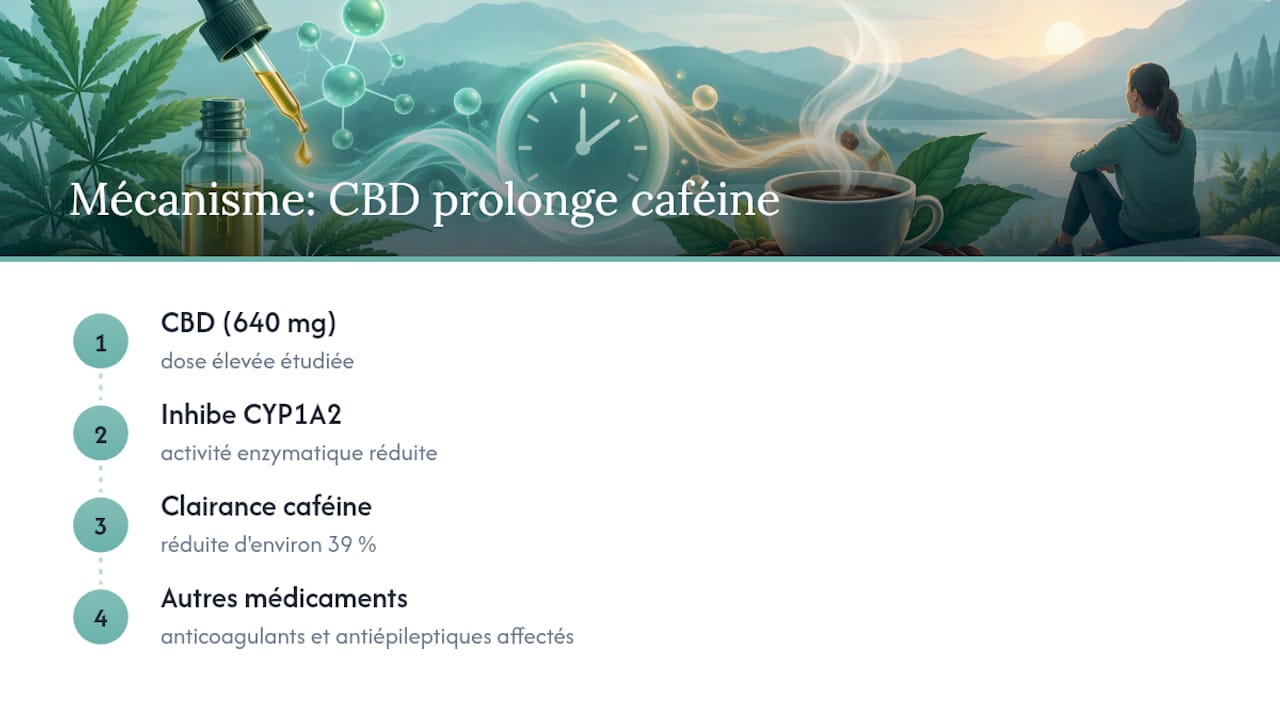
This data comes from a high-dose trial, involving doses far higher than what an occasional user of CBD drops or flowers would consume. However, it has real practical implications for two groups of people: those who take CBD at a consistent dose every day, and those taking medications metabolized by CYP enzymes, particularly certain anticoagulants or antiepileptic drugs. A recent systematic review confirms that these interactions between cannabinoids and drugs with a narrow therapeutic index are well-documented and clinically significant.
How to Try a Coffee-and-CBD Blend Without Any Unpleasant Surprises
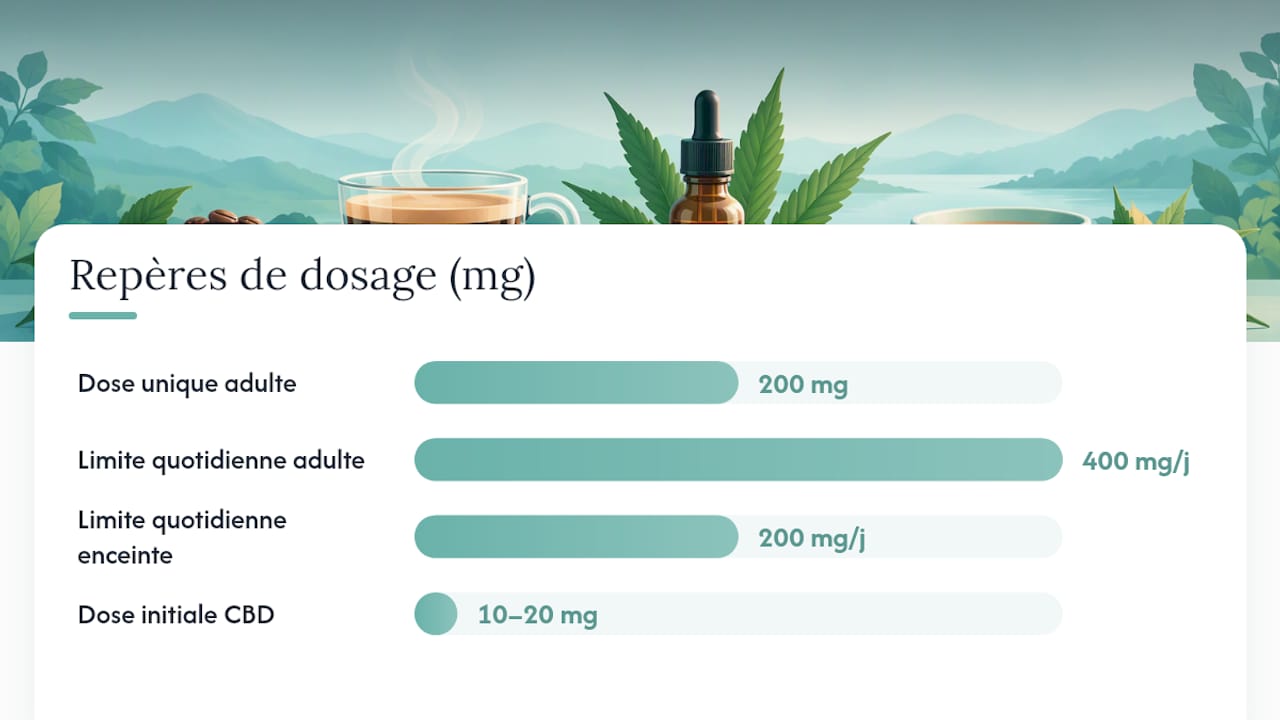
EFSA has established clear guidelines for caffeine: a single dose of up to 200 mg is safe for a healthy adult, and 400 mg per day is the general upper limit that should not be exceeded. For pregnant women, this daily limit drops to 200 mg. These thresholds provide a useful framework before adding CBD to the equation.
Here is a step-by-step approach to testing the combination without putting a strain on your body:
- Start with a low dose of CBD—between 10 and 20 mg—mixed into your usual cup of coffee.
- Pay attention to how you feel over the next 24 to 48 hours: sleep, digestion, energy levels, and anxiety.
- Spread out your coffee intake if you drink several cups throughout the day, rather than having them all in the morning.
- Adjust your CBD dose gradually, without ever exceeding the recommended caffeine limit.
- Avoid trying this before driving or engaging in any activity that requires sustained attention.
Pro tip: Keep a simple journal noting the time you took it, the CBD dose, the number of coffees, and how you generally feel. After a week, recurring patterns (tiredness at the end of the day, improved concentration, nervousness) become much easier to spot than if you were relying solely on your memory. To learn more about the available formats, this guide to using CBD oil details step-by-step dosages tailored for beginners.
Who should be careful when using CBD and caffeine?
French authorities have stepped up their vigilance in recent years. The ANSM reports an increase in cases of poisoning linked to CBD products containing other substances—a problem distinct from the CBD-coffee blend itself but one that affects the same consumer population.
Certain classes of medications require special caution because they are metabolized by the same liver enzymes as CBD and caffeine:
- Anticoagulants such as warfarin, which have a narrow therapeutic range.
- Antiepileptic drugs, where fluctuations in blood levels can have clinical consequences.
- Immunosuppressants, which are sensitive to even the slightest metabolic changes.
- Treatments for anxiety or sleep disorders, the effects of which may add to those of CBD.
If you experience an unusual side effect, the first step is to stop using the product and contact a healthcare professional. Submitting a pharmacovigilance report also helps document the issue and better understand these interactions, which are still not well understood. Our article on the possible side effects of CBD explains this process step by step.
How to Check the Quality of a CBD Product Before Consuming It
A reliable certificate of analysis (COA) specifies the exact CBD and THC content and confirms the absence of residual solvents, heavy metals, and pesticides.
The risk is not merely theoretical. A report byANSES reveals that a significant proportion of the CBD products tested had a composition different from what was advertised, sometimes containing synthetic cannabinoids that are far more potent and dangerous than the expected CBD. These molecules, such as HHC-O or certain derivatives similar to H4CBD, cause unpredictable effects that have nothing to do with the intended ones. Our guide on contaminants in CBD details the values to look for on a COA.
Editorial Perspective: Tailoring Caution to Your Profile
If you’re concerned about anxiety, start with very low doses of CBD and keep your coffee intake consistent to isolate the effects. If you’re a regular coffee drinker, pay close attention to how long the stimulating effects last toward the end of the day. If you’re undergoing medical treatment, the question isn’t whether you “can” try it, but whether you should talk to your doctor first.
Research on this combination is still evolving, and a logbook remains your best tool until more comprehensive data becomes available.
— Steven
Where to Find Reliable CBD Products to Enjoy with Your Coffee
Pure-extract-cbd prioritizes transparency over vague promises: every product is lab-tested, with certificates of analysis available to verify that THC levels do not exceed the legal threshold and that the products are free of unwanted contaminants.

If you’re looking to incorporate CBD into your coffee routine with confidence, opt for pre-measured formats rather than guessing the amount. 10-mg CBD capsules are a good choice for a gradual introduction, while the full range of flowers, resins, oils, and extracts allows you to tailor the format to your needs once you have a better understanding of your tolerance. Check the certificate of analysis for each product before purchasing, and always start with the lowest dose listed on the product label.
This article is intended to provide general information and is not a substitute for the advice of a qualified healthcare professional. Consult a qualified healthcare professional about your specific situation before taking any action based on this content.
Sources
- Evaluation of Cytochrome P450-Mediated Cannabinoid-Drug Interactions in Healthy Adult Participants
- Caffeine | EFSA
- A Preliminary Investigation of the Combined Effects of Cannabidiol and Caffeine
- Systematic Review of Drug-Drug Interactions Involving Delta-9-Tetrahydrocannabinol, Cannabidiol, and Cannabis
- Increase in Poisonings Caused by CBD Products Containing Other Substances | ANSES
Frequently Asked Questions
What are the main contraindications for CBD?
CBD is not recommended during pregnancy, while breastfeeding, or when taking anticoagulants, antiepileptic drugs, or immunosuppressants, as it interacts with the CYP450 enzymes that metabolize these medications. Always seek medical advice before using CBD if you are undergoing long-term treatment.
When is the best time to take CBD with coffee?
Taking CBD in the morning is a good option if you’re looking to minimize caffeine-related anxiety without disrupting your sleep, provided you stick to a low dose of CBD. Avoid taking it late in the day, as CBD can prolong the stimulating effects of caffeine longer than expected.
Is coffee not recommended if you're experiencing dizziness?
Caffeine can worsen certain types of vascular dizziness in sensitive individuals, as it stimulates the nervous system and can affect blood pressure. If you experience recurrent dizziness, reduce your coffee intake and avoid combining it with high doses of CBD without medical advice.
Which CBD product should you choose for sciatica?
No CBD product has been officially approved for sciatica, and clinical evidence regarding nerve pain remains limited to date. Those interested often turn to controlled-dose oils or capsules as a supplement to conventional medical care—never as a replacement for it.
How much do CBD products cost at Pure-extract-cbd?
Current, detailed pricing is available directly on the Pure-extract-cbd website.



