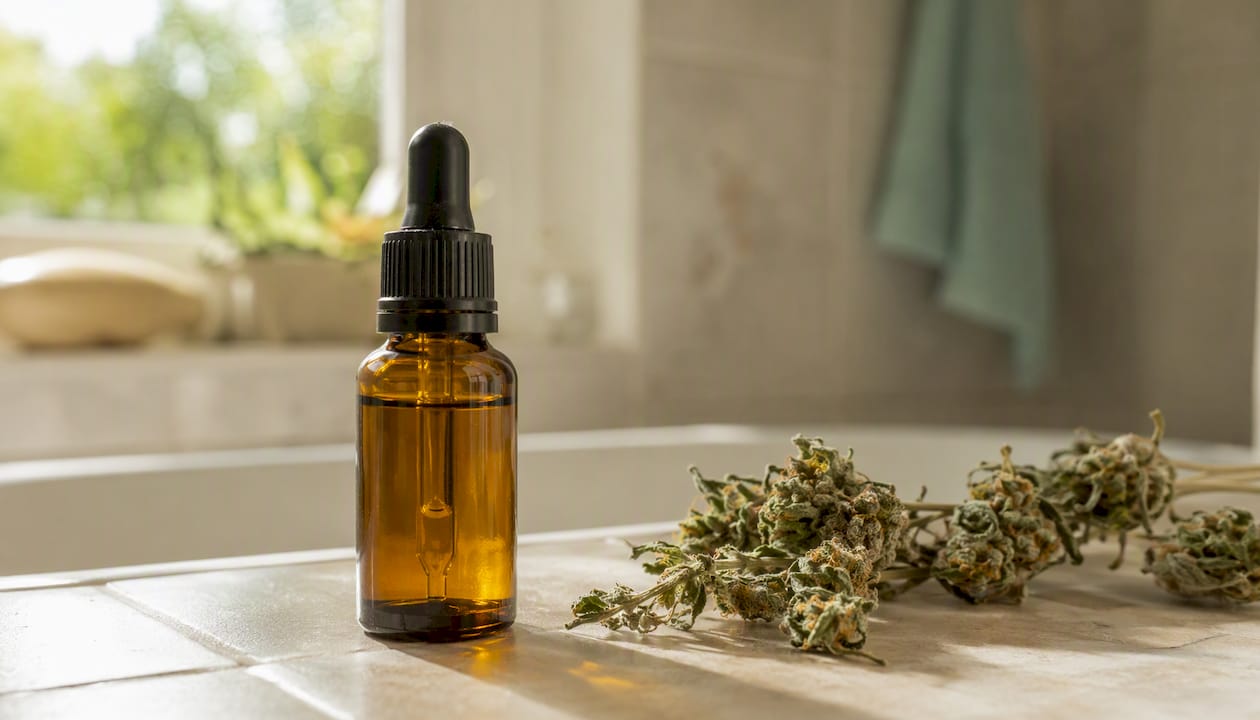
CBD is not an approved treatment for acute migraine attacks: no rigorous studies have confirmed its effectiveness when used alone. The most robust data pertain to an inhaled THC+CBD blend, while isolated cannabidiol shows potential benefits primarily in prevention and for certain associated symptoms (neck stiffness, nausea, anxiety).
Three key points to consider regarding the available evidence: a controlled trial demonstrated the superiority of a spray containing 6% THC and 11% CBD over a placebo; data on CBD alone remain largely preclinical; and any purchase should include a product accompanied by a certificate of analysis from an independent laboratory.
Before attempting anything, here are the steps you can take to minimize risks:
- Talk to your doctor or neurologist about this, especially if you are already taking maintenance medication.
- Start with a low dose and increase it gradually.
- Keep a migraine diary for 8 to 12 weeks to objectively assess the effect.
Key Points
CBD isolate has not been shown to be more effective than a placebo in treating acute migraine attacks, unlike the THC+CBD combinations tested in clinical trials.
| Point | Details |
|---|---|
| No evidence of an acute crisis | CBD alone has not outperformed a placebo in the clinical trials available to date. |
| Plausible, but unproven mechanisms | Anti-inflammatory effects, muscle relaxation, and endocannabinoid modulation remain hypotheses currently under investigation. |
| 8- to 12-week trial protocol | Start with a low dose, keep a migraine diary, and gradually adjust the dose under medical supervision. |
| Monitor interactions | Because cytochrome P450 is shared with triptans and antiepileptic drugs, this requires discussion with the prescribing physician. |
| Choose a tested product | Pure-extract-cbd offers oils and flowers accompanied by certificates of analysis from an independent laboratory. |
Table of Contents
- What is a migraine, and how is it different from a regular headache?
- What is CBD, and in what forms is it available?
- What do studies on CBD and migraines really say?
- How might CBD affect the mechanisms underlying migraines?
- How can you safely try CBD for migraines?
- What are the risks, side effects, and drug interactions you should be aware of?
- What should you check before buying a legal CBD product?
- What should you keep in mind before getting started?
- Pure-extract-cbd, to try CBD with confidence
- Frequently Asked Questions About CBD and Migraines
- Sources
What is a migraine, and how is it different from a regular headache?
Migraines are characterized by a throbbing pain, often confined to one side of the head, that can last from a few hours to three days. They are frequently accompanied by nausea, sensitivity to light, and sometimes a visual aura that precedes the attack by a few minutes.
Triggers vary from person to person, but some are common:
- stress and hormonal fluctuations;
- too little or too much sleep;
- certain foods or prolonged fasting;
- neck muscle tension.
This is where the distinction matters: a tension headache, caused by muscle contraction, responds differently than a migraine, which involves activation of the trigeminal-vascular system. CBD, through its purported muscle-relaxing effect, may help alleviate the tension associated with migraines, but it is not a substitute for a triptan during a severe attack.
What is CBD, and in what forms is it available?
Cannabidiol is one of the main compounds extracted from hemp, along with THC, from which it differs in that it has no psychoactive effects in its pure form. It acts on the endocannabinoid system without causing the intoxication associated with THC.
There are several types, each with its own advantages:
- Sublingual oil: gradual absorption, precise drop-by-drop dosing, suitable for daily use.
- Capsules: a fixed and convenient dosage, but the effect is delayed because the drug must first be digested.
- Flowers and resins: fast-acting when vaporized, useful for occasional tension headaches, but less well-studied for migraines.
- Topical treatments: target localized pain, such as neck stiffness, without significant systemic absorption.
Before buying, three criteria really matter: a recent certificate of analysis (COA), the actual CBD and THC content confirmed by a third-party laboratory, and the absence of pesticides, heavy metals, or residual solvents. The difference between full-spectrum, broad-spectrum, and isolate also affects the perceived effect, with some users reporting greater benefits from broad-spectrum extracts due to the entourage effect of the other cannabinoids.
Pro tip: When looking at a COA, check the date of analysis (less than twelve months), the name of the independent laboratory, and compare the CBD concentration listed on the label with the measured concentration: a discrepancy of more than 10% should raise a red flag.
What do studies on CBD and migraines really say?
The strongest evidence does not pertain to CBD alone. A randomized clinical trial tested an inhalation formulation combining 6% THC and 11% CBD against a placebo: at the two-hour mark, a significantly higher proportion of participants reported pain relief and the resolution of bothersome symptoms compared to the placebo (controlled trial published on PubMed). The benefits persisted for up to 24 and 48 hours.
A second crossover trial, published as a preprint, confirms this pattern: the THC+CBD combination outperformed the placebo in terms of pain relief and complete pain resolution, whereas CBD-dominant treatment alone was not superior to the placebo at the two-hour mark in the primary analyses. This finding carries significant weight: the most robust positive results are based on a combination with THC, not on cannabidiol alone.
A review of the literature on phytocannabinoids concludes that these compounds “appear to reduce the severity and, in some cases, the frequency of migraines in certain patients,” while noting that robust clinical evidence is still lacking and that additional controlled trials are needed.
On the preclinical front, an animal study using a nitroglycerin model shows that CBD reduces trigeminal hyperalgesia and decreases the production of CGRP—a peptide directly involved in triggering migraine attacks—as well as certain inflammatory markers. These results are limited to rodents and do not guarantee the same effect in humans.
The boundaries need to be clearly defined:
- Most positive test results are for a THC+CBD mixture, not CBD alone.
- No large-scale randomized controlled trial has yet validated CBD alone for the treatment of acute attacks.
- Observational studies on isolated CBD often suffer from small sample sizes and a risk of reporting bias.
A public-facing summary from Harvard Health sums up the situation well: small improvements in pain are sometimes reported, but the variability in products and dosages makes it difficult to draw any general conclusions.
How might CBD affect the mechanisms underlying migraines?
Several biological mechanisms have been proposed to explain a potential effect of CBD, though none have been definitively confirmed in humans.
- Modulation of the endocannabinoid system: CBD indirectly influences the CB1 and CB2 receptors, which are involved in pain regulation.
- Anti-inflammatory effect: It may reduce certain pro-inflammatory cytokines, thereby limiting the neurogenic inflammation associated with seizures.
- Reduction in CGRP: Observed in animal models, this decrease appears to directly affect a central mechanism of migraine.
- Muscle-relaxing and anxiolytic effects: helpful for neck tension and stress, two common triggers.
These mechanisms primarily target the factors that accompany or contribute to the crisis, not the crisis itself once it has begun. A simple diagram summarizes the hypothesis: stress or muscle tension triggers hyperexcitability of the trigeminovascular system, which CBD is thought to alleviate upstream rather than downstream.
How can you safely try CBD for migraines?
A structured protocol helps avoid false hopes and unpleasant surprises. Here's the process to follow:
- Consult your doctor or neurologist before starting, especially if you are already on maintenance therapy.
- Choose a lab-tested product with a recent COA and a spectrum tailored to your needs.
- Start with a low dose, around 2 to 5 mg per day, and then gradually increase it over two to four weeks.
- Evaluate the results over 8 to 12 weeks before concluding whether there is an effect or not.
The doses observed in studies range from a few milligrams to 100 mg per day in some observational cohorts for prophylactic use, but these figures are only indicative and vary widely depending on body weight, metabolism, and individual sensitivity.
When it comes to timing, there are two opposing approaches: daily use (oil or capsules) is intended for long-term prevention, while sublingual or spray administration at the onset of prodromal symptoms is intended for occasional use, which is less supported by current evidence for CBD alone.
- Record the frequency, intensity, and duration of each episode.
- List the medications you are taking and the CBD dosage used.
- Report any side effects, even minor ones.
What are the risks, side effects, and drug interactions you should be aware of?
The most common side effects remain mild: drowsiness, fatigue, and mild digestive problems are the most frequently reported. These effects should be monitored, and if they are unusual or severe, they should be reported to the pharmacovigilance authorities.
The most technical issue concerns drug interactions. CBD is metabolized by cytochrome P450, the same enzymatic pathway as many migraine medications: certain triptans, antiepileptic drugs used for prevention, and beta-blockers. Consulting with the prescribing physician, along with laboratory monitoring if the treatment is long-term, remains the only prudent approach.
Dr. Stephen Silberstein of the American Migraine Foundation’s Headache Center points out that there is no solid evidence that CBD alone treats an acute migraine attack, but that it may help with certain associated symptoms, such as neck pain or nausea, provided that pure, tested products are used.
Another underestimated risk: medication-overuse headache. As with any pain reliever, taking it too frequently in response to every flare-up can, paradoxically, perpetuate the pain cycle. A maintenance regimen, rather than taking it multiple times a day, helps limit this risk. Also, avoid driving after taking THC, and monitor your blood pressure if you are undergoing chronic treatment at the same time.
What should you check before buying a legal CBD product?
In France, only products that have no psychoactive effects and comply with the legal THC limit may be sold. This distinction between THC and CBD determines whether the product you purchase is legal.
Before placing an order, the following checklist will help you avoid unpleasant surprises:
- A recent, legible COA issued by an independent laboratory.
- CBD and THC levels that match what is stated on the label.
- Tests for pesticides, heavy metals, and residual solvents.
- Hemp of clearly identified origin, ideally organic.
Pro tip: Opt for a tested broad-spectrum or full-spectrum oil rather than a cheap, uncertified isolate. The entourage effect of secondary cannabinoids often plays a role in the overall experience, whereas an untested product may contain undeclared THC.
What should you keep in mind before getting started?
CBD is effective for prevention and for managing symptoms associated with migraines (tension, nausea, anxiety), but not as a standalone treatment for acute attacks: the strongest evidence supports its use in combination with THC.
Three practical steps before you begin:
- Talk to your neurologist about this, especially if you're already on medication.
- Conduct a structured trial using a migraine diary over 8 to 12 weeks.
- Keep your approved medications (triptans, anti-inflammatory drugs) on hand in case of a severe attack, and seek emergency care if the attacks become more severe or change in nature.
What the CBD Race Against Migraines Really Reveals
The hype surrounding CBD for migraines is often based on a confusion—whether intentional or not—between the results obtained with THC combined with CBD and those from CBD used alone. The two are not the same, and conflating them in marketing messaging does a disservice to patients seeking an honest answer.
What strikes me is that the most promising avenue in the short term may not be the direct analgesic effect, but rather its impact on the factors that exacerbate attacks: muscle tension, disrupted sleep, and chronic anxiety. A reader expecting CBD to have an effect comparable to that of a triptan will be disappointed. Those who incorporate it as a tool for managing migraine symptoms, alongside medical care, are more likely to derive real benefit from it.

Pure-extract-cbd, to try CBD with confidence
Pure-extract-cbd offers broad-spectrum oils in 5%, 10%, and 20% concentrations, each accompanied by a certificate of analysis from an independent laboratory, allowing you to begin your testing protocol without having to guess what’s actually in your bottle.

For a cautious first try as a preventive measure,the 5% CBD/CBG oil offers a gradual dosage that’s easy to adjust drop by drop. If you prefer faster relief from neck tension through vaporization, CBD Fruit flowers are a tested and compliant alternative. Each product page details the hemp’s origin, spectrum, and lab results, so you know exactly what you’re consuming even before you place your order.
Want to start your migraine journal with a reliable product? Check out our line of 10% CBD/CBG oils and order today to begin your 8-week tracking period.
Frequently Asked Questions About CBD and Migraines
Can CBD really relieve an ongoing migraine attack?
Current evidence does not show that CBD alone is clearly superior to a placebo during an acute attack. Positive results have mainly been observed with formulations containing THC.
How long does it take to see an effect on the frequency of migraines?
Allow at least 8 to 12 weeks of regular use before assessing its preventive effect, as this is the time it takes for the body to adjust to a steady dose.
Can CBD replace my long-term migraine treatment?
No. There is no evidence to support stopping an approved treatment and replacing it with CBD. It can be used as a supplement under medical supervision.
Which form of CBD is best for migraines?
Sublingual oil is suitable for daily, long-term use, while vaporizing a CBD-infused tobacco substitute acts more quickly but has been less extensively studied for this specific use.
Is CBD dangerous when taken with my migraine medications?
It may interact with certain triptans, antiepileptic drugs, or beta-blockers via cytochrome P450. It is essential to consult your doctor before using CBD in combination with these medications.