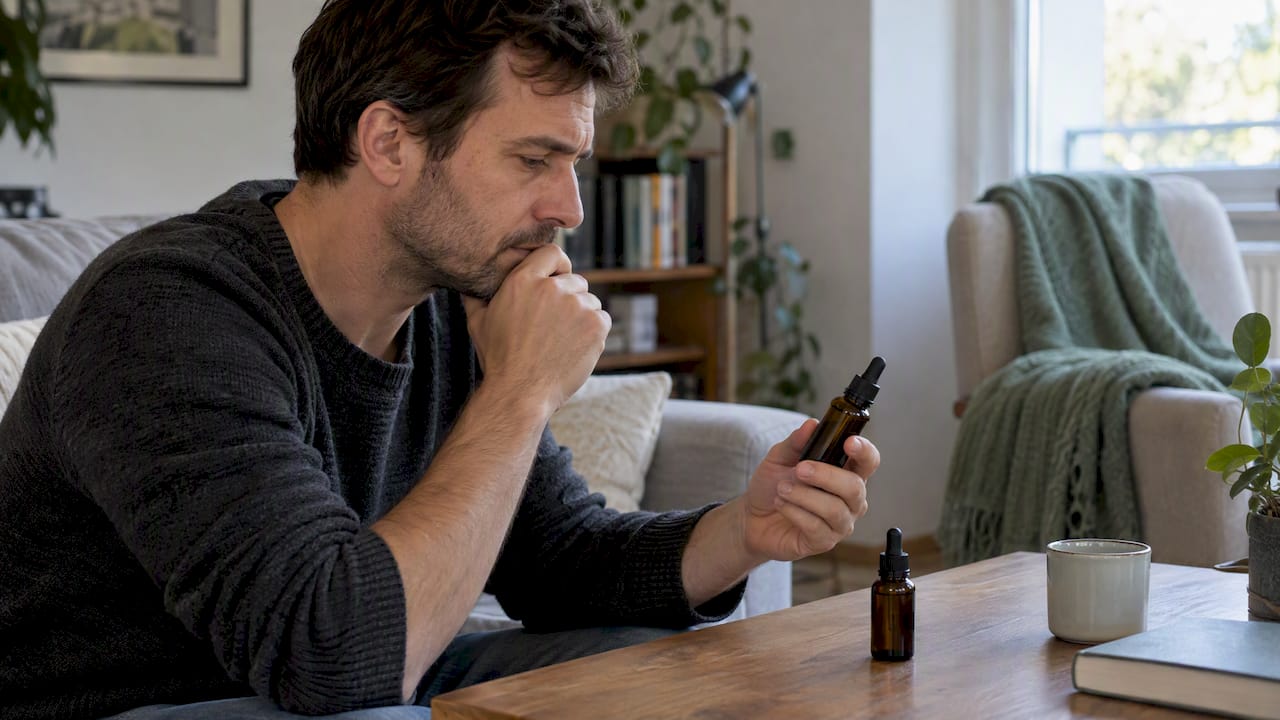
Yes, CBD can support post-workout recovery, particularly in two specific areas: perceived pain and sleep quality. However, scientific evidence remains limited regarding muscle healing and direct performance. Effectiveness depends largely on the quality of the product: it should contain no detectable THC and be taken in a cautious, gradual dosage. In practice, a sublingual oil or a topical balm are the most suitable formats to start with.
In short:
- CBD primarily affects perceived pain and sleep quality; there is no solid evidence that it directly improves performance or muscle recovery.
- Its effectiveness depends on the quality of the product—specifically, the absence of THC and careful dosing—and on formats such as sublingual oil or topical balm.
- Research confirms improvements in sleep and anxiety, but there is still limited evidence to demonstrate an ergogenic effect or an effect on muscle healing.
- For optimal recovery, it is recommended to take CBD within two hours after exercise or before bedtime, choosing the form that best suits your goal.
- Verifying a product’s traceability and compliance through a certificate of analysis is essential to avoid any risks, particularly during competition or regular use.
Table of Contents
- What does science say about CBD and sports recovery?
- When and How to Use CBD After a Workout
- Oil, balm, capsule, or flower: Which form is best for which use?
- How to Measure Out CBD Without Making a Mistake
- CBD, Anti-Doping, and Interactions: What Every Athlete Needs to Know
- A Checklist Before Buying a CBD Product for Recovery
- Three Practical Routines for Incorporating CBD into Your Recovery
- What You Need to Know Before Getting Started
- Find Tested CBD Products for Your Sports Recovery
- Learn More About CBD and Recovery
- Sources
What does science say about CBD and sports recovery?
Cannabidiol acts on the endocannabinoid system, a network of receptors (notably CB1 and CB2) that regulates pain, inflammation, sleep, and anxiety. By acting on CB2 receptors, which are found in high concentrations in immune cells, CBD appears to modulate the inflammatory response without causing the psychoactive effects associated with THC. It is this mechanism that has fueled the sports world’s interest in the compound.
A narrative review published on PMC provides a good summary of the current state of knowledge: CBD has promising anti-inflammatory, analgesic, and anxiolytic properties, but the data collected from athletes remain limited and heterogeneous. The authors explicitly call for more randomized controlled trials before drawing definitive conclusions about muscle recovery.
This methodological caution is reflected in several recent reviews. An analysis published by Gospi confirms that CBD affects inflammation and sleep, but that, to date, there is no robust evidence establishing a direct ergogenic effect—that is, a measurable improvement in performance itself.
Three limitations consistently emerge in these studies:
- Samples of participants that are often small and rarely representative of elite athletes.
- Dosage protocols vary from one study to another, which prevents any direct comparison.
- A lack of long-term monitoring of complete training cycles.
What research currently confirms most strongly is the effect of CBD on sleep and anxiety. A clinical trial involving a 300 mg oral CBD formulation showed a subjective improvement in sleep compared to a placebo, a finding reported in several reviews on athletic recovery. Better-quality sleep remains one of the best-documented factors in recovery across all sports.
Regarding perceived pain, particularly muscle soreness associated with microtrauma (the so-called DOMS), the findings are encouraging but preliminary. As for tissue healing itself or measurable performance gains, the current literature does not provide a definitive answer.
When and How to Use CBD After a Workout
The timing of the lift depends on the desired goal. There are two distinct approaches, and confusing them is the most common mistake among beginner athletes.
- For inflammation and perceived pain: take it within two hours of exercise, when muscle discomfort begins to set in. This is the window of opportunity when CBD’s local or systemic effects are most effective.
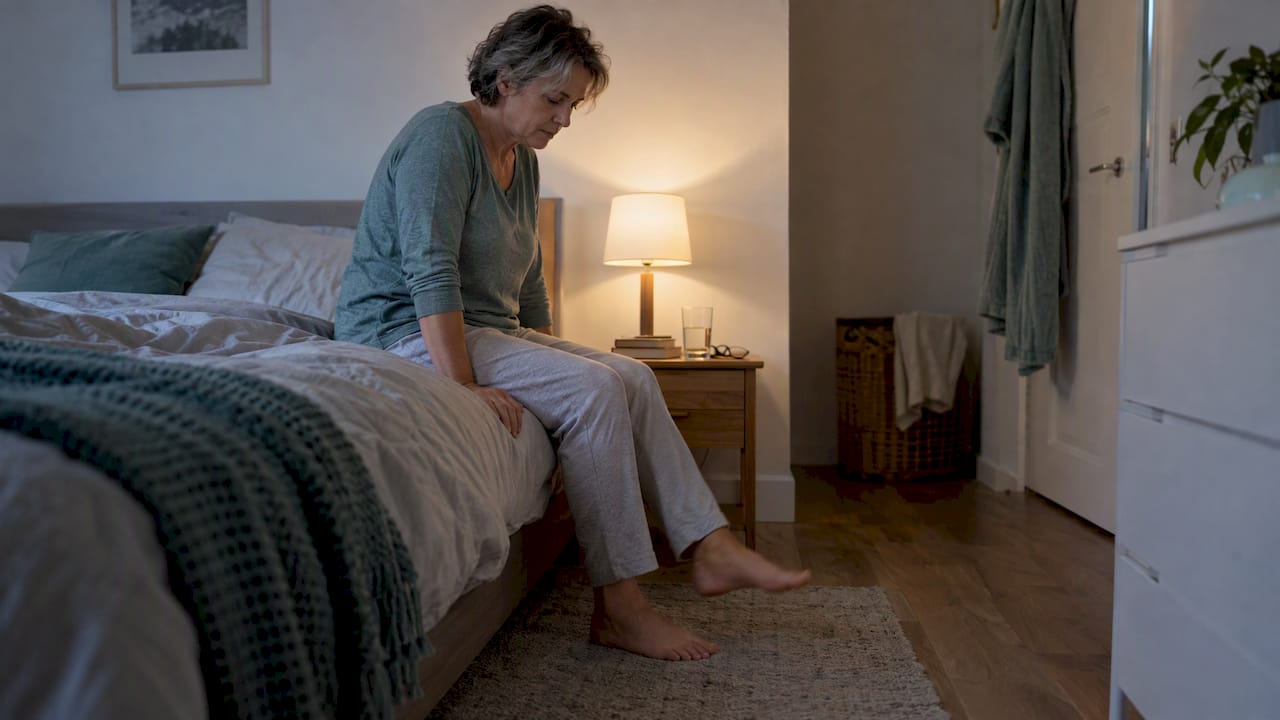
- To promote sleep, take the product late in the evening, about thirty to sixty minutes before bedtime. This is the use best supported by current data.
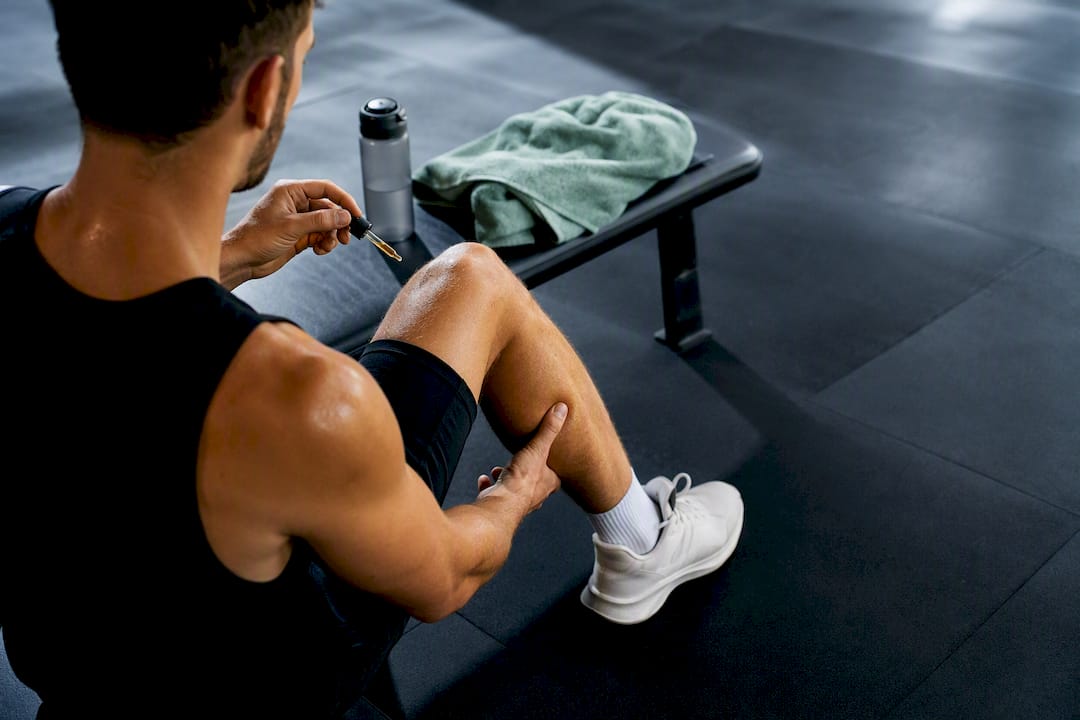
- For localized pain (knee, calf, lower back), a topical balm applied directly to the affected area is more effective than an oral medication, which has a more diffuse effect.
- For rapid systemic action, sublingual oil—applied under the tongue—is absorbed more quickly than when taken through the digestive tract, making it suitable for immediate post-workout use.
The capsule form, which provides slower release, is better suited for a consistent daily routine than for occasional use after an intense workout.
Pro tip: Always start with the lowest dose listed on the label, even if you’re an experienced, muscular athlete. People respond to CBD very differently, and gradually increasing the dose helps you identify your personal threshold without wasting product or missing a warning sign from your body.
Avoid smoking (smoked flowers) if your goal is to improve respiratory and cardiovascular function: inhaling smoke is counterproductive for athletes, regardless of the cannabinoid consumed.
Oil, balm, capsule, or flower: Which form is best for which use?
Each format addresses a different need, and the choice depends primarily on the nature of the discomfort to be relieved rather than on a general preference for CBD.
- Sublingual oil offers good bioavailability and relatively rapid onset of action, making it a sensible choice after a full workout, when fatigue affects the entire body rather than a specific area.
- Balms and topical treatments target a specific area. Preliminary studies show signs of effectiveness in relieving localized muscle soreness, particularly among runners and strength athletes, according to a specialized guide from L’Atelier Gym. The practical advantage: you can massage the area directly while applying the product, which adds a mechanical benefit to the cannabinoid’s effect.
- Capsules provide a more gradual release, making them suitable for those seeking a regular routine rather than a one-time solution for acute pain. Their drawback: they take longer to take effect, which isn’t ideal for immediate relief after a workout.
- Flowers and sprays allow for very rapid absorption, but they pose two problems for athletes: a respiratory risk associated with repeated inhalation, and traceability that can sometimes be more difficult to verify depending on the production method.
In practice, many users combine several formats rather than choosing just one. A topical treatment for DOMS combined with a sublingual oil in the evening addresses the two most common needs at the same time: targeted pain relief and sleep.
How to Measure Out CBD Without Making a Mistake
There is no one-size-fits-all approach to sports recovery: a person’s needs vary depending on their weight, individual sensitivity, and goals. A gradual, three-step approach remains the safest.
- Trial period: Start with the minimum dose indicated on the product for five to seven days, noting how you feel (sleep, pain, digestion).
- Adjustment phase: If the effect is still insufficient, increase the dose slightly, in small increments, without ever doubling the dose all at once.
- Stabilization phase: Once the effective dose has been determined, maintain that dose for several weeks before considering any changes.
Certain signs should serve as a warning and may warrant reducing or stopping use: marked daytime drowsiness, persistent digestive problems, or an unusual decrease in alertness during training.
Pro tip: Keep a simple logbook noting the dose, the time you took it, and a note about your sleep or pain the next day. This is the best way to distinguish a genuine effect of CBD from a mere coincidence related to your training load.
If you are taking medication, you should exercise even greater caution: CBD can interact with certain CYP450 liver enzymes, which may alter the effectiveness of several common medications, as noted in the narrative review on CBD and sports recovery. Talk to your doctor before combining CBD with long-term medication, regardless of your fitness level.
CBD, Anti-Doping, and Interactions: What Every Athlete Needs to Know
Cannabidiol itself is no longer considered a prohibited substance in sports since the World Anti-Doping Agency removed it from its list in 2018. THC, on the other hand, remains strictly prohibited in competition, and that is where the real risk lies for an athlete affiliated with a federation.
The problem does not stem from the CBD molecule itself, but rather from the varying quality of products sold online. Several independent analyses show that some CBD products on the market may contain more THC than indicated on the label, exposing users to the risk of testing positive, according to a recent review on CBD and sports.
Three habits can effectively reduce this risk:
- Always require a certificate of analysis (COA) issued by an independent laboratory, ideally one accredited to the ISO/IEC 17025 standard.
- Prioritizing CBD isolates in competitive settings—a recommendation shared by several federations and echoed in Gospi’s analysis—because, in theory, they contain no traces of THC, unlike full-spectrum products.
- Tell your sports doctor if you are taking CBD, especially if you are undergoing long-term treatment, due to the liver interactions mentioned above.
For an amateur athlete not subject to doping tests, this risk remains theoretical. For a licensed competitive athlete, it becomes a selection criterion in its own right, just as important as the dosage itself.
A Checklist Before Buying a CBD Product for Recovery
A good product is recognized first and foremost by its transparency. Here are the points you should always check before making a purchase, regardless of the format you choose:
- Is the certificate of analysis (COA) available, up-to-date, and issued by a laboratory independent of the manufacturer?
- Is the THC level listed as "not detectable" or within the European legal limit?
- Does the spectrum match your situation: an isolate for competition, or a broad-spectrum or full-spectrum product for unregulated recreational use?
- Is the hemp organically grown, with its origin and traceability clearly indicated?
- Does customer service respond quickly to technical questions about ingredients or dosage?
| Criteria | Why It's Important | Recommended skill level |
|---|---|---|
| Certificate of Analysis (COA) | Confirms the absence of detectable THC and that the CBD content matches the stated level | Essential for all job profiles |
| Spectrum (isolate, broad, complete) | Determines the residual risk of trace amounts of THC | Isolation for Licensed Athletes |
| The Origin of Hemp | Affects the quality and the presence of contaminants | Recommended European organic hemp |
| Traceability and Communication | Demonstrates the brand's overall credibility | Published and accessible analyses |
These checks take just a few minutes and help avoid costly disappointments, whether from an ineffective product or, worse, a compromised doping test. The educational pages on a specialized website—such as those dedicated to the benefits of CBD for athletes—allow you to learn more about these criteria before making your first purchase.
Three Practical Routines for Incorporating CBD into Your Recovery
Here are three simple training plans that you can adapt to fit your routine and athletic schedule.
- After a strength training session: Apply a topical balm to the muscle groups you worked within one hour of your workout, then take a sublingual oil 30 minutes before bedtime to support restful sleep.
- During a multi-day endurance training block (training camp, trail running or marathon training), take one capsule with a consistent dose each evening, and be sure to pay special attention to hydration, which remains the most important factor in recovery from this type of exertion.
- The day before a competition, keep it simple: use a low dose, stick exclusively to isolate products, and make sure the COA is up to date. Keep a record of the brand and lot number in case of a test, and avoid any new products that haven't been tested before.
Pro tip: Never try a new product or a new dosage the day before an important event. Save testing for regular training weeks, well in advance of any deadlines, to give your body time to reveal any potential side effects.
What You Need to Know Before Getting Started
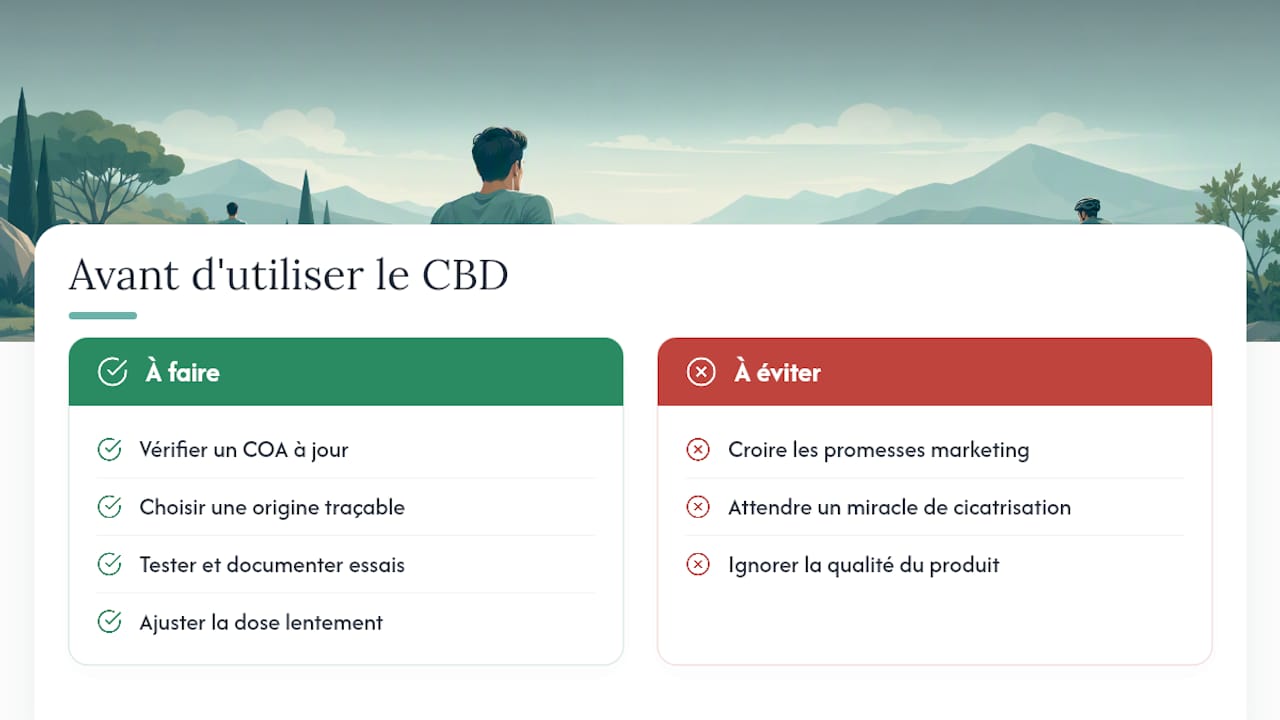
CBD isn’t a miracle cure, and I think that’s exactly what makes it credible. The best available evidence points to a real effect on sleep and perceived pain, not to some magical acceleration of muscle healing. It’s a nuance that a lot of marketing rhetoric wrongly overlooks.
The real factor that determines whether your experience will be positive isn't the molecule itself, but the quality of the product you're buying. An up-to-date COA, traceable origin, and customer service capable of answering technical questions often speak volumes more than a promise of effectiveness. Document your own trials, make adjustments gradually, and consult a healthcare professional if you’re undergoing treatment or are a senior athlete.
— Steven
Find Tested CBD Products for Your Sports Recovery
Once the quality criteria have been identified, the question of which product to choose remains. A range of products made from organic hemp is available, backed by independent laboratory tests that guarantee compliance and the absence of detectable THC—which is important for any athlete concerned about both recovery and regulatory compliance.

To get started, the page dedicated to CBD oil consumption explains the best practices for dosing and timing mentioned above. You can also browse the entire range of CBD products directly to compare formats based on your recovery goals. In any case, it’s advisable to start by purchasing a small amount to test your tolerance, to always check the provided certificate of analysis, and to contact customer service if you have any doubts about the traceability of a batch.
Learn More About CBD and Recovery
- The Potential Role of CBD in Sports Recovery: A Narrative Review of the Mechanisms and Current Limitations of Research.
- CBD and Sleep: A Closer Look at This Well-Documented Benefit.
- CBD and THC: Legal Differences—What You Need to Know Before Making a Purchase.
This article is intended to provide general information and is not a substitute for the advice of a qualified healthcare professional. Consult a qualified healthcare professional about your specific situation before taking any action based on this content.
Sources
- The Potential Role of Cannabidiol in Sports Recovery: A Narrative Review
- CBD and Sports in 2026: What Studies Say About Recovery
- CBD and Sports: What Science Really Says About Muscle Recovery in 2026 – Gospi