
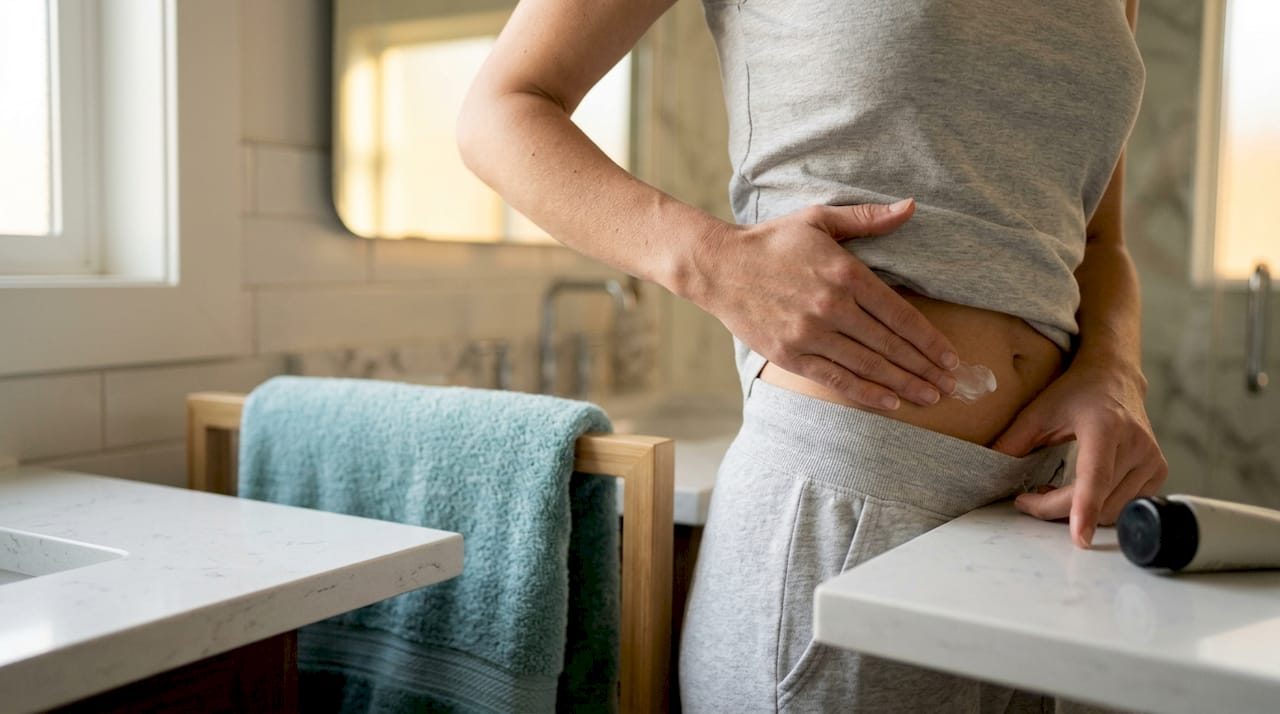
CBD may provide relief for some women during their periods, but there is no scientific evidence to support it as a proven remedy. Available studies show encouraging signs regarding the reduction of menstrual symptoms, but do not meet the standard of evidence required for a validated treatment. It is best to consider it as a complementary option, to be tried with caution, and to consult a healthcare professional in cases of severe pain or suspected endometriosis.
In short:
- CBD shows promise in reducing certain menstrual symptoms, but no validated treatment currently exists in clinical practice.
- Potential mechanisms of action include modulation of CB1/CB2 receptors, an anti-inflammatory effect, and action on the TRPV1 receptor, primarily demonstrated in vitro or in animal studies.
- Human studies remain limited, with small sample sizes, varying formulations, and few controlled trials comparing CBD to a placebo or a conventional anti-inflammatory drug.
- The form of administration (sublingual oil, topical products, suppositories) and the timing (preventative or as soon as pain begins) should be tailored to each individual’s needs, starting with low doses.
- CBD is generally safe, but caution is advised for people taking medications or in specific situations, due to possible interactions with certain treatments.
Table of Contents
- How CBD Affects Period-Related Pain and Inflammation
- What do clinical studies on CBD and painful periods actually show?
- In what form should CBD be used during your period, and when?
- Is it safe to take CBD during your period?
- How can you tell if a CBD product is reliable for your period?
- Pure-extract-cbd's Editorial Position on CBD and Menstrual Cramps
- Laboratory-tested oils and topical products to support your cycles
- Sources
- Frequently Asked Questions
How CBD Affects Period-Related Pain and Inflammation
Cannabidiol interacts with the endocannabinoid system, a network of receptors found throughout the body that plays a role in regulating pain, inflammation, and mood. Unlike THC, CBD does not bind directly to CB1 and CB2 receptors; rather, it modulates their activity, which partly explains its lack of psychoactive effects.
Several mechanistic hypotheses have been proposed to explain its potential benefits for menstrual cramps:
- Modulation of CB1/CB2 receptors: These receptors, found in the uterus and the nervous system, play a role in regulating contractions and pain sensitivity.
- Putative anti-inflammatory effect: Preclinical studies suggest that CBD may partially inhibit cyclooxygenase-2 (COX-2), an enzyme involved in the production of prostaglandins responsible for uterine cramps. This is a mechanism shared by certain conventional anti-inflammatory drugs, but its clinical significance remains uncertain.
- Effect on the TRPV1 receptor: This receptor, which is also activated by capsaicin, plays a role in the transmission of pain signals; CBD may reduce its sensitivity.
One thing to keep in mind is that most of these mechanisms are based on in vitro or animal studies, not on trials conducted directly on menstruating women. Researchers have a coherent biological framework, but comprehensive clinical evidence is still lacking.
What do clinical studies on CBD and painful periods actually show?
Evidence from human studies is only beginning to accumulate, and it remains limited in scope. A clinical study published in 2024 followed women who took CBD daily for five days over three consecutive menstrual cycles. The results show a statistically significant reduction in scores measuring irritability, anxiety, stress, and the subjective severity of menstrual symptoms. This is a notable finding, but the study did not include a placebo group, which makes it impossible to rule out a placebo effect or spontaneous improvement.
Ce que dit la donnée clé : un essai contrôlé sur tampons imprégnés de CBD a rapporté une réduction significative de la douleur (p < 0,05) chez 63 participantes ayant complété trois cycles, avec une incidence d’irritation inférieure à 5 %.
This second study, published on ScienceDirect, focuses on primary dysmenorrhea—that is, menstrual pain with no identified organic cause. The delivery method is interesting: unlike an oil taken orally, the tampon delivers cannabidiol directly to the affected tissues. The authors note good tolerability and satisfactory clinical acceptance, while explicitly calling for replication studies before any generalizations can be made.
A review by experts in gynecology qualifies these findings: preclinical evidence remains promising, but clinical data from human studies remain limited in scope and heterogeneous. Three limitations recur consistently in the available literature:
- small samples of female participants, often fewer than 100 people;
- CBD formulations that vary from one study to another (oil, swab, dosage), which makes comparisons difficult;
- a near absence of randomized, double-blind trials comparing CBD to a placebo or a standard anti-inflammatory drug.
The practical conclusion can be summed up in one sentence: the evidence is real and encouraging, but there is currently no scientific consensus to support the claim that CBD effectively treats menstrual pain for all women.
In what form should CBD be used during your period, and when?
The choice of treatment depends as much on the type of pain experienced as on each person's lifestyle.
- Sublingual oil: When placed under the tongue, it enters the bloodstream directly and affects the entire body. This is the most effective form for addressing irritability, anxiety, or generalized pain, as suggested by the PubMed study conducted over several cycles.
- Topical treatments and patches: Applied directly to the lower abdomen or lower back, they target the painful area without passing through the digestive system. They are well-suited for localized cramps and lower back pain.
- Soaked tampons: a more recent option, specifically designed for primary dysmenorrhea, with encouraging results in terms of pain reduction and good tolerance reported by participants.
When it comes to timing, two approaches coexist. Some users take a preventive approach by starting the medication one to two days before their period begins, when sensitivity to prostaglandins starts to increase. Others prefer to take it as needed, as soon as the first cramps appear, for relief that is more precisely timed. Neither of these two strategies has been directly compared in clinical trials, but current clinical guidelines often recommend starting the medication five to seven days before the expected start of the period for preventive use.
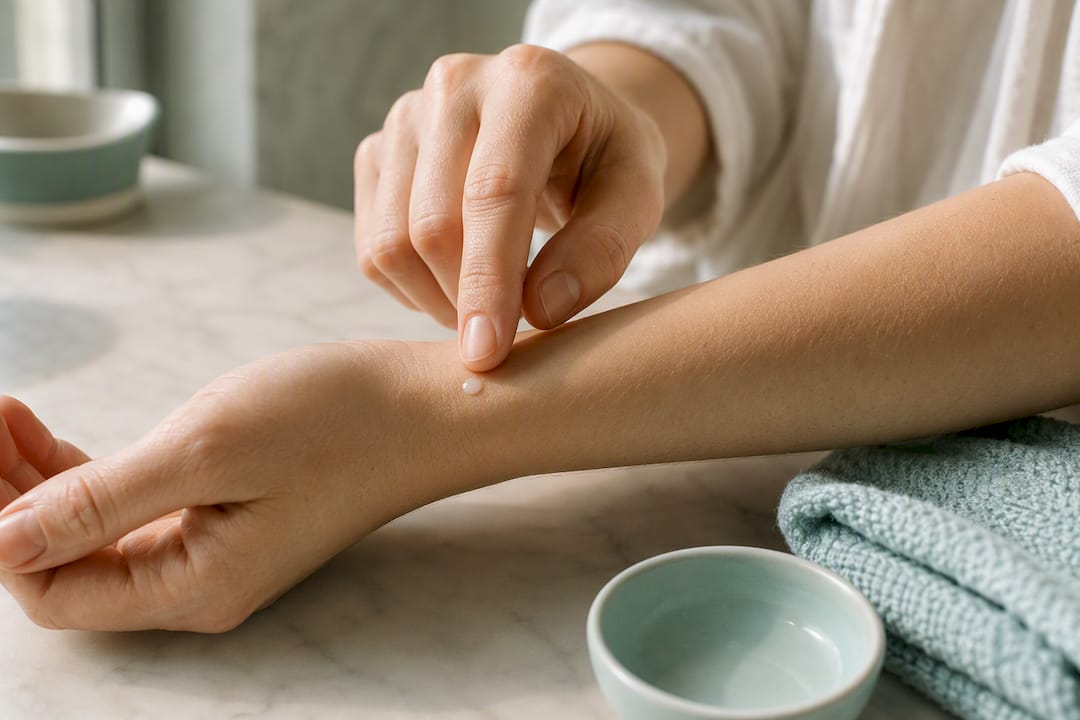
Pro tip: Before using a topical product on a large area of skin, test it on a small area of your arm 24 hours in advance. For oil, always start with the lowest dose listed on the label, and note how you feel over two to three cycles before judging its effectiveness for you. To learn more about dosing and sublingual use, check out our guide on how to use CBD oil.
Is it safe to take CBD during your period?
CBD has a generally reassuring safety profile, but “generally safe” does not mean “risk-free for everyone.” The most common side effects are mild: drowsiness, dry mouth, and slight changes in appetite or blood pressure.
The most important consideration concerns drug interactions. CBD inhibits certain liver enzymes in the cytochrome P450 group, which can alter the way the body metabolizes other substances. This applies in particular to:
- anticoagulants, the effects of which may be enhanced or reduced, depending on the situation;
- antiepileptic drugs, which may increase blood levels of the medication;
- certain antidepressants and hormonal contraceptives, which are metabolized through the same enzymatic pathways.
Women who are pregnant, breastfeeding, or undergoing long-term treatment should always consult a healthcare professional before starting CBD, regardless of the form they choose. This also applies to anyone on long-term medication, even if it appears unrelated to the menstrual cycle. Our article on the possible side effects of CBD discusses these situations in greater detail. The best approach is simple: observe the effects over two or three full cycles before drawing a conclusion, rather than judging after just one try.
How can you tell if a CBD product is reliable for your period?
The full potential effectiveness of CBD depends on the quality of the product you choose, and the market remains inconsistent in this regard. Four criteria can help you distinguish reliable products from subpar ones:
- The Certificate of Analysis (COA): Issued by an independent laboratory, it confirms the actual concentration of CBD and the absence of contaminants (heavy metals, pesticides, residual solvents). A reputable seller makes it available without you having to ask for it.
- Compliance with the legal THC limit: In France, regulations strictly govern the permitted thresholds and prohibit any unvalidated therapeutic claims on packaging or in marketing materials.
- Traceability from hemp to the finished product —knowing where the plant comes from and how it was grown and processed—provides a better guarantee of consistency across batches.
- The right form for the symptoms: an oil is suitable for diffuse pain and irritability, a topical treatment targets a specific area, and a pad (when available) provides direct, localized relief.
Comparing the concentration in mg/mL rather than just the price per bottle remains the most useful approach: two products at the same price may have very different costs per dose depending on their actual strength. Our article on the scientific and legal differences between CBD and THC explains how to interpret this information on a label.
Pure-extract-cbd's Editorial Position on CBD and Menstrual Cramps
Pure-extract-cbd relies on independent laboratory testing and full traceability for every product sold. This rigor does not alter the current scientific reality: CBD remains a supplement, never a substitute for gynecological care, particularly when endometriosis is suspected. To learn more about the legal framework, see our article on medical claims to avoid.
— Steven
Laboratory-tested oils and topical products to support your cycles
When dealing with menstrual cramps, some women turn to traditional anti-inflammatory medications, while others rely on heat or dietary changes. Some online stores offer products where each batch is tested by an independent laboratory, with a certificate of analysis available to verify the CBD concentration and the absence of contaminants.

The online store features its full range of CBD products, including sublingual oils and resins made from organic hemp. For those new to CBD, the practical guide on how to use CBD oil explains step-by-step how to gradually increase the dosage and how to take it sublingually. Customer service is available to answer questions about the products or their certificates of analysis, with delivery times specified on the website. Visit the Pure-extract-cbd store to compare product formats and start with the lowest dose recommended on the product page.
Sources
To verify these claims: the 2024 PubMed study provides the most recent clinical evidence; the ScienceDirect trial on impregnated tampons details the methodology of an innovative format; the review in *Chirurgie Gynécologie* offers an expert critical analysis; and Service-public.fr outlines the French regulatory framework.
This article is intended to provide general information and is not a substitute for the advice of a qualified healthcare professional. Consult a qualified healthcare professional about your specific situation before taking any action based on this content.
- Examination of the Effects of Cannabidiol on Menstrual Symptoms. (PubMed)
- Efficacy and Usability of a Cannabidiol-Infused Tampon for the Relief of Primary Dysmenorrhea (ScienceDirect)
- CBD and Menstrual Pain: What Does the Science Say? (Gynecological Surgery)
- Public Service
Frequently Asked Questions
Does CBD relieve endometriosis pain?
No reliable studies confirm a specific effect on endometriosis: gynecologists view CBD as a potential wellness supplement, but never as a substitute for medical care for this condition.
What are the effects of CBD on women during their periods?
Available studies report a reduction in irritability, anxiety, stress, and the subjective severity of menstrual symptoms after several cycles of use, although there is no evidence of a universal effect.
Can CBD really relieve pain?
Plausible mechanisms (modulation of CB1/CB2 receptors, action on TRPV1) and preliminary clinical trials suggest a real effect on certain types of pain, but the level of evidence remains insufficient to consider it a validated treatment.
How much CBD should you take for painful periods?
There is no agreed-upon dose: the “start low, go slow” strategy recommends beginning with the lowest dose indicated on the product and gradually adjusting it over several cycles.
How can you quickly relieve severe menstrual cramps?
Aside from natural remedies such as CBD or local heat, severe or unusual pain warrants a prompt medical consultation to rule out an underlying cause such as endometriosis.



