
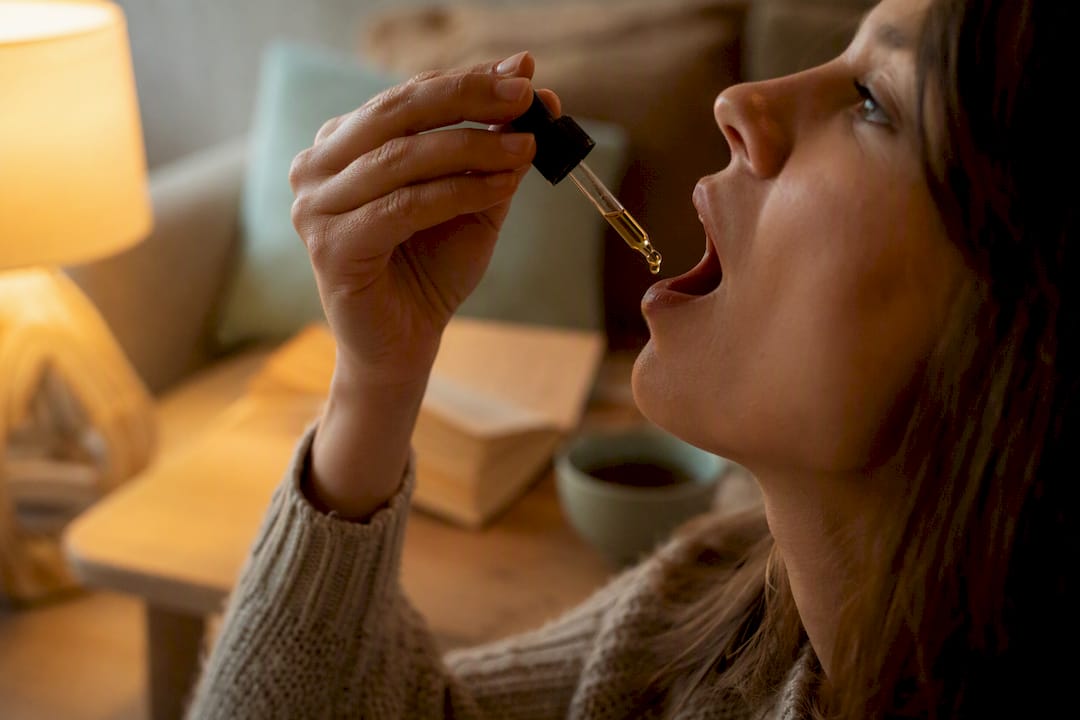
CBD can help some people fall asleep, especially when insomnia is caused by stress or persistent mental restlessness. For quick relief at bedtime, a low-dose, lab-tested sublingual oil remains the most suitable form; capsules and herbal teas are better suited for regular use or for maintaining sleep during the second half of the night.
The available clinical data remain limited, but the results are encouraging. In a case series involving 72 patients, the majority reported an improvement in their sleep as early as the first month of use, in addition to their usual treatment. This figure should be interpreted with caution: it is based on clinical observations rather than a large-scale randomized trial.
- CBD works primarily indirectly, by reducing anxiety rather than directly sedating the body.
- The sublingual form takes effect in 15 to 45 minutes, compared to 1 to 2 hours for capsules and gummies.
- Anyone on long-term medication (anticoagulants, antiepileptics) should consult a doctor before trying CBD, due to possible interactions involving cytochrome P450.
Key Points
CBD helps you fall asleep, primarily by reducing pre-sleep anxiety, and the choice of formulation (fast-acting or extended-release) should be tailored specifically to the type of sleep disorder.
| Point | Details |
|---|---|
| Indirect effect, not sedative | CBD alleviates anxiety and mental restlessness rather than causing forced drowsiness. |
| Encouraging but limited clinical evidence | A majority of patients in a case series reported improved sleep within one month, without a large-scale randomized trial. |
| Shape as needed | Sublingual oil or flower extract for falling asleep quickly, or capsules or CBN for nighttime awakenings. |
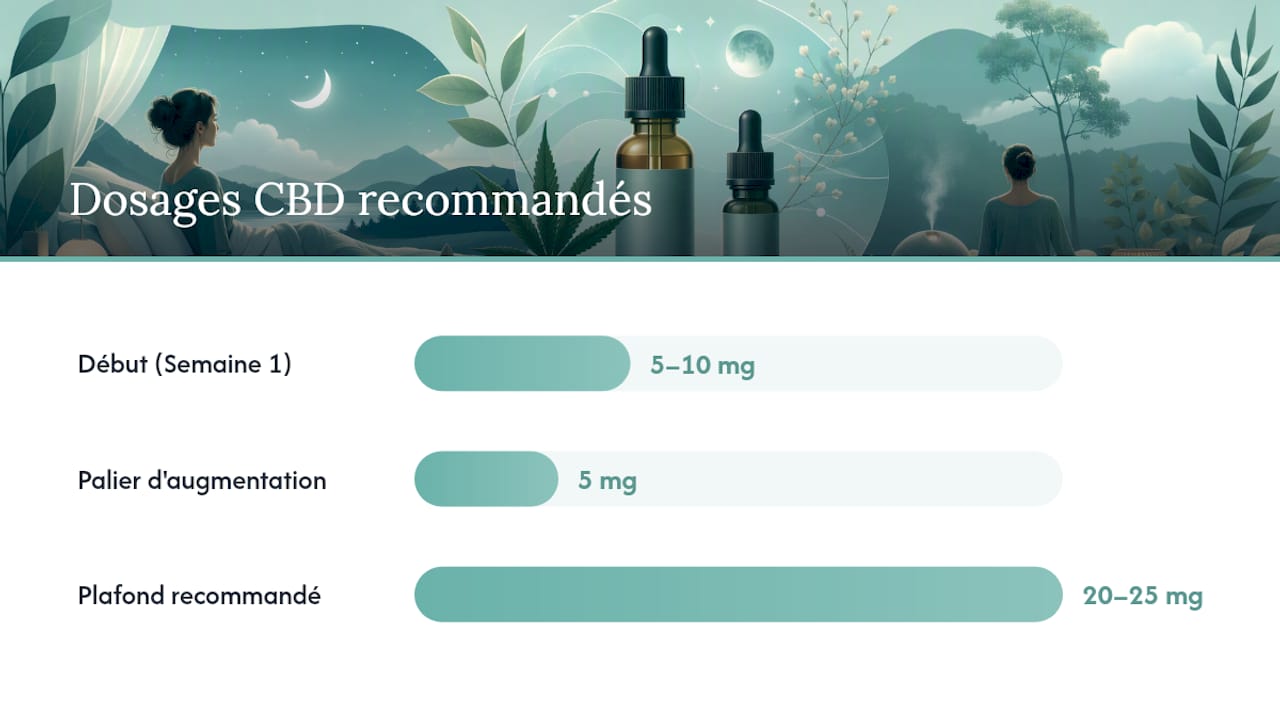
| Gradual and cautious dosing | Start with 5–10 mg in the evening, and adjust the dose in 5-mg increments over two to three weeks. |
| Check the COA before purchasing | Pure-extract-cbd offers lab-tested sleep products with full batch traceability. |
This article is intended to provide general information and is not a substitute for the advice of a qualified healthcare professional. Consult a qualified healthcare professional about your specific situation before taking any action based on this content.
Table of Contents
- How Does CBD Affect Sleep, and What Do the Studies Really Say?
- Which form of CBD should you choose based on your sleep issue?
- What dose of CBD should you take to sleep well?
- Is it safe to take CBD every night to help me sleep?
- How can you tell if a CBD oil or capsule is reliable for sleep?
- Why a Sleep-Centric Approach Is a Game-Changer
- Where can you find a reliable, lab-tested CBD product for sleep?
- Sources
How Does CBD Affect Sleep, and What Do the Studies Really Say?
CBD does not induce sleep like a traditional sleeping pill. It acts on the endocannabinoid system, a network of receptors in the brain and nervous system that regulates, among other things, anxiety, pain, and sleep-wake cycles. Review studies show that CBD modulates neurotransmitters such as serotonin (via the 5-HT1A receptor) and GABA, two pathways directly linked to relaxation and the reduction of mental agitation before bedtime.
This distinction makes a big difference in how we approach the product. CBD is not a hypnotic in the pharmacological sense: it does not cause forced drowsiness like certain medications. Rather, it appears to act upstream by calming the rumination and anxiety that prevent falling asleep. People suffering from so-called psychophysiological insomnia—that is, insomnia linked to a vicious cycle of stress and wakefulness—are often the ones who report the most noticeable benefits.
What does the scientific evidence show at this point? Here is the current state of our knowledge:
- The most frequently cited case series in this field involves 72 adults monitored in real-world clinical settings, 48 of whom reported improved sleep after one month.
- This study remains a clinical observation, not a large-scale, randomized, placebo-controlled trial: it provides a strong indication, not definitive proof.
- Most of the positive findings regarding CBD and sleep come from case series or secondary studies, which explains why healthcare professionals are cautious on this topic.
- No large-scale trial has yet established a universal optimal dose for insomnia.
CBD does not work like a traditional sedative. It reduces anxiety and mental restlessness, which helps prepare the body for sleep rather than forcing it to fall asleep.
This distinction explains why some users feel almost nothing after their first dose, while others notice a clear change after a few days. The effect of CBD on deep sleep—unlike its effect on falling asleep—remains less well-documented and is more subject to individual variations.
Which form of CBD should you choose based on your sleep issue?
Waking up at 3 a.m. and having trouble falling asleep are not treated the same way. Different forms of CBD vary greatly in how quickly they take effect and how long the effects last, which makes the choice of formulation almost as important as the dosage itself.
| Format | Start of the action | Estimated duration | Recommended Use |
|---|---|---|---|
| Spraying (flowers) | 2 to 10 minutes | 1 to 3 hours | Falls asleep quickly, occasional anxiety at bedtime |
| Sublingual oil | 15 to 45 minutes | 4 hours | Falling Asleep and Staying Asleep Early in the Night |
| Capsules / gummies | 45 minutes to 2 hours | 6 hours | Nighttime feeding, frequent awakenings |
| CBD Tea | 30 to 60 minutes | 3 to 5 hours | Evening relaxation ritual, gentle effect |
| Products Containing CBN | Varies depending on the dosage form | Often extended | Recurring nighttime awakenings |
For those who have trouble falling asleep but don’t wake up multiple times during the night, sublingual oil or flower vaporization provide relief quickly enough to be taken right before bed. Conversely, if the problem is waking up at 2 a.m. or 4 a.m., a slower-release capsule or a CBD-CBN combination makes more sense, since its effects last for a longer period of time.
CBN, a cannabinoid related to CBD but derived from the oxidation of THC, is increasingly being combined with CBD in products designed to promote sleep. Some manufacturers also add melatonin to these products. While these combinations look promising on paper, their clinical benefits have yet to be confirmed, and melatonin requires particular caution regarding dosage, as excessive amounts can actually disrupt the circadian rhythm.
Pro tip: Keep a sleep journal for two to three weeks, noting the time you took the product, the form you used, and the quality of your sleep on a scale of 1 to 5. This is often the only reliable way to know if a product really works for you, rather than relying on how you feel the next morning.
CBD teas also appeal to people who are looking for an evening ritual rather than a strong effect: the warmth of the drink and the repetitive act of sipping play almost as big a role as the compound itself.

What dose of CBD should you take to sleep well?
Starting low and adjusting gradually remains the safest approach, since there aren't enough studies to establish a universal dosage. Here is a reasonable progression for testing a product without being caught off guard by its effects:
- Week 1: Start with 5–10 mg of CBD in the evening, about 30 to 60 minutes before bedtime if using oil or capsules, or just a few minutes before lying down if using vaporized flower.
- Week 2: If no improvement is noted, gradually increase the dose in 5-mg increments, without exceeding 20 to 25 mg, unless otherwise advised by a healthcare professional.
- Week 3: Find the dose that works best for you and monitor your progress over several consecutive nights rather than just a single trial, since the effect can vary from night to night depending on your stress levels during the day.
This gradual approach is also in line with a common practical recommendation: to try CBD for several weeks and keep detailed records before concluding whether it is effective or not.
For sublingual oil, the method of administration is almost as important as the dose. Place the drops under your tongue, hold them there for 60 to 90 seconds without swallowing, then swallow as usual. This direct absorption through the oral mucosa partially bypasses the liver, which speeds up the onset of the effect compared to swallowing a capsule. Store the bottle away from light and heat to preserve the stability of the cannabinoids.
There are two signs that should alert you and prompt you to make adjustments: persistent drowsiness the following day, which indicates that the dose is too high for your body, or a complete lack of effect after three weeks at a stable dose, which suggests that CBD alone is not enough in your case and that you should consult a doctor rather than continue increasing the dose.
Is it safe to take CBD every night to help me sleep?
CBD generally has a favorable safety profile, with high tolerability reported even with prolonged daily use. However, this does not mean that caution should be overlooked in certain areas, particularly regarding drug interactions.
- CBD is metabolized by cytochrome P450, a family of liver enzymes that also metabolizes many medications: anticoagulants, antiepileptics, and certain antidepressants are among the classes of drugs that should be discussed with a doctor before taking them on a regular basis.
- Pregnancy and breastfeeding remain situations in which CBD should be avoided, as there is insufficient safety data regarding its effects on the fetus or infant.
- In children, CBD should only be used to aid sleep under strict medical supervision, unless there are specific, already validated therapeutic indications.
- Pre-existing liver failure also warrants a medical consultation, as the liver is the primary organ responsible for metabolizing CBD.
- The most common side effects are generally mild: dry mouth, mild drowsiness, and occasionally temporary digestive problems, which are usually reversible by reducing the dose.
Pro tip: If you experience persistent side effects, your first reaction shouldn’t be to stop taking the medication abruptly; instead, try reducing the dose by half for a few days before deciding what to do. If the side effects don’t go away, seeking medical advice is still your best option.
One final point to keep in mind concerns the quality of the product itself: an up-to-date certificate of analysis (COA) ensures that the THC content complies with regulations and that no contaminants—such as heavy metals or pesticides—have found their way into the finished product.
How can you tell if a CBD oil or capsule is reliable for sleep?
The CBD market offers hundreds of products, but not all of them are created equal when it comes to consistent dosing or traceability. Here are the things to check before making a purchase, listed in order of importance:
- The certificate of analysis (COA) must be available and up-to-date, indicating the exact CBD content, CBN content (if applicable), and confirmation that the THC content remains below the legal threshold.
- The product's spectrum (full spectrum, broad spectrum, or isolate) determines the presence or absence of other cannabinoids and terpenes, which influence the effect experienced beyond that of CBD alone.
- The extraction method—ideally using supercritical CO2—ensures higher purity than extractions using inexpensive chemical solvents.
- The concentration per dose should allow for precise measurement—in milligrams per drop or per capsule—rather than simply providing an overall percentage, which is of little practical use in everyday life.
Beyond technical criteria, there are a few simple indicators of trustworthiness that can help you weed out questionable products:
- Clear traceability from the lot number back to the original hemp field.
- Manufactured and tested in Europe by a third-party laboratory independent of the manufacturer.
- Customer service that can answer specific questions about dosage and a clear return policy in case of dissatisfaction.
- Usage instructions provided with the product, not just generic legal notices.
Why a Sleep-Centric Approach Is a Game-Changer
Most content on CBD and sleep remains vague: it conflates chronic insomnia, deep sleep, and simple everyday stress without ever distinguishing between the underlying causes. This is a mistake, because difficulty falling asleep and repeated nighttime awakenings do not respond to the same treatment strategy or dosage.
What the current data really suggest is that CBD works primarily as a tool for managing pre-sleep anxiety, not as a substitute for sleeping pills. The generic recommendation to “take CBD in the evening” without distinguishing between different profiles misses the point: the form, the timing of administration, and the dosage progression matter almost as much as the molecule itself.
My recommendation, based on a review of the available data: always start with a low dose of sublingual oil and a sleep log, before even considering combinations with CBN or melatonin. These combinations come second, once you know your baseline response to CBD alone.
— Steven
Where can you find a reliable, lab-tested CBD product for sleep?
Given the growing number of brands, the simplest approach is to start with a store that offers a selection of pre-verified products rather than comparing dozens of analysis certificates on your own. Pure-extract-cbd offers a range of flowers, oils, and infusions made from organic hemp, each tested by an independent laboratory and manufactured in accordance with European standards.

If you’re just getting started, the page dedicated to CBD for sleep lists the formats best suited for falling asleep and staying asleep, with CBD concentrations clearly listed for each product so you can follow the gradual dosing protocol described above. For your first sublingual dose, the practical guide to using CBD oil details the administration technique and dosage guidelines. Pure-extract-cbd’s customer service team is available to help you choose the right product based on your needs, and the return policy lets you try products without any major commitment. Visit the Pure-extract-cbd store to compare the available products and start your sleep regimen tonight.
Sources
- Cannabidiol for Anxiety and Sleep: A Large Case Series – PMC
- Review of Cannabinoid Mechanisms – NCBI PMC



