
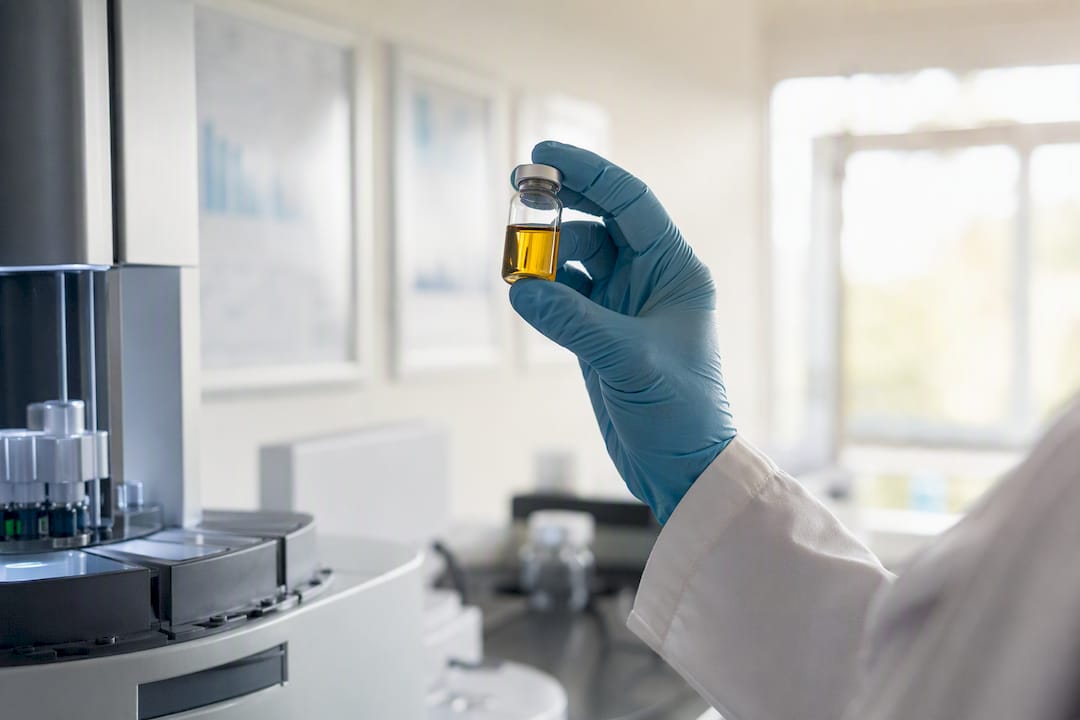
Pure cannabidiol is not included on the World Anti-Doping Agency’s (WADA) list of prohibited substances or on the AFLD’s list, either in-competition or out-of-competition. The real risk, therefore, does not come from CBD itself, but from what accompanies it: many commercial products contain traces of THC or other prohibited cannabinoids that are not listed on the label. However, in the event of a positive test, the responsibility falls entirely on the athlete, regardless of whether they acted in good faith.
-
Pure CBD: permitted, with no restrictions on timing or dosage.
-
THC and other cannabinoids: prohibited in competition, with virtually no margin for error.
-
The top priority: Require a recent certificate of analysis (COA) before making any purchase intended for supervised athletic use.
Key Points
Whether a CBD product complies with anti-doping regulations depends less on the cannabidiol itself than on whether THC and other prohibited cannabinoids are verifiably present in the purchased batch.
| Point | Details |
|---|---|
| Status of the CBD | Approved by WADA and AFLD, both in-competition and out-of-competition. |
| THC Threshold | Set at 150 ng/mL in urine; the other cannabinoids have no tolerance threshold. |
| Strict Liability | The athlete remains liable even in the event of unintentional contamination of a legally purchased product. |
| COA Verification | Require a recent certificate that includes the lot number, LOD/LOQ, and an ISO/IEC 17025-accredited laboratory. |
| Traceable Products | Pure-extract-cbd offers isolates and oils with certificates of analysis that can be viewed before purchase. |
Table of Contents
- CBD's Status in Anti-Doping: What WADA and AFLD Say
- Why a CBD product can still cause a positive test result
- What are the detection thresholds and windows you need to know?
- What practical steps can you take to reduce the risk before buying a CBD product?
- What do scientific studies say about CBD and athletic recovery?
- What should you do if you test positive for cannabis or THC?
- How do you read a certificate of analysis to verify a CBD product?
- Where to find tested and traceable CBD products for supervised use in sports
- Sources
CBD's Status in Anti-Doping: What WADA and AFLD Say
The World Anti-Doping Agency removed cannabidiol from its list of prohibited substances several years ago, a position that has been reaffirmed in successive updates to its anti-doping regulations. THC, on the other hand, remains classified as a prohibited substance in competition, with a urine threshold set at 150 ng/mL. All other natural or synthetic cannabinoids (including THCP, HHC, and THCV) are prohibited in competition, with no tolerance threshold: their mere detection is sufficient to constitute a violation.
The AFLD confirms this distinction within France and clarifies a detail that many athletes are unaware of: the competition period generally begins at 11:59 p.m. on the night before the event, which limits the window of opportunity for use the night before.
Compliance with French law regarding CBD does not exempt anyone from anti-doping rules: a product that is perfectly legal to purchase can still result in a sports sanction if a prohibited cannabinoid is detected in it.
- CBD (cannabidiol): permitted, both in and out of competition.
- THC: prohibited in competition; urine threshold of 150 ng/mL.
- Other cannabinoids (THCP, HHC, etc.): prohibited in competition, with no threshold.
Why a CBD product can still cause a positive test result
The problem almost never stems from the CBD listed on the label, but rather from everything else in the bottle. Three mechanisms account for the majority of contamination cases:
- The product spectrum: An isolate theoretically contains 0% THC; a broad-spectrum product typically contains trace amounts; while a full-spectrum product intentionally retains all of the plant’s cannabinoids, including THC.
- Purification defects: Some manufacturers do not achieve the advertised purity, leaving THC residues that exceed the threshold permitted for civilian consumers.
- Batch-to-batch variability: Two bottles of the same product, purchased months apart, may contain different levels of cannabinoids depending on the hemp crop used.
A study on contamination in CBD products shows that no commercial guarantee truly protects the buyer: labeling alone proves nothing.
Pro tip: Never trust the “0% THC” label printed on packaging. Only an independent certificate of analysis—dated and linked to a specific batch number—is reliable.
What are the detection thresholds and windows you need to know?
The threshold set by WADA for THC in urine is a level designed to distinguish recreational use from marginal environmental exposure, based on a specific reference value. For all other prohibited cannabinoids, no threshold exists: even the slightest trace constitutes a violation.
THC is eliminated from the body slowly, and its detection window varies greatly from person to person depending on frequency of use, metabolism, and body fat percentage. A single use may remain detectable for several days, while regular use may remain detectable for several weeks.
The only figure that really matters is the one measured at the time of the test: WADA is clear on this point—the date of consumption is never taken into account when analyzing a violation.
- Urinary THC threshold: 150 ng/mL.
- Other prohibited cannabinoids: zero tolerance.
- Detection window: variable, ranging from a few days to several weeks depending on usage.
What practical steps can you take to reduce the risk before buying a CBD product?
An athlete subject to testing doesn't have to give up CBD, but they do need to change how they buy it. Here are the steps to take, listed in order of importance.
Upon purchase:
- Choose an isolate or, if that is not available, a certified broad-spectrum product rather than a full-spectrum product.
- Require a recent COA issued by a laboratory accredited under ISO/IEC 17025.
- Verify the traceability of the hemp used (origin, cultivation, harvest date).
In everyday life:
- Inform the sports physician of any use of CBD, even if it is only occasional.
- As a precaution, avoid taking it in the days leading up to a competition.
- Always keep the receipt and the COA for the batch you have used.
Situations to avoid at all costs: products sold without documentation, CBD vapes (which have poorly controlled combustion contaminants), and prolonged regular use, which can lead to the accumulation of residual THC even from minimal traces.
Pro tip: Keep a digital copy of every COA associated with your purchases. In the event of an inspection, these documents will make the difference between a credible explanation and a penalty that’s hard to contest.
UKAD points out that this type of vigilance is not unique to France: most international federations apply the same principle of strict liability.
What do scientific studies say about CBD and athletic recovery?
The available clinical data remain limited, but they are beginning to paint a consistent picture. A systematic review published on PMC notes limited positive findings regarding certain physiological parameters, such as oxygen consumption during exercise, but the evidence is still insufficient regarding muscle strength or recovery after intense exercise.
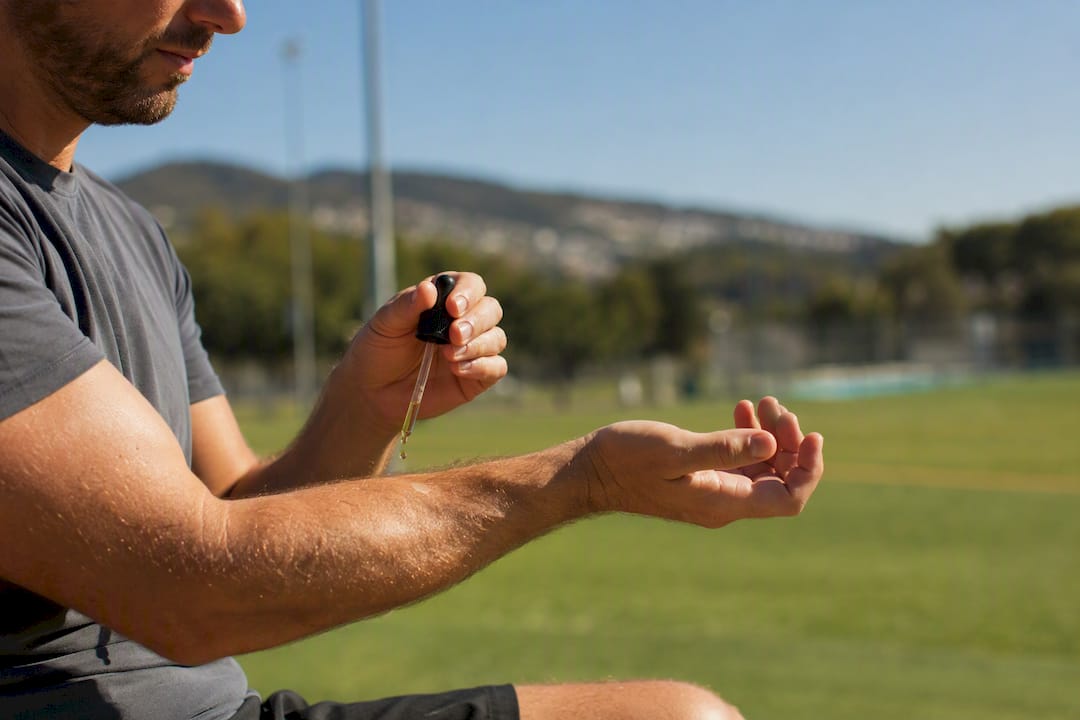
Most of these studies have been conducted in recent years, using small sample sizes and inconsistent protocols, which prevents any definitive conclusions about their actual ergogenic effectiveness.
The uses for which there is the most scientific evidence are not related to performance, but rather to sleep and anxiety. The most well-documented uses remain sublingual oils to promote sleep and manage competition-related stress, or topical products for localized pain—without any promise of a cure. Our article on CBD and athletic recovery details these uses and their limitations.
- Pure performance: limited evidence at this stage.
- Sleep and Anxiety: The Most Reliable Indicators.
- Muscle recovery: mixed findings, with still too little data.
What should you do if you test positive for cannabis or THC?
A positive test result does not automatically mean a severe penalty, but every step counts in building a strong case.
- Immediately keep all proof of purchase: receipts, invoices, and the COA for the relevant batch.
- Notify the referring physician and the sports organization immediately, before making any official statement.
- Request a dispute or a second opinion if the product consumed had a reliable certificate of analysis at the time of purchase.
- If necessary, consult an attorney specializing in sports law to evaluate possible disciplinary remedies.
The outcome of the case depends largely on the quality of the evidence gathered in advance: preserving a COA can result in a reduced penalty rather than a long suspension.
How do you read a certificate of analysis to verify a CBD product?
A COA is only valuable if it includes certain specific elements. Here’s what to look for before trusting a product.
- The name of the ISO/IEC 17025-accredited laboratory, which can be independently verified.
- A recent test date, ideally linked to the actual batch purchased.
- A specific lot number, rather than a generic part number that applies to an entire product line.
- The limits of detection (LOD) and quantification (LOQ) for THC, expressed as specific numerical values, not vague terms.
An COA without a lot number, without a detailed chromatogram, or issued by a non-accredited laboratory should raise an immediate red flag. In this case, the appropriate course of action is to request a reanalysis from the seller or, more simply, to reject the product. Our guide on non-cannabinoid contaminants in CBD details other points to watch for in these documents.
Pro tip: Always compare the COA date with the manufacturing date listed on the packaging. A gap of several months between the two is often a sign that quality control was performed only once for an entire production run.
Pragmatic caution, before any pursuit of efficiency
For an athlete who undergoes drug testing, the question is never “Does CBD work?” but rather “Could this bottle cause me to fail a test?” Traceability takes precedence over claims. When in doubt, consulting a sports physician remains the safest course of action.
Where to find tested and traceable CBD products for supervised use in sports
In response to these traceability requirements, Pure-extract-cbd offers a range of products that are consistently accompanied by their certificates of analysis, which can be viewed before purchase rather than simply being promised on trust.

The most suitable formats for supervised athletic use remain isolates and oils, which are easier to dose and verify than full-spectrum products. The 10% H4CBD oil is among the products available with traceability of the source hemp, as are all the lab-tested flowers and isolates featured on the website. Before making any purchase intended for use in a sports context subject to testing, always check the COA for the specific batch and compare it to the thresholds mentioned above. Review the corresponding product page and download the certificate of analysis before confirming your order.
Sources
- WADA — WADA Executive Committee Approves the 2023 Prohibited List
- AFLD — Cannabis and Cannabidiol (CBD)
- PMC — Systematic Review on CBD and Performance/Recovery
- PubMed — Study on Contamination and Variability in CBD Products
This article is intended to provide general information and is not a substitute for the advice of a qualified attorney. Consult a qualified legal professional regarding your specific case before taking any action based on this content.



