
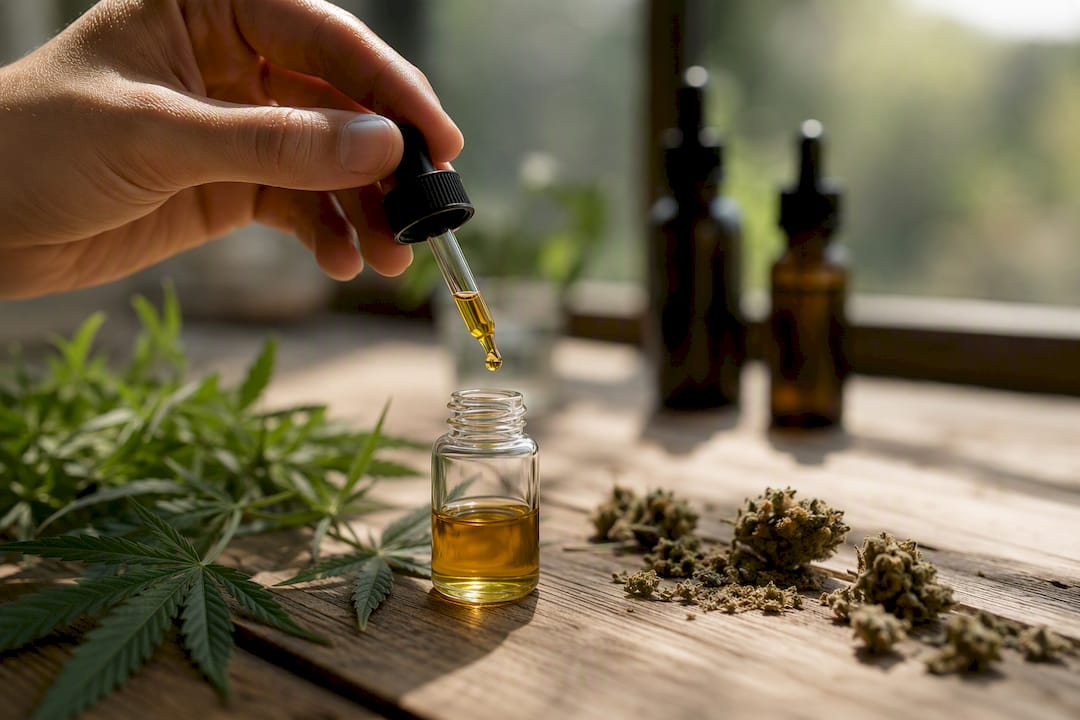
Pure CBD will not cause you to fail a saliva test. However, a product containing THC—even in trace amounts—can trigger a positive result and lead to penalties in France. This distinction makes all the difference: it is not cannabidiol that is the problem, but rather the residual presence of Δ9-tetrahydrocannabinol in certain legally sold products.
French law has a near-zero tolerance policy for driving under the influence: even the slightest confirmed trace of THC constitutes an offense, regardless of whether the product was purchased legally. Before delving further into how the test works and detection times, keep these three key points in mind:
- The saliva test detects THC, never CBD itself.
- Legal CBD products may contain up to 0.3% THC, a level high enough to skew a test result.
- The Court of Cassation confirmed that the legality of a sale does not preclude a traffic violation.
Pro tip: Before driving after consuming CBD, check the product’s certificate of analysis. A non-detectable THC level remains the only reliable guarantee.
Key Points
| Point | Details |
|---|---|
| CBD is not targeted | The saliva test detects Δ9-THC, but never cannabidiol itself. |
| The legal threshold is not a safety threshold | A product containing 0.3% THC may remain detectable for several hours. |
| There is zero tolerance in France | The Court of Cassation confirms that the legality of a sale does not preclude a traffic violation. |
| Processing times vary depending on the purpose | From 4 hours for occasional use to 7–8 days for heavy use. |
| COA remains the best protection | Check the exact THC level measured by an independent laboratory before making any purchase. |
This article is intended to provide general information and is not a substitute for the advice of a qualified attorney. Consult a qualified legal professional regarding your specific case before taking any action based on this content.
Table of Contents
- How does a CBD saliva test work, and what does it actually detect?
- Why do some CBD products cause a positive THC test result?
- What does French law say about a positive CBD saliva test?
- How long does THC remain detectable in saliva?
- Which CBD products should you choose to minimize the risk of testing positive?
- What should you do if your CBD saliva test comes back positive during a screening?
- How can you verify that a CBD product actually meets compliance standards before buying it?
- What True Prudence Demands, Beyond Common Assumptions
- Sources
- Frequently Asked Questions
How does a CBD saliva test work, and what does it actually detect?
The roadside saliva test specifically screens for Δ9-THC, the psychoactive compound in cannabis, and not for cannabidiol. This is confirmed by Drogues Info Service, which notes that CBD without THC will not result in a positive saliva test.
In practice, a traffic stop consists of two steps:
- An immediate qualitative test, performed on-site, that provides a binary result (presence or absence of THC).
- In the event of a positive result, laboratory confirmation through a blood test is the only way to establish a solid legal basis for potential legal action.
The main limitation of this device is the lack of a quantitative threshold: the on-site test indicates the presence of CBD, but never its concentration. A minimal trace from a legal CBD product and recreational cannabis use therefore trigger the same initial alert, which explains much of the confusion surrounding CBD saliva testing.
Why do some CBD products cause a positive THC test result?
French regulations allow the sale of CBD products containing up to 0.3% THC. This figure may seem negligible, but it is often enough to leave a detectable trace in saliva, especially in cases of repeated use or high doses.
Three factors account for the majority of positive CBD results on saliva tests:
- The product's spectrum. A full-spectrum extract retains all of the cannabinoids found in hemp, including THC, while a pure isolate theoretically contains none.
- Manufacturing quality. Artisanal resins and flowers, which undergo fewer quality controls, pose a higher risk of contamination or inaccurate labeling than products tested by an independent laboratory.
- Confusion about metabolism. Contrary to popular belief, CBD does not convert to THC in the body: the risk comes solely from the THC already present in the product being consumed, not from an internal chemical conversion.
What does French law say about a positive CBD saliva test?
The Highway Code makes no distinction between THC derived from a legal CBD product and THC derived from recreational cannabis. The regulations on driving under the influence of drugs establish a zero-tolerance policy: any confirmed presence of a narcotic while driving constitutes an offense, punishable regardless of the product’s source.
Case law has explicitly settled this issue.
The legal sale of a CBD product containing traces of THC does not exempt the driver from liability: the Court of Cassation has confirmed that even the slightest confirmed trace of THC is sufficient to constitute a traffic violation, regardless of whether the product complies with commercial regulations.
The practical consequences of a positive test result are severe:
- Immediate suspension of the driver's license, generally for 72 hours.
- Confirmatory blood test—the only one admissible in court.
- Possible criminal penalties: a fine, suspension or revocation of the driver’s license, or even imprisonment in the event of a repeat offense or an accident.
This strict approach sets France apart from countries such as Germany, which have introduced measurable tolerance thresholds for THC. This is a different regulatory choice, not a rule that can be directly applied: in France, the presence of THC takes precedence over its concentration.
How long does THC remain detectable in saliva?
According to the SFTA’s toxicological summaries, the observed ranges are as follows:
- Occasional use: Detection is possible between 4 and 24 hours after consumption.
- Regular use: detectable traces for up to 24 hours, sometimes longer depending on the dosage.
- Intensive or daily use: a period of up to 7 or 8 days.
These ranges are approximate: the absorbed dose, the route of administration (inhalation, oral), individual metabolism, and frequency of use cause these ranges to vary significantly.
Which CBD products should you choose to minimize the risk of testing positive?
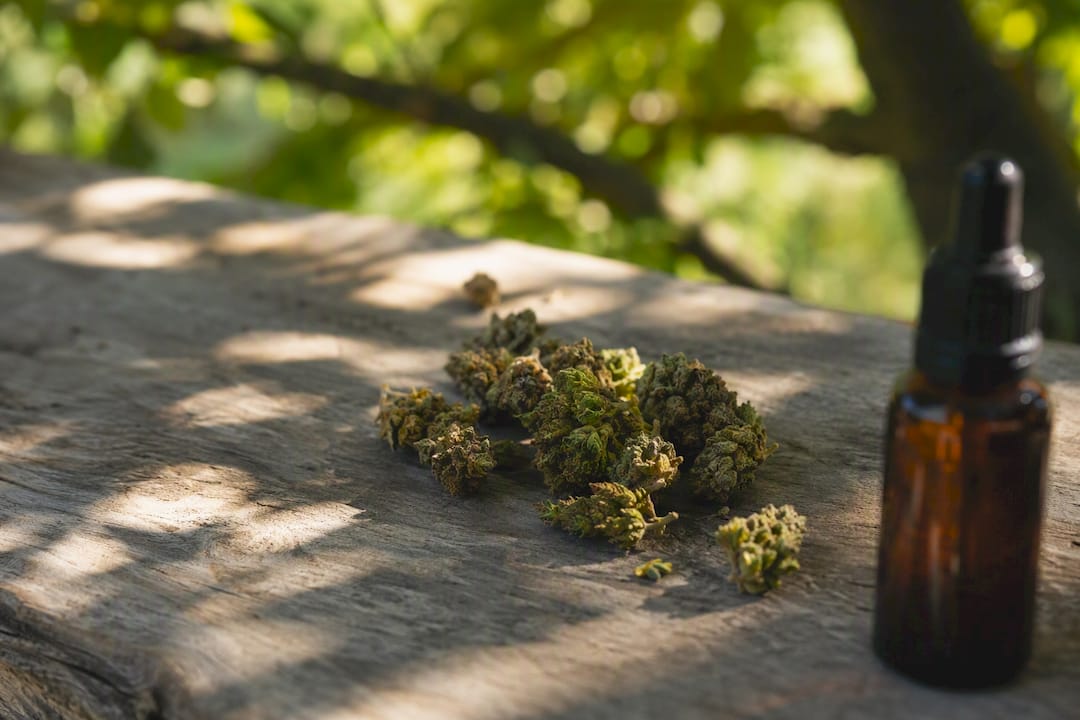
The level of risk varies greatly depending on the product’s form and how it is manufactured. Flowers and resins—even when sold legally—statistically pose the highest risk of testing positive, as their residual THC levels are often less strictly controlled than in a laboratory setting. Isolate or broad-spectrum oils, which are tested and guaranteed to be free of detectable THC, significantly reduce this risk.
Before making any purchase, there are a few things you should check:
- Request a certificate of analysis (COA) from an independent laboratory that specifies the exact Δ9-THC level.
- Verify that the COA also covers heavy metals, pesticides, and residual solvents.
- Choose shops with traceable products over untested artisanal goods.
Pro tip: A 5% broad-spectrum CBD/CBG oil accompanied by a COA showing no detectable THC remains the safest option before getting behind the wheel.
What should you do if your CBD saliva test comes back positive during a screening?
A positive result does not automatically mean a conviction, but how you respond at the scene matters. Here is the procedure to follow:
- Calmly inform the officer that you are using a legal CBD product, without trying to downplay the test result.
- Request laboratory confirmation (blood test), which is the only legally admissible test.
- Keep all your proofs of purchase: invoice, product certificate of authenticity, and, if possible, a sample from the affected batch.
- Contact a lawyer who specializes in traffic law if criminal proceedings are initiated, particularly to discuss a second opinion.
These steps do not guarantee that you will avoid a penalty, but they are the only serious defense against a charge based solely on the presence of THC.
How can you verify that a CBD product actually meets compliance standards before buying it?
A reliable certificate of analysis must specify the measured Δ9-THC level, expressed as a precise percentage, as well as the results of tests for heavy metals, pesticides, and residual solvents. The absence of this information on a product sheet should raise red flags, regardless of the store’s reputation.
At Pure-extract-cbd, each product comes with an independent laboratory analysis guaranteeing compliance with the legal threshold. To understand the scientific distinctions between the two molecules, our article on the differences between CBD and THC details the key points to know, and our guide on pesticide and heavy metal testing specifies the standards you should expect.
Three simple steps to take before making any purchase:
- Insist on a dated and legible COA, not just a marketing claim that it is “THC-free.”
- Compare the value shown on the label with the laboratory result.
- Choose product lines that are regularly retested rather than those based on a single analysis conducted several years ago.
What True Prudence Demands, Beyond Common Assumptions
Most discussions about CBD and saliva tests oversimplify the issue: they either claim that CBD is completely safe or demonize any hemp-derived product. Neither of these positions does justice to the legal reality in France, where the presence of THC is punishable regardless of its origin or intended use.
This discrepancy explains why consumers acting in good faith sometimes find themselves in violation of the law without ever having sought a psychoactive effect.
In my view, the priority is not to debate the merits of this rule, but to adapt to it in practical terms: choose products with truly undetectable THC levels, keep your receipts, and never drive shortly after consuming cannabis—even if it’s legal. Keeping accurate records is just as important as the quality of the product itself.
Sources
- CBD and Saliva Tests: Will a Positive Result Always Lead to Prosecution?
- Road Safety — Regulations on Driving Under the Influence of Drugs
- Cited Decision of the Court of Cassation
- SFTA — Drugs, Saliva, and Driving (Current State of Knowledge)
Frequently Asked Questions
Can CBD alone cause a positive result on a saliva test?
No. The test specifically targets Δ9-THC, a molecule distinct from cannabidiol. A pure CBD product with no detectable traces of THC will not trigger a positive result.
Why can a legal CBD product still result in a positive test?
This small amount may be enough to leave a detectable trace in saliva, especially after recent or repeated use.
What happens after a positive saliva test during a traffic stop?
The driver’s license is generally confiscated, and a confirmatory blood sample is then analyzed in a laboratory. It is this second result that determines the course of the legal proceedings.
Is there a tolerance threshold for THC in France, as there is in Germany?
No. France enforces a zero-tolerance policy: any confirmed trace of THC constitutes an offense, with no minimum concentration threshold, unlike in some neighboring countries.
How can you tell if a CBD product is truly free of detectable THC?
Ask for the certificate of analysis (COA) issued by an independent laboratory. It must specify the exact measured level of Δ9-THC, not just a marketing claim such as “THC-free.”



