

The cannabinoid DC10, scientifically known as 10-OH-HHC (10-hydroxy-hexahydrocannabinol), is a semisynthetic hemp derivative that is currently legal in France, subject to strict composition requirements. In 2026, the ANSM did not include 10-OH-HHC on the list of controlled substances, but this status remains precarious. Regulations governing cannabinoids are evolving rapidly through ministerial decrees, without parliamentary debate. Understanding the legal status of DC10 cannabis and the associated precautions is essential for responsible consumption in compliance with French law.
What are the known effects and risks of the cannabinoid DC10?
10-OH-HHC produces significant psychoactive effects that are more potent than those of conventional HHC. This increased potency is due to its modified chemical structure, which enhances its affinity for the CB1 and CB2 cannabinoid receptors in the endocannabinoid system. CB1 receptors, which are concentrated in the brain, are responsible for the psychoactive effects. CB2 receptors, found in the immune system, modulate inflammatory responses.
Reported side effects of DC10 include:
- Tachycardia: an increased heart rate, sometimes accompanied by palpitations
- Anxiety and agitation: common reactions in cases of overdose or individual sensitivity
- Severe drowsiness: impaired alertness that can last for several hours
- Psychotic delusions: rare but documented effects, particularly in predisposed individuals
- Rapid withdrawal syndrome: may occur after regular and heavy use
Side effects are dose-dependent. A low dose generally produces mild euphoria and muscle relaxation, while a high dose increases the risk of serious adverse reactions.
Certain populations are at increased risk. Minors, pregnant or breastfeeding women, and people with cardiac, psychiatric, or neurological conditions should not use this cannabinoid. These contraindications are strongly recommended by healthcare professionals. The lack of published controlled clinical trials reinforces the need for caution.
Pro tip: If you are taking any medications, consult a doctor before consuming 10-OH-HHC. Interactions with medications metabolized by the liver—including anticoagulants and antidepressants—are possible and have not yet been sufficiently documented.
How do regulations govern the cannabinoid DC10?
The legal status of DC10 cannabis is based on a specific chemical distinction. HHC has been banned in France by ministerial decree. 10-OH-HHC, on the other hand, is exempt from this ban due to a specific chemical substitution that does not meet the legal definition of the benzochromene ring. A legal memorandum confirmed in October 2024 clarifies this exemption. This nuance illustrates just how much cannabinoid regulation relies on highly technical molecular criteria.
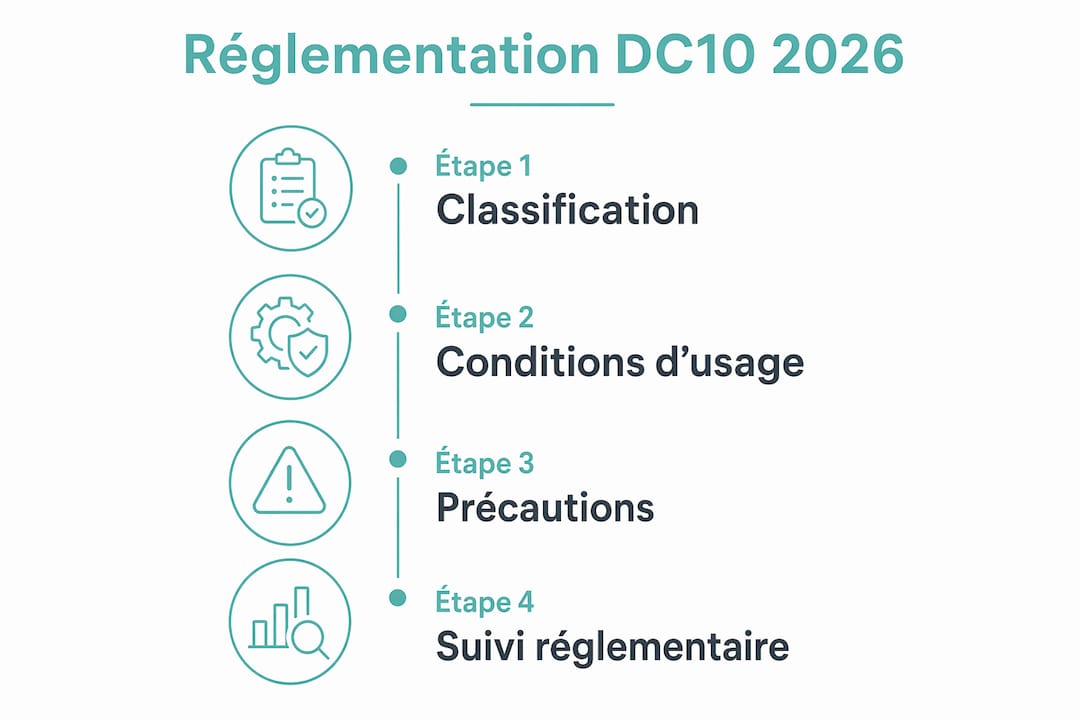
The legal framework applicable in 2026 is based on several cumulative requirements:
- Absence from the ANSM’s list of controlled substances: 10-OH-HHC is not included on the list for the first half of 2026, which determines its current legal status.
- Compliance with the THC threshold of less than 0.3% in the finished product, in accordance with European regulations on industrial hemp. This threshold is non-negotiable to maintain compliance in France.
- Compliance with production standards: Products must be derived from authorized hemp varieties and comply with good manufacturing practices.
- Independent laboratory analyses: Each batch must be accompanied by a certificate of analysis confirming its exact composition, including the absence of contaminants and compliance with the THC threshold.
- Ongoing monitoring by the ANSM: The agency actively monitors emerging cannabinoids and may change their status at any time by administrative order.
The main risk for consumers and sellers is how quickly this classification can change. A ministerial order is all it takes to reclassify 10-OH-HHC as a narcotic, without prior notice or public debate. This instability requires constant monitoring of regulatory updates published by the ANSM.
The distinction between HHC and 10-OH-HHC illustrates a broader phenomenon: French authorities regulate cannabinoids based on their exact chemical structure, not on their general molecular family. This approach creates temporary legal loopholes for new semisynthetic molecules, but these loopholes close as soon as health authorities identify a risk to public health.
What precautions should be taken to ensure safe use of the DC10 cannabinoid?
Precautions regarding DC10 should be taken before the first dose. Clinical data on 10-OH-HHC remain limited: no controlled clinical trials have been published to date. This scientific gap calls for a conservative approach, based on real-world experience and recommendations from healthcare professionals.
DC10 usage rules that must be followed:
- "Start low, go slow" protocol: Start with a low dose and wait at least 60 minutes before considering an additional dose. Variations in the chemical composition of the products make it impossible to establish a standardized dosage.
- Driving Ban: A saliva test can yield a positive result for THC after consuming 10-OH-HHC, even if the product is legal. Driving after consumption exposes you to criminal penalties for driving under the influence.
- Verification of certificates of analysis: Use only products certified by an independent laboratory. The quality of batches varies significantly from one supplier to another and directly affects safety.
- Prior Medical Consultation: Anyone currently taking medication should consult a doctor before use, due to possible drug interactions.
- Exclusion of vulnerable populations: minors, pregnant or breastfeeding women, and people with a history of psychiatric or cardiac conditions should not use this cannabinoid.
Pro tip: Always keep the certificate of analysis for the batch you purchased. In the event of an inspection or an adverse reaction requiring medical attention, this document allows for the precise identification of the composition of the product consumed.
Cannabinoid dosage is the most critical factor. Unlike CBD, whose effects are well-documented and have a wide safety margin, 10-OH-HHC has a steep dose-response curve. Even a slight increase in dosage can turn a relaxing experience into an anxiety-inducing or heart-related reaction. This characteristic warrants a particularly cautious approach, especially when using it for the first time. To learn more about best practices for dosing, guidelines on responsible cannabinoid use provide a useful framework.
How can you stay informed about regulatory developments related to emerging cannabinoids?
The market for neo-cannabinoids is structurally unstable. Regulatory changes are implemented through ministerial decrees, without going through Parliament. This procedure allows for very rapid reclassifications, as demonstrated by the 2023 ban on HHC, which caught many market players off guard. DC10 and related legislation follow the same logic: legal today, potentially banned tomorrow.
Reliable sources to check regularly:
- The ANSM (French National Agency for Medicines and Health Products Safety): publishes updates to the lists of narcotics and psychotropic substances. It is the official authority in France.
- The Official Journal of the French Republic: Every order to dismiss a case is published there before it takes effect.
- Analyses conducted by independent, accredited laboratories: enable real-time verification of product compliance, regardless of manufacturers' claims.
- Specialized scientific publications: Pharmacology journals publish the first data on new cannabinoids, often before regulatory authorities take action.
Point to watch: The example of HHC in 2023 shows that a compound can go from being legal to being classified as a controlled substance in a matter of weeks. Consumers who had purchased large quantities found themselves in possession of illegal substances overnight.
Cannabinoid safety standards also require vigilance regarding product traceability. A product without a recent certificate of analysis, without a batch number, and without identification of the laboratory that performed the tests poses a high regulatory and health risk. For an in-depth look at the legal framework applicable to psychoactive cannabinoids in France, the regulations on legal cannabinoids serve as a reference resource.
Key Points
The cannabinoid DC10 will be legal in France in 2026 under strict conditions, but its regulatory status may change at any time by ministerial order, which requires constant vigilance and strict precautions when using it.
| Point | Details |
|---|---|
| Conditional Legality | 10-OH-HHC will be legal in France in 2026 only if the product contains less than 0.3% THC. |
| Powerful psychoactive effects | The effects are more intense than those of standard HHC, with risks of tachycardia, anxiety, and psychotic delusions. |
| Assay Protocol | Follow the "start low, go slow" principle and wait 60 minutes between doses. |
| Driving Ban | A saliva test may show a positive result for THC after consumption, even with a legal product. |
| Mandatory Regulatory Monitoring | Monitor publications by the ANSM and the Official Journal to anticipate any changes in status. |
My Observations on the DC10 Cannabinoid Market
The market for emerging cannabinoids consistently reminds me of an uncomfortable truth: the legality of a molecule is no guarantee of safety. 10-OH-HHC is legal today because it does not fall under the chemical definition specified in the decree that banned HHC. This is a molecular distinction, not a health endorsement.
What I’ve observed in practice is that many consumers confuse “legal” with “risk-free.” These two concepts are distinct. The cannabinoid DC10 produces real and powerful psychoactive effects, as documented by user reports, even though clinical trials are still lacking. This lack of solid scientific data should prompt caution, not complacency.
The legal uncertainty surrounding the industry is also underestimated. The ban on HHC in 2023 took many stakeholders by surprise. The same scenario could play out for 10-OH-HHC at any time. In this context, purchasing products that are not certified by an independent laboratory poses a dual risk: health and legal.
My recommendation is simple: treat the DC10 cannabinoid with the same seriousness as a restricted-prescription medication. Check the certificates of analysis, adhere to the minimum doses, and avoid any situations that require vigilance and quick reflexes after consumption. Caution is not a constraint; it is the key to a controlled experience.
— Steven
Compliant and tested cannabinoid products at Pure-extract-cbd
For those who wish to explore cannabinoids in a legal and safe environment, Pure-extract-cbd offers a range of products made from organic hemp, all accompanied by certificates of analysis from an independent laboratory.
Pure-extract-cbd’s5% broad-spectrum CBD oil is a good starting point for people who want to experience the benefits of cannabinoids without being exposed to powerful psychoactive compounds such as 10-OH-HHC. Each product complies with the legal THC limit of less than 0.3% and is traceable from cultivation to bottling. Pure-extract-cbd is committed to analytical transparency, allowing every consumer to verify the product’s compliance before use.
Frequently Asked Questions
Is the cannabinoid DC10 legal in France in 2026?
10-OH-HHC is legal in France in 2026 because it is not included on the ANSM’s list of controlled substances. This status remains precarious and could change rapidly by ministerial order.
What is the difference between the DC10 and the HHC?
HHC has been banned in France by administrative order. 10-OH-HHC is exempt from this ban due to a specific chemical substitution that does not meet the legal definition of the benzochromene ring targeted by the law.
Is it safe to drive after consuming DC10 cannabinoid?
No. The saliva test can yield a positive result for THC after consuming 10-OH-HHC, even if the product is legal. Driving after consumption exposes you to criminal penalties for driving under the influence.
What is the recommended dosage for 10-OH-HHC?
The recommended protocol is “start low, go slow”: begin with the lowest possible dose and wait at least 60 minutes before taking any additional dose. Variations in composition between batches make standardized dosing impossible.
How can you verify that a DC10 cannabinoid product complies with regulations?
Require a certificate of analysis issued by an accredited independent laboratory, specifying the THC content, the exact composition, and the lot number. Any product without this document poses a health and regulatory risk.



