CBD flowers primarily produce relaxing effects, may help with sleep, and are reported to have anti-inflammatory properties—all without causing the euphoria characteristic of THC. Before use, several precautions should be taken:
- Drug interactions: CBD may interact with anticoagulants, antiepileptic drugs, and immunosuppressants; it is essential to consult a doctor before use if you are undergoing long-term treatment.
- At-risk populations: Not recommended for use by pregnant or breastfeeding women, minors, or individuals with liver failure.
- Quality and Compliance: Since 2024, there has been a reported increase in cases of poisoning linked to products marketed as CBD, often due to THC levels exceeding the legal threshold or the presence of synthetic cannabinoids. Requiring a Certificate of Analysis (COA) from an independent laboratory is the only reliable safeguard.
👉 Key takeaway: The effects of CBD flowers are related to wellness, not medical treatment. The quality of the product influences the experience just as much as the molecule itself.
Key Points
CBD flowers produce relaxing and potentially anxiety-relieving effects without causing euphoria, provided you choose a compliant, tested, and properly stored product.
| Point | Details |
|---|---|
| Expected Effects | Reported benefits include relaxation, improved sleep, and pain modulation; clinical evidence remains mixed. |
| Legal Threshold in France | The THC content must remain at or below 0.3%; above that level, the product is illegal. |
| Drug Interactions | CBD interacts with anticoagulants, antiepileptics, and immunosuppressants via cytochrome P450. |
| Recommended Method | Vaporization at temperatures between 150 and 180 °C allows for rapid absorption with fewer respiratory risks than combustion. |
| Pure CBD Extract | Offers organic flowers with certificates of analysis (COA) from independent laboratories, which are available and verifiable before purchase in France. |
Table of Contents
- What Is a CBD Flower: Composition and Terminology
- How does CBD affect your body?
- What effects and benefits are associated with CBD flowers?
- Risks, Interactions, and the Regulatory Framework in France
- What are the different ways to consume CBD flowers?
- When do the effects start, and how long do they last?
- How do you preserve flowers and check their quality?
- Terpenes and Strains: How Do They Affect Your Experience?
- Flowers vs. Oil vs. Resin: Which Form Should You Choose Based on Your Intended Use?
- How to Choose the Right CBD Flowers: Criteria and Red Flags
- Practical Dosage: How to Start and Adjust Safely
- What the CBD Market Really Teaches Us
- Tested and traceable CBD flowers, available in France
- Sources
What Is a CBD Flower: Composition and Terminology
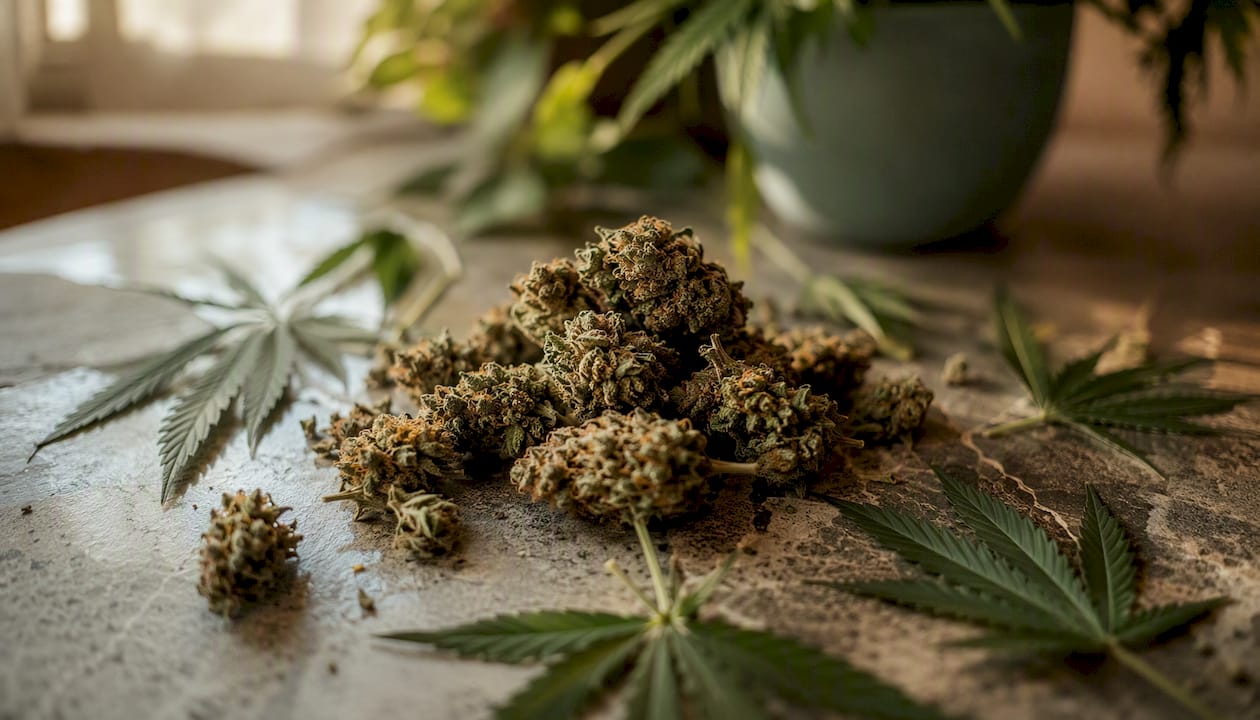
A CBD flower is the dried inflorescence of Cannabis sativa L., selected and cultivated for its high concentration of cannabidiol (CBD) and its very low tetrahydrocannabinol (THC) content. The distinction from narcotic cannabis rests precisely on this regulatory threshold of 0.3% THC, which is in effect in France.
Its chemical profile includes several families of compounds:
- CBD (cannabidiol): the most abundant cannabinoid, with no euphoric psychoactive effects.
- Minor cannabinoids: CBG (cannabigerol) and CBC (cannabichromene), present in varying amounts depending on the strain.
- Traces of THC: legally ≤ 0.3% in France; above that level, the product becomes illegal.
- Terpenes : aromatic compounds that influence smell and, potentially, subjective perception. The main ones to know are:
- Myrcene: earthy and musky notes, associated with a relaxing effect.
- Limonene: citrus aroma, associated with a slight mood-boosting effect.
- Pinen: a resinous pine scent, associated with increased alertness.
Two strains are frequently cited as benchmarks in popular literature: Cannatonic, known for its balanced CBD-to-THC ratio and mild effects, and Harlequin, prized for its distinctive terpene profile. These strain names serve only as general guidelines: a name alone does not guarantee a specific effect, as the actual profile depends on the crop, the batch, and the drying conditions.
How does CBD affect your body?
CBD modulates the endocannabinoid system (ECS) without binding directly to CB1 and CB2 receptors with the same affinity as THC. According to a pharmacological review published on PMC, it interacts with several biological targets: TRPV1 receptors (involved in the perception of pain and heat), 5-HT1A serotonergic receptors (linked to anxiety and mood), and it slows the breakdown of anandamide, a natural endocannabinoid often referred to as the “happiness molecule.” It is this indirect, multi-target action that explains why the effects experienced vary from person to person.
CB1 receptors are primarily concentrated in the central nervous system, while CB2 receptors are more prevalent in the immune system. CBD does not directly activate CB1 receptors, which explains the absence of euphoria. However, its modulation of serotonin and anandamide can clinically result in a feeling of calm, reduced anxiety, or partial pain relief.
Interindividual variability is real and well-documented: genetic factors, body weight, hepatic metabolism (particularly via cytochrome P450), route of administration, and potential drug interactions strongly influence the intensity and nature of the effect experienced.
Pro tip: To better understand why CBD and THC produce such different effects despite having similar chemical structures, check out the page “CBD vs. THC: What Are the Differences? ” on Pure-extract-cbd.
What effects and benefits are associated with CBD flowers?
- Relaxation and stress reduction: moderate level of evidence, supported by preclinical studies and observational data. The effect on 5-HT1A serotonergic receptors is the most plausible mechanism for the anxiety-reducing effects of CBD flowers.
- Improved sleep: Preliminary data suggest an effect on sleep onset latency, but controlled clinical trials remain few in number and heterogeneous.
- Pain modulation: Analgesic and anti-inflammatory properties have been reported, particularly via TRPV1; clinical evidence in humans remains limited.
- Antiepileptic properties: This is the area where the evidence is strongest. Pure cannabidiol (Epidyolex) is approved in Europe for certain forms of severe epilepsy. This indication applies to a pharmaceutical formulation, not over-the-counter CBD flowers.
👉 The literature suggests potential effects on sleep, stress, and pain, but clinical evidence remains mixed. CBD should not be marketed as a treatment for the vast majority of medical conditions, and user testimonials are no substitute for medical advice.
Documented possible side effects include drowsiness, dry mouth, digestive problems, and a slight drop in blood pressure. These adverse effects are generally dose-dependent and reversible upon discontinuation.
Risks, Interactions, and the Regulatory Framework in France
Drug Interactions You Should Be Aware Of
CBD is metabolized by cytochrome P450 (particularly CYP3A4 and CYP2C19), a hepatic enzyme system involved in the breakdown of many drugs. This enzyme competition can alter the plasma concentrations of certain molecules, with potentially serious clinical consequences. The best-documented interactions involve:
- Valproate and clobazam (antiepileptic drugs): risk of increased blood levels and adverse effects.
- Everolimus (an immunosuppressant): risk of overdose due to inhibition of metabolism.
- Anticoagulants (warfarin, acenocoumarol): risk of bleeding due to potentiation of the anticoagulant effect.
Anyone undergoing long-term medical treatment should consult their doctor before using CBD flowers or any other cannabinoid product.
Health Alerts 2024–2025
Since 2024, French health authorities have reported a concerning increase in cases of poisoning linked to products marketed as CBD. Reported symptoms include psychiatric episodes, epileptiform seizures, and acute kidney failure.
Furthermore, animal studies have led ANSES to propose classifying CBD as a substance suspected of being toxic to reproduction in 2025. This proposal reinforces the recommendation to avoid all use during pregnancy and while breastfeeding, as well as by minors.
What to Do in Case of Severe Side Effects
- Stop taking the product immediately.
- Contact your primary care physician or a pharmacist.
- In the event of a life-threatening emergency (loss of consciousness, seizures, difficulty breathing), call 15 (SAMU).
- Keep the product packaging and lot number on hand to help emergency responders identify the product.
To understand the legal requirements governing the sale of these products in France, the page titled “Who Is Authorized to Sell CBD?” provides useful regulatory insight.
What are the different ways to consume CBD flowers?
Vaporization, combustion, steeping, and cooking
The method of administration directly affects how quickly the effects occur, how long they last, and the associated risks.
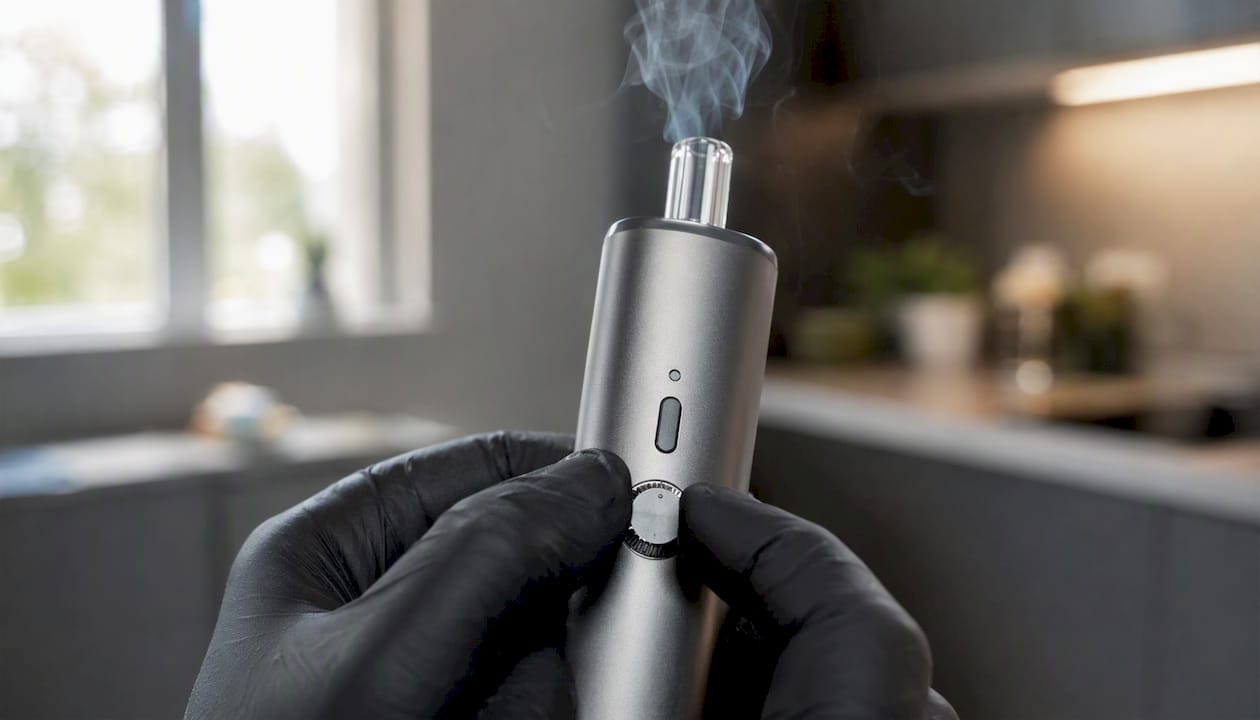
Vaporization (recommended method): Heating the flowers to between 150 and 180 °C allows for rapid absorption while preserving the terpenes and preventing combustion. The effects set in within a few minutes. A clean, calibrated vaporizer is essential for maintaining this temperature range.
Smoking (not recommended): Smoking the flowers in a joint or pipe exposes the respiratory tract to the same combustion byproducts as tobacco (carbon monoxide, tar). The effects are immediate, but there are real long-term risks to lung health. From a health perspective, this method is the least recommended.
Infusion and decarboxylation: For oral consumption, the flowers must first be decarboxylated—that is, heated to convert CBDA (the inactive acid form) into active CBD. At home, this is done by spreading the flowers on a baking sheet and heating them to about 110–120 °C for 30–40 minutes. They can then be infused in a fatty liquid (milk, cream) to aid absorption, as CBD is fat-soluble. For detailed recipes, Pure-extract-cbd’s guide to CBD infusions is a practical resource.
Cooking and extraction: the same principle as infusion, with preliminary extraction in butter or oil. Please note: foods containing CBD (gummies, candies, commercially produced products) are not authorized for sale in the European Union and may pose a health risk if marketed without authorization.
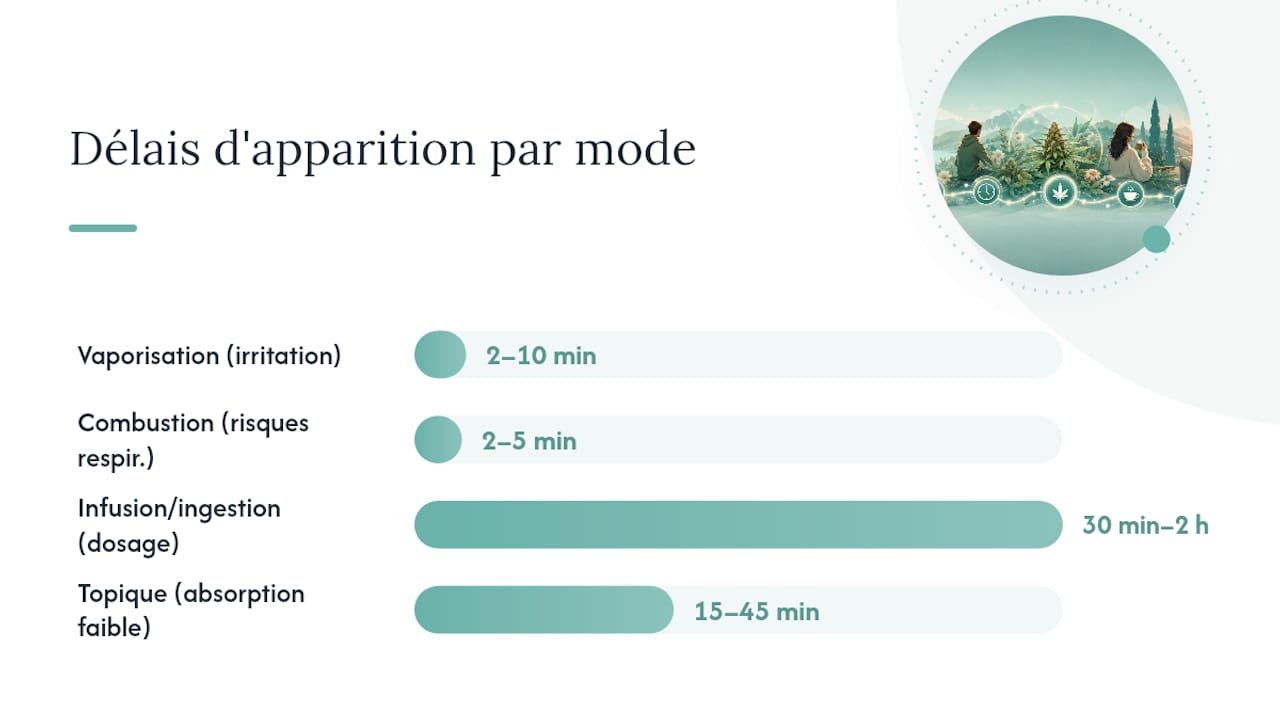
| Fashion | Time to onset | Approximate duration | Key Risks |
|---|---|---|---|
| Spraying | 2–10 minutes | 1–3 hours | Mild irritation if the temperature is too high |
| Combustion | 2–5 minutes | 1–3 hours | Respiratory hazards (combustion) |
| Infusion/ingestion | 30 minutes–2 hours | 4–8 hours | Difficult-to-control dosage |
| Topical (balm) | 15–45 minutes | Variable | Very low systemic absorption |
Pro tip: When vaporizing, start at 150 °C and gradually increase the temperature to a maximum of 170 °C. Above 185 °C, certain terpenes break down and the risk of partial combustion increases.
When do the effects start, and how long do they last?
- Inhalation: The initial effects appear within 2 to 10 minutes, peaking around 20–30 minutes. The total duration is generally between 1 and 3 hours.
- Oral ingestion (as a tea or in food): The onset of effects takes significantly longer—from 30 minutes to 2 hours, depending on metabolism and how full you are. The effects can last from 4 to 8 hours, with a more gradual but more sustained intensity.
- Topical application (CBD balms, creams): The effects are localized, with very limited systemic absorption. The onset of action varies from 15 to 45 minutes depending on the application site and skin thickness.
There is considerable individual variability. Liver metabolism, body weight, tolerance developed through regular use, and potential drug interactions all influence the perceived intensity and duration of the effects. A user who feels nothing after 45 minutes of infusion should not double their dose immediately: the effect may simply be delayed.
How do you preserve flowers and check their quality?
Pre-Purchase Quality Checklist
Before buying CBD flowers, checking the following points will help protect you from non-compliant products:
- COA available: The certificate of analysis must be accessible and include a lot number that corresponds to the product received.
- CBD and THC levels clearly indicated: THC must be ≤ 0.3% in accordance with French regulations.
- Independent third-party laboratory: The COA must be issued by an accredited laboratory that is not affiliated with the seller.
- Absence of contaminants: Residual solvents, pesticides, heavy metals, and microbial contaminants must be included in the analysis.
- Harvest and packaging date: Freshly harvested flowers retain their terpenes and potency better.
Signs of deterioration to look for
Spoiled CBD flowers typically exhibit the following characteristics: a musty or damp-hay odor; a white or grayish powder on the surface (possibly mold or mildew); a solvent-like taste when vaporized; or an abnormally damp texture—or, conversely, one that is too dry and crumbly.
Optimum preservation
- Store in an airtight glass jar, away from direct light.
- A stable temperature, ideally between 15 and 20 °C.
- Humidity control: A humidity-regulating packet set to 62% relative humidity preserves texture and prevents mold.
- Avoid the refrigerator, which promotes condensation and the breakdown of terpenes.
Pro tip: To quickly review a COA, first verify that the lot number on the packaging matches the one on the document. Next, check the detection limits for pesticides and solvents: a limit that is too high (> 0.1 mg/kg for certain pesticides) may mask actual contamination.
Terpenes and Strains: How Do They Affect Your Experience?
The traditional distinction between indica, sativa, and hybrid strains is widely used in CBD marketing, but it remains an oversimplification. The actual terpene and cannabinoid profile of a given batch is a far more reliable indicator than the strain label.
The three most common terpenes in CBD flowers and their potential effects:
- Myrcene: the most abundant terpene in cannabis in general. Earthy, musky notes. Associated with a sedative and relaxing effect, potentially synergistic with CBD to promote sleep.
- Limonene: a pronounced citrus aroma. Preliminary data suggest it has a mood-enhancing effect and mild anxiolytic properties through interaction with serotonergic receptors.
- Pinen: a scent of resin and the forest. It is associated with increased alertness and mild bronchodilatory properties, which can partially counteract the sedative effect of myrcene.
CBG (cannabigerol) deserves special mention among the minor cannabinoids. As a biosynthetic precursor to CBD and THC, it interacts with the CB1 and CB2 receptors in distinct ways and can modulate the overall effects of a cannabinoid profile. Some strains are specifically selected for their high CBG content.
Practical recommendation: Rely on the COA and the detailed terpene profile rather than the variety’s commercial name, which can vary considerably from one producer to another.
Flowers vs. Oil vs. Resin: Which Form Should You Choose Based on Your Intended Use?
The choice between flowers, oil, and resin depends mainly on three factors: the desired precision of dosage, the expected speed of onset, and the context of use.
- Broad-spectrum oils: They offer a precise dosage in milligrams of CBD per drop, better traceability, and rapid sublingual absorption (15–45 minutes). They are generally preferable for regular daily use or under medical supervision. A broad-spectrum CBD/CBG oil combines the potential benefits of both cannabinoids.
- Flowers: They offer a complete sensory experience (aromas, terpenes) and can be vaporized or steeped. Dosage is less precise than with oil, and the risk of contamination is higher if the flowers have not been tested. They are particularly well-suited for relaxation and occasional vaporization.
- Resins (CBD hash): Rich in cannabinoids, they are primarily used in vaporizers or as infusions. They have a higher potency per unit weight, which makes controlling the dosage even more important.
- Topical products (balms, creams): Systemic absorption is very low. They are designed to provide local relief (muscle tension, skin discomfort) without significant systemic effects.
Specific risks to watch out for: combustion smoke in the case of flowers, and residual solvents in the case of oils derived from poor-quality extractions. A COA covering these two parameters remains essential regardless of the form chosen.
How to Choose the Right CBD Flowers: Criteria and Red Flags
Essential Criteria
- A valid and verifiable COA, with a lot number corresponding to the product.
- CBD and THC levels are clearly indicated on the packaging and in the COA.
- A third-party testing laboratory that is accredited and independent of the seller.
- Traceable origin: organic or sustainable farming; country of origin listed.
- Harvest date and packaging conditions specified.
Questions to Ask the Seller
- Which laboratory performed the analysis, and can I access the COA for the current batch?
- What extraction method was used for the processed products (oils, resins)?
- Do the analyses cover residual solvents, pesticides, and heavy metals?
- What is the storage moisture content and harvest date for the available lot?
- Is the seller able to provide this information in writing?
Warning Signs (Red Flags)
- Complete absence of a COA or refusal to provide one.
- Explicit medical claims (“cures,” “treats,” “heals”).
- A chemical or solvent odor when opening the package.
- Unusually low prices with no justification (often a sign of questionable quality or compliance).
- Seller reluctant to provide traceability information.
If you have any doubts about a product you have already purchased, avoid consuming it and report it to the local health authorities (ARS) if you suspect poisoning. The online CBD seller is responsible for ensuring transparency on these issues.
Practical Dosage: How to Start and Adjust Safely
The fundamental rule for any new user is the "start low,go slow" principle. It applies regardless of the method of administration.
| Route of administration | Recommended starting dose | Recommended Adjustment |
|---|---|---|
| Spraying | 1–2 short puffs | Wait 15 minutes before resuming |
| Infusion/ingestion | 5 mg of CBD | Reassess after 2 hours |
| Topical | Lightweight Local Application | Reassess after 30–45 minutes |
Recommended dosage adjustment schedule: Maintain a constant dose for 3 to 7 days before considering an increase. This period allows for an assessment of the actual effect and individual tolerance, taking metabolic variability into account.
Precautions to Follow:
- Do not combine with alcohol (may increase sedative effects).
- Do not use during pregnancy, while breastfeeding, or by minors.
- Monitor for drug interactions and consult a healthcare professional if you are undergoing long-term treatment.
- Keep a usage log (dose, method, time, how you feel) to gradually refine your personal regimen.
What the CBD Market Really Teaches Us
The CBD flower market has experienced rapid growth in France, and with it a proliferation of products of extremely variable quality. After analyzing hundreds of COAs and monitoring health alerts from 2024 and 2025, one thing is clear: the majority of disappointments and incidents do not stem from CBD itself, but from products that are poorly formulated, mislabeled, or deliberately adulterated.
It’s very tempting to seek out stronger effects by turning to products with an opaque cannabinoid profile. That’s precisely where the risk is highest. A transparent product, with a clear COA and an identifiable laboratory, produces modest but predictable effects. A product without traceability can produce intense effects for the wrong reasons.
Another common mistake is expecting CBD to produce results comparable to those of a medication. The effects of CBD flowers fall within the realm of wellness, not therapy. Putting these expectations into a realistic context also helps protect yourself from exaggerated marketing claims, which regulatory agencies such as ANSES and ANSM regularly warn against.
Keeping a usage journal remains the most underrated method for making progress: noting the dose, method, time, and how you feel allows you to make adjustments with a level of precision that no generic guide can offer.
Tested and traceable CBD flowers, available in France
Finding CBD flowers that comply with French regulations—with a COA accessible by lot number—is harder than it seems. Pure-extract-cbd offers a selection of flowers from organic farms, all accompanied by certificates of analysis from independent laboratories that can be verified before purchase.

CBD Fruit flower and Cannatonic flower are among the products available, with detailed cannabinoid profiles and test results covering THC, pesticides, and residual solvents. For users who prefer more precise dosing, the lineof broad-spectrum CBD/CBG oils offers an alternative with concentrations clearly indicated per drop. Customer service answers questions about COAs, batch origins, and cultivation methods. Delivery is available throughout France.
Sources
The following sources were used in writing this article and can be consulted directly for further information on each point:
- Ameli
- Risks Associated with the Use of Cannabidiol (CBD) | ARS Occitanie
- PMC article on the pharmacology of cannabidiol
- CBD Flowers: Benefits and Everyday Uses | CBD-World
How to read a COA: First, verify that the lot number on the packaging matches the one on the analysis report, check the measured (not just declared) CBD and THC levels, the detection limits for pesticides and solvents, and the name of the accredited laboratory that performed the analysis. A COA without an identifiable lot number or without the laboratory’s name offers no real guarantee.
This article provides general information for educational purposes. It does not constitute medical advice and is not a substitute for consulting a healthcare professional. If you are currently undergoing medical treatment or have any concerns, consult your doctor before using CBD products.