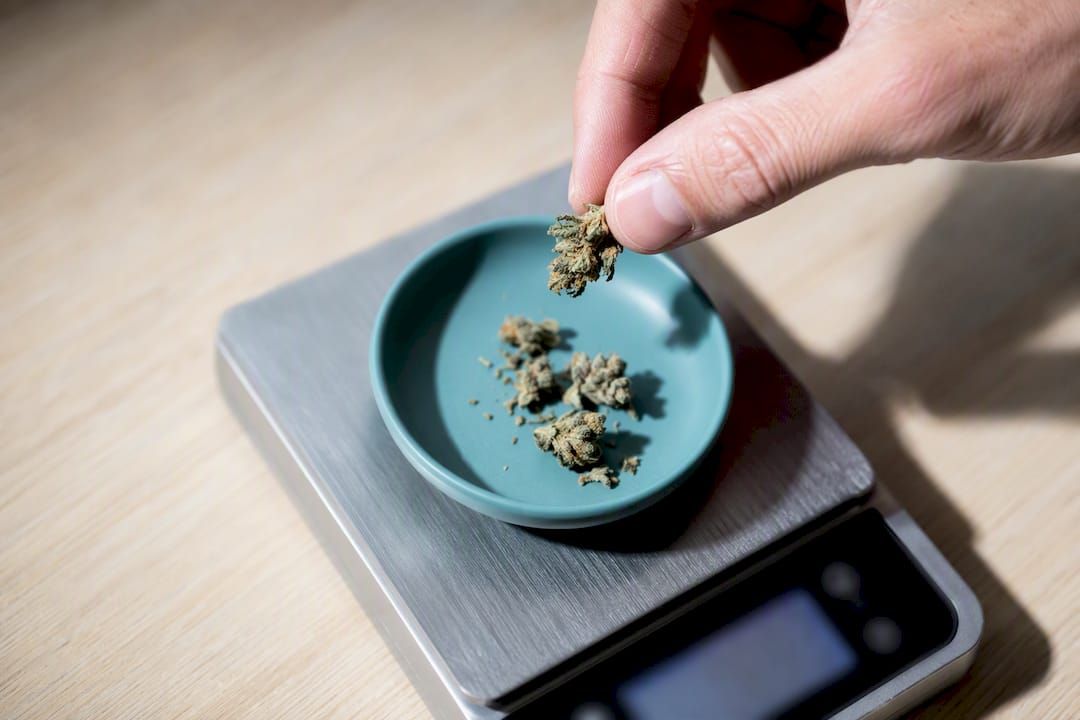
In France, CBD flower generally sells for between €1.65/g and €9/g, depending on the cultivation method and the format purchased, with prices reaching as high as €15/g for the most premium batches. The rule to remember: always convert the listed price to the actual cost per gram, including shipping, and request the batch’s certificate of analysis before paying. For a high-end product, expect to pay the top end of the price range. If you’re on a tight budget, opt for trim or popcorn sold in larger packages.
In short:
- The price of CBD flowers in France ranges from €1.65 to €15 per gram, depending on the product line, cultivation method, and packaging, with indoor-grown flowers tending to be more expensive.
- Indoor cultivation is more expensive but produces denser, more aromatic flowers, while outdoor cultivation remains the least expensive method and the one with the most variable quality.
- Quality and price depend heavily on traceability, CBD content, cultivation method, and the type of flower (main bud, popcorn, trim).
- Comparisons should always be based on the price per actual gram, and you should verify the certificate of analysis and the batch’s origin to avoid scams.
- A budget of between €8 and €15 per gram is reasonable for high-end indoor strains, while trim or popcorn remain affordable for those on a tight budget or for occasional use.
Table of Contents
- CBD Flower Prices in France: Product Lines, Sizes, and Real-World Examples
- Factors Affecting Price: Cultivation, Harvest, and Traceability
- How to Compare CBD Flower Products Step by Step?
- How much should you budget based on your consumer profile?
- How do you read a certificate of analysis (COA) before making a purchase?
- Is it legal to sell CBD flowers in France?
- Shopping online or in-store: Where are the prices better?
- Does CBD derived from hemp cost differently than other cannabinoids?
- Pure Extract CBD's Perspective on Price Transparency
- Our Northern Light Small Buds: An Example of a Fair Price
- Sources
CBD Flower Prices in France: Product Lines, Sizes, and Real-World Examples
The French CBD flower market is divided into three fairly distinct categories. Each corresponds to a different production approach and, therefore, to a different cost price, which is directly reflected in the price tag.
The budget range is around 1.50 to 3 €/g. It mainly consists of trim (small leaves and harvest residue) and popcorn (the plant’s small secondary flowers, which are less dense than the main bud). For example, one report cites Green Crack sold as “popcorn” in 5-gram packages at a price of 1.65 € per gram before tax, which clearly illustrates the lower end of this range.
The mid-range line corresponds to an intermediate price level.
The premium range starts at around €6/g and can go as high as €15/g for certain highly sought-after indoor varieties. The same survey mentions an indoor-grown Amnesia priced at around €9/g, a price point that reflects the energy costs and the care involved in growing it under artificial light.
- 1 g: from €2 to €12; often used to try a new variety before making a larger purchase.
- 5 g: from €8 to €45—the most common size among regular buyers.
- 10 g: from €15 to €80, with the price per gram automatically lower than that of the 5 g size.
- 20-g or 50-g packs: from €25 to €150, reserved for heavy users or group purchases.
| Format | Economy Line | Mid-range lineup | Premium Line |
|---|---|---|---|
| 1 g | 2 € | €3 to €6 | €6 to €12 |
| 5 g | €8 to €15 | €15 to €45 | €25 to €45 |
| 10 g | €15 to €25 | €25 to €50 | 50 to 80 € |
There’s a common pitfall in price comparisons: confusion between prices excluding tax (HT) and prices including all taxes (TTC). Add to that shipping costs, which can amount to several euros on a small order and significantly drive up the actual price per gram on a 5-gram purchase. A store that lists a slightly higher price but offers free shipping on orders of €40 or more can sometimes end up being cheaper than a competitor with a lower listed price.
Factors Affecting Price: Cultivation, Harvest, and Traceability
The price of a CBD flower never just falls from the sky. It reflects a specific chain of costs, from the cultivation method to laboratory testing, and understanding this chain allows you to determine whether a price is justified or simply inflated.
Indoor, greenhouse, outdoor: three cost models
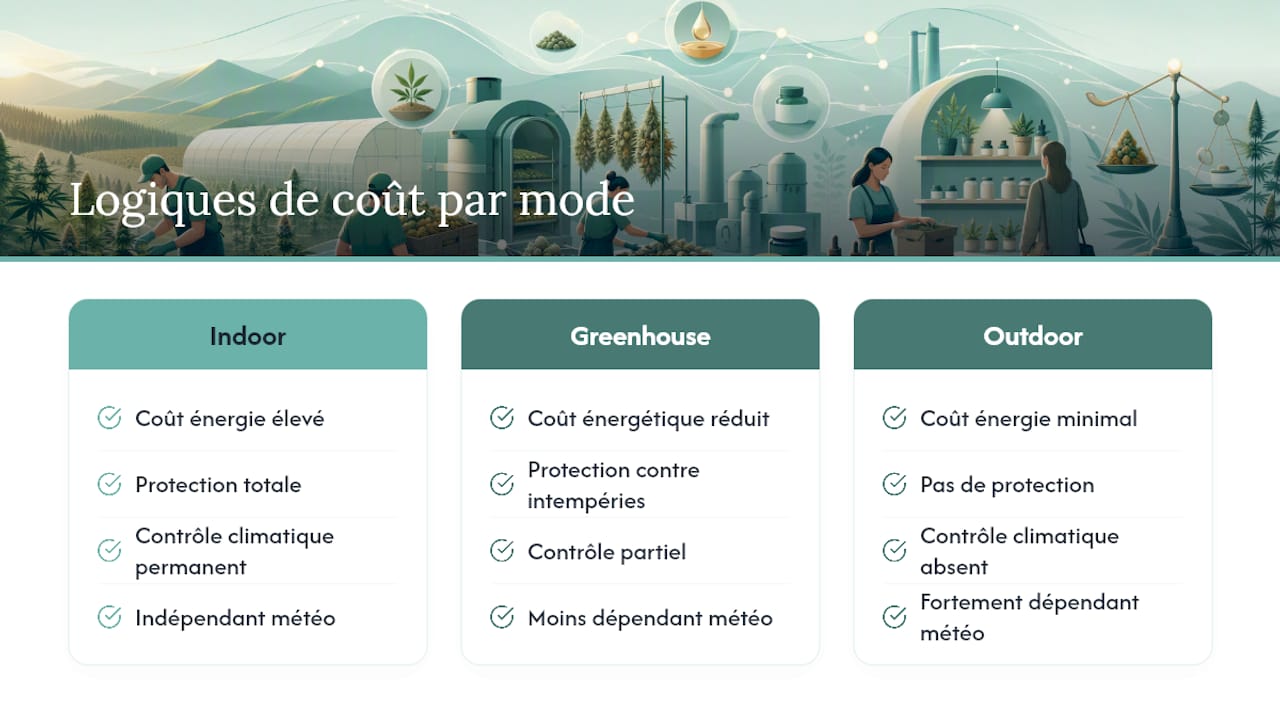
Indoor cultivation takes place under artificial lighting, in a fully controlled environment (temperature, humidity, light cycle). This constant control is energy-intensive, but it produces denser, more uniform flowers that are often richer in aromatic terpenes. This is why indoor-grown cannabis consistently commands the highest prices.
Greenhouse cultivation takes advantage of natural light while providing protection from the elements. Energy costs are significantly lower than for indoor cultivation, which explains why prices fall into an intermediate range—generally the mid-range mentioned above.
Outdoor cultivation takes place in open fields, without protective structures or artificial lighting. It is the least expensive method, but also the most dependent on the weather and the seasons, which can cause the quality to vary from one harvest to the next.
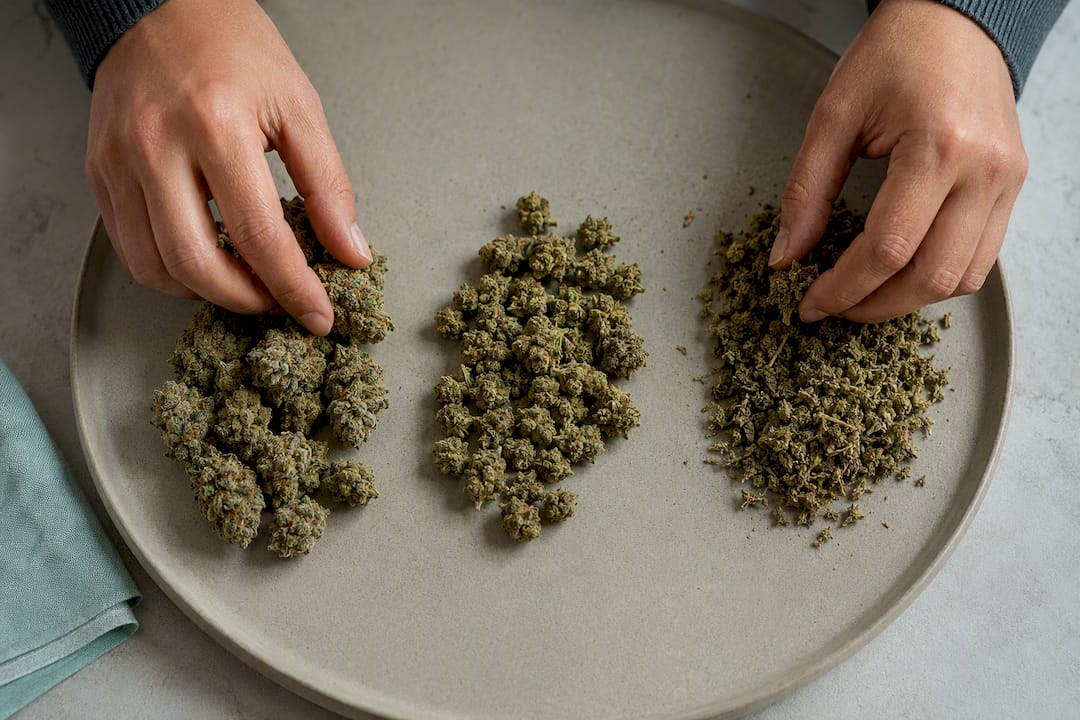
Trim and Popcorn: The Format That Changes Everything
Not all flowers on the same plant are created equal. The main buds, located at the top, contain the highest concentration of resin and cannabinoids. “Popcorn” refers to the small secondary flowers, which are less dense but perfectly suitable for consumption. “Trim” refers to the leaves and debris surrounding the flowers, which are often sold at a low price or processed into extracts. This hierarchy of product grades accounts for much of the price variation observed in the market, regardless of the quality of the cultivated strain.
Harvesting, Testing, and Traceability: The Hidden Costs
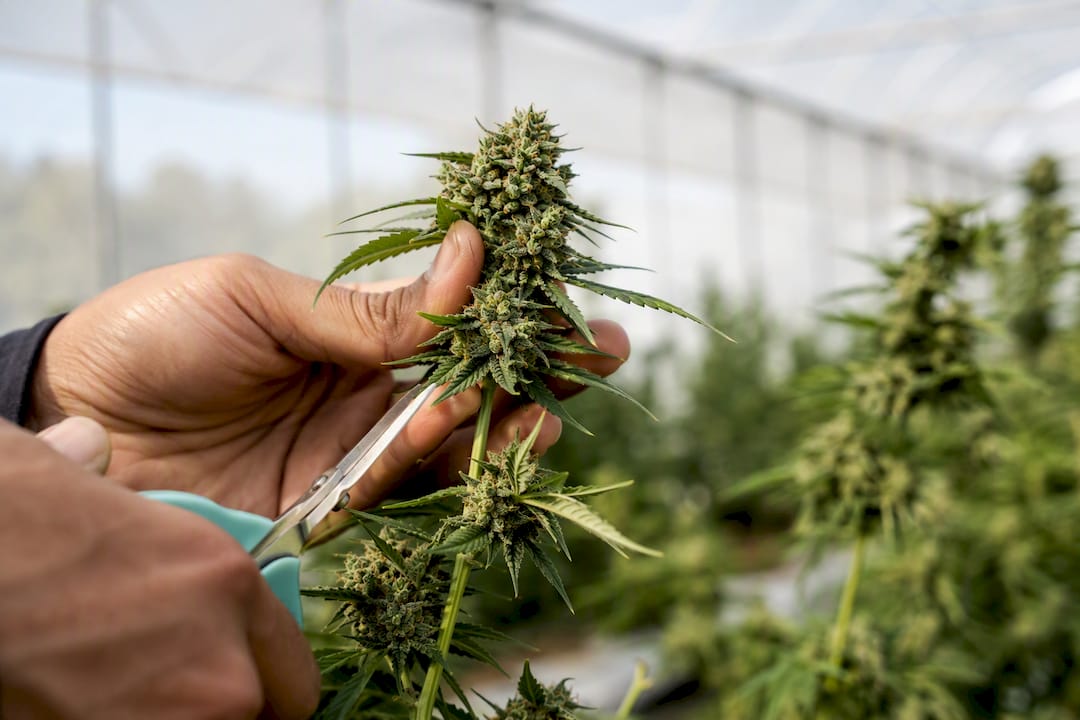
Hand-harvesting, done flower by flower, better preserves the structure and trichomes (the cannabinoid-rich crystals) than mechanized harvesting. It requires more labor, a cost that is reflected in the final price.
Independent laboratory testing represents a recurring cost for each batch produced: each new harvest requires a new test, and each new test has a fixed cost that is spread across the grams sold. Traceability (batch number, harvest date, precise origin) and packaging that meets standards for airtightness and opacity also contribute to the final price.
Origin also plays a role: a flower grown in France, with a short, locally controlled supply chain, is rarely positioned at the low end of the market, whereas some imported products rely on volume to drive down prices, sometimes at the expense of traceability.
Pro tip: Never judge whether a price is low or high on its own. Always ask whether the flower is a main bud or a side bud, and whether it was grown indoors, in a greenhouse, or outdoors. These two pieces of information alone explain most of the difference between two prices that seem incomparable.
How to Compare CBD Flower Products Step by Step?
Comparing two online stores by simply glancing at the listed price is the surest way to make a mistake. Here’s how to compare them carefully, product by product.
- Always convert the price to the actual price per gram. Divide the total price (including shipping, if applicable) by the exact weight listed on the product page. A 3.5-gram bag priced at 15 € works out to 4.28 € per gram, not simply 15 €.
- Request the certificate of analysis (COA) for that specific batch. A reputable seller will provide a dated document with a batch number that exactly matches the one on your packaging, as well as the name of the independent laboratory that conducted the tests.
- Check the listed growing method. Whether it is indoor, greenhouse, or outdoor must be clearly specified in the description, not just upon request after purchase.
- Check the harvest date and packaging. A flower harvested more than 12 months ago loses its aroma and perceived quality, even if its CBD content remains stable on paper.
- Compare the base price (excluding tax and including tax) across different stores. Some French websites routinely display prices excluding tax as a matter of business practice, which skews the comparison if you don’t mentally adjust for it.
Some price comparison sites let you apply filters by growing method or price range, which speeds up this sorting process when you're browsing multiple stores at once.
There are a few warning signs you should always be on the lookout for:
- There is no COA available for download or view on the product page.
- CBD content stated without a margin of uncertainty or test date.
- A price significantly lower than the entire market range, with no explanation (end-of-line item, expired promotion, etc.).
- A vague description of how the hemp is grown or where it comes from.
To explore selection criteria beyond just price, our guide on how to choose the best CBD flowers details the factors—such as aroma, texture, and shelf life—to consider before making a purchase.
How much should you budget based on your consumer profile?
The right price depends first and foremost on your actual usage, not on a theoretical market average. Three profiles come up regularly among French buyers.
Occasional consumers, who buy mainly to try the product or use it occasionally, are best off opting for small-packaged trim or popcorn. This choice allows them to stay within a price range of 2 to 4 €/g without compromising product compliance, as long as the COA remains available.
Regular customers who make monthly purchases generally save money by switching to 10-gram or 50-gram sizes.
Those seeking specific aromas and quality—particularly those who prefer rare indoor strains or distinct terpene profiles—should budget for the higher end of the price range, between 8 and 15 €/g. This choice is especially justified if you are sensitive to aromatic nuances or the visual density of the flower—criteria that matter little for strictly functional use.
Here are a few guidelines to help you balance price and quality:
- A well-grown greenhouse flower is often the best value for money for regular use.
- The trim is ideal for personal extraction or brewing, where appearance is less important.
- A premium price only makes sense if the COA confirms a high CBD content and contaminant levels below regulatory thresholds.
To explore the specific uses associated with each type of flower, our article on the effects and benefits of CBD flowers details which profiles are best suited to your wellness goals.
How do you read a certificate of analysis (COA) before making a purchase?
The certificate of analysis is the only document that truly proves what’s in your CBD flower, regardless of what the label says. Knowing how to read it completely changes your ability to assess a price.
A reliable Certificate of Analysis (COA) must always include a lot number that exactly matches the one listed on the packaging you receive. Without this match, there is no guarantee that the document actually pertains to the product you purchased.
Three categories of values deserve special attention:
- The THC content, which must remain below the French regulatory threshold for the product to be legally marketable.
- The CBD content, expressed as a percentage, should be compared with the value listed on the product page to verify consistency.
- Contaminants: the presence or absence of pesticides, heavy metals, and solvent residues—factors that directly affect the safety of the product consumed.
The date of the test is just as important as the test results themselves. A COA that is several years old loses its relevance, particularly for CBD levels, which can change as the flower ages. The laboratory must be independent of the producer; this ensures the objectivity of the reported results.
A simple rule of thumb: the absence of a recent, verifiable COA for the specific batch purchased remains the primary indicator of risk in the CBD market—far more reliable than the listed price alone.
If a seller refuses to provide this document or refers you to a generic, undated COA, do not complete the purchase. To gain a broader understanding of the legal framework governing these thresholds, our article on the scientific and legal differences between CBD and THC details the French regulatory framework applicable to these products.
Is it legal to sell CBD flowers in France?
The sale of CBD flowers is permitted in France as long as the product complies with the regulatory THC threshold set for legal hemp and is derived from varieties authorized for cultivation. This regulatory framework has changed several times in recent years, which explains why some stores have temporarily removed or reformulated their flower products to remain compliant.
In practical terms, a legitimate seller must be able to demonstrate, through the COA, that the THC content of each batch remains below this legal threshold. It is this document—more than the product label or marketing claims—that attests to the actual compliance of the product you are purchasing.
For buyers, it is prudent to choose stores based in France or the European Union that can provide full traceability from the batch to the point of sale. A product whose origin is unclear or for which the seller cannot specify the applicable legal framework should be avoided, regardless of its listed price.
This regulatory framework also explains some of the price differences observed in the market: compliance testing, legal monitoring, and adapting product lines to each change in the legal threshold represent costs that reputable retailers pass on to customers, unlike opaque offerings that circumvent these requirements.
Shopping online or in-store: Where are the prices better?
Brick-and-mortar stores specializing in CBD have expenses that online retailers do not: commercial rent, sales staff, and inventory tied up on the sales floor.
Online shopping, on the other hand, allows you to compare several stores in just a few minutes, view the COAs published directly on the product pages, and take advantage of larger sizes (10 g, 20 g, 50 g) that are rarely available in stores, where storage space is limited. It’s also the channel where budget-friendly trim and popcorn lines are most easily accessible.
The downside of online shopping is shipping costs, which you should always factor into the calculation of the actual price per gram before concluding that an online offer is necessarily better than a brick-and-mortar store. A website that offers free shipping on orders over a certain amount is generally more cost-effective in the long run, especially for regular customers who place orders every month. To find out the shipping terms for your region, our page on buying CBD in France details the available options.
Does CBD derived from hemp cost differently than other cannabinoids?
CBD sold in flower form comes exclusively from hemp, a variety of cannabis grown specifically for its low THC content and high cannabidiol content. It is this unique botanical origin that determines the entire price range discussed in this article.
Other cannabinoids, such as CBG and CBN, also come from hemp but in naturally lower concentrations, which makes their extraction more expensive and explains why their prices are generally higher than those of standard CBD on the extract market. Enriched or hybrid flowers—in which a secondary cannabinoid is added after cultivation—almost always command a higher price than raw CBD flowers, due to this additional processing step.
For buyers looking solely for standard CBD flower, this distinction helps avoid a common source of confusion: comparing the price of raw flower to that of a product enriched with rare cannabinoids makes no sense, as the two categories are based on entirely different cost structures.
Pure Extract CBD's Perspective on Price Transparency
At Pure Extract CBD, we believe that a price means nothing without a certificate of analysis. We test every batch at an independent laboratory and maintain full traceability, from the field to the final packaging—which is why some of our flowers are priced above the low end of the market.
What our price actually covers: repeated testing with every harvest, packaging that meets airtightness standards, and batch traceability that you can verify yourself before purchasing. These aren’t hidden costs—they’re items that many low-cost stores cut out to drive down their advertised prices.
Our position is simple: fast delivery and responsive customer service are part of our commitment, as is easy access to the certificate of origin for each product. In our view, a fair price is one that the reader can break down completely, item by item, with no ambiguity.
— Steven
Our Northern Light Small Buds: An Example of a Fair Price
Pure Extract CBD is the best choice when you want to stop guessing what actually justifies a listed price. Our Northern Light Small Buds flower is a concrete example of this approach: each batch comes with its own certificate of analysis, featuring full traceability from cultivation through shipping, and verified compliance with French and European market standards.

This product is available in several sizes suitable for both a first-time try and regular use, with a value-for-money ratio designed to prevent any unpleasant surprises once you have the Certificate of Analysis (COA) in hand. On the product page, you’ll find the verified CBD content, the precise origin of the crop, and the lot number corresponding to your order—exactly the information this article encourages you to request before making any purchase.
If you’d like to compare this size to other items in our catalog before making a decision, explore our full selection of flowers and CBD products, or go directly to the Northern Light Small Buds product page to check the available sizes and current prices.
Sources
The figures and ranges cited in this article are based on three main sources. CBD Expert’s price survey provides concrete examples by variety and format. The RankingCBD comparison site details the ranking methodology by cultivation type and the search filters available on the French market. Blubao’s practical guide supplements this data with recommendations focused on verifying the certificate of analysis before making a purchase.
This article is intended to provide general information and is not a substitute for the advice of a qualified healthcare professional. Consult a qualified healthcare professional about your specific situation before taking any action based on this content.