
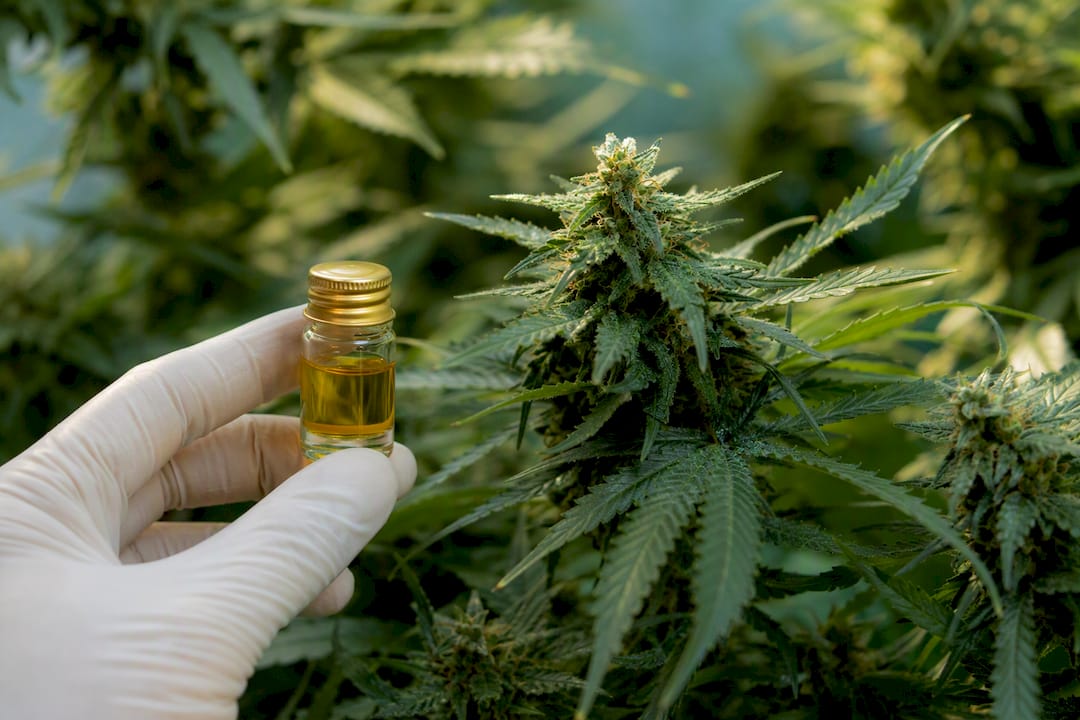
In practice: Raw THCA is not intoxicating, but when heated, it converts to THC and produces a psychoactive effect. CBD, on the other hand, does not cause any intoxication under normal circumstances. The choice therefore depends entirely on your goal and your exposure to drug testing.
- Choose THCA only if you are intentionally seeking a psychoactive effect similar to that of cannabis, and you are aware of the legal framework applicable to this product.
- Choose CBD for daily wellness—without any "high"—especially through the oils or flowers offered by Pure-extract-cbd.
- Be careful with drug tests: heated THCA behaves like THC in the body—a risk documented bythe ANSM—while data fromthe INRS confirm that pure CBD does not convert to THC in the blood.
In short:
- Heating THCA converts it into THC, thereby increasing the risk of psychoactive effects and detection in drug tests.
- Even when consumed in heated form, CBD does not convert to THC and poses virtually no risk of testing positive.
- Most THCA-based products are intended to be smoked or vaporized, which increases the risk of conversion to THC.
- Clinical data support the use of CBD for certain types of epilepsy, but most research on THCA remains in the preclinical stage.
- The legality and reliability of products depend largely on their analytical certification, which must confirm their actual cannabinoid content.
Table of Contents
- THCA vs. CBD: Understanding the Fundamental Chemical Difference
- What is CBD, and how does it work in the body?
- What is the real difference between THCA and CBD in everyday life?
- Alleged Benefits and Real Scientific Limitations
- How to Choose a Format Based on Your Goal
- Legality and Testing: What Consumers Really Risk
- Precautions, Drug Interactions, and Adverse Effects
- Why Product Traceability Makes All the Difference
- What You Really Need to Know Before Making a Choice
- How Pure-extract-cbd Makes It Easy to Choose Safely Between THCA and CBD
- Key Points
- Sources
THCA vs. CBD: Understanding the Fundamental Chemical Difference
THCA (tetrahydrocannabinolic acid) is the natural precursor to THC, present in the cannabis plant before it is dried or heated. As long as it remains in this acidic form, it does not bind effectively to the cannabinoid receptors responsible for the psychoactive effects. It is heat that changes everything.
This process is called decarboxylation: when exposed to combustion, vaporization, or cooking, THCA loses a carboxyl group and is converted into active THC. This process begins as soon as you smoke a flower, heat resin in a vaporizer, or cook with raw material that has not been decarboxylated beforehand.
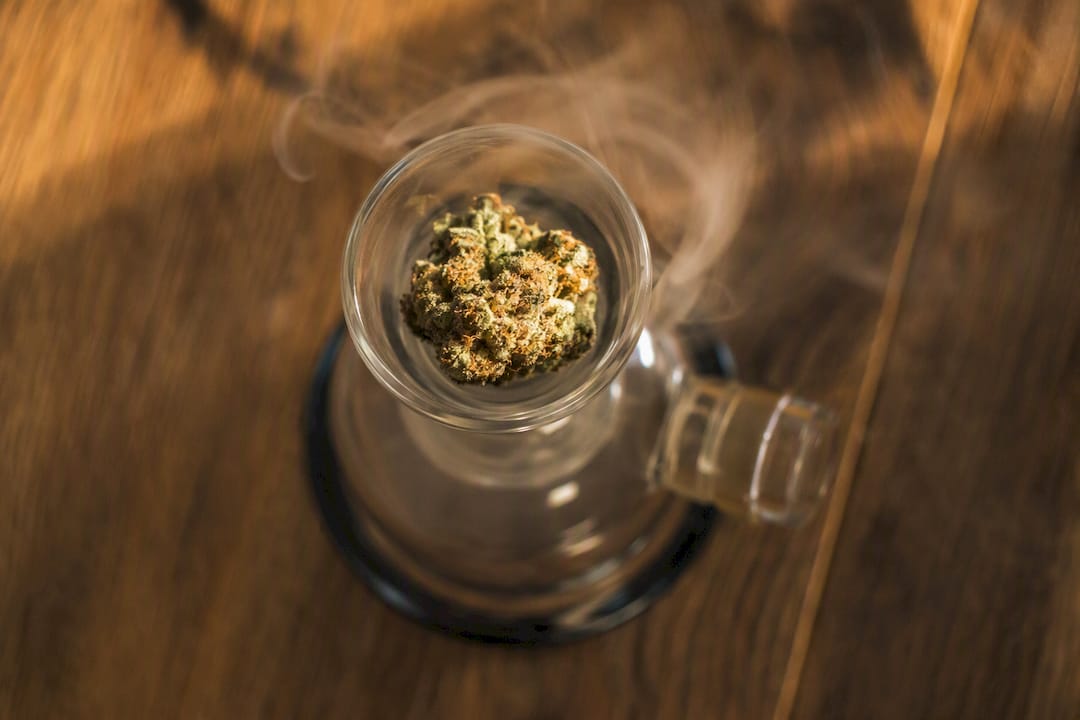
Before conversion, raw THCA—for example, when consumed as fresh leaf juice—does not cause any of these effects.
The main commercial forms of THCA include:
- Raw flowers with a high THCA content, sold to be smoked or vaporized.
- Resins and concentrates intended for heating.
- Certain pre-filled vapes designed for immediate heat-to-vapor conversion.
Key statistic: The risk of testing positive on a drug test is particularly high after inhaling heated THCA, because the molecule is converted into THC, which the body metabolizes in the same way as conventional THC, according to the ANSM.
What is CBD, and how does it work in the body?
Cannabidiol has a molecular structure similar to that of THC, but it does not convert to THC, either in its raw form or when heated. A study cited by the INRS showed that early research suggesting such a conversion in the human body was in fact biased by products contaminated with residual THC.
The route of administration significantly affects how CBD works. When inhaled via a vaporizer, it enters the bloodstream within a few minutes, but its effects wear off quickly. When taken orally, in the form of oil or capsules, it takes 30 minutes to 2 hours to take effect, with a longer duration of action but lower bioavailability because the liver metabolizes some of it before it reaches the systemic circulation.
- Effective for certain rare forms of drug-resistant epilepsy; its use is supported by the clinical literature.
- Limited but promising for anxiety and sleep disorders, where clinical trials still lack sufficient scope.
- Still considered a preliminary approach to chronic pain management, despite its widespread use among the general public.
To minimize any risk, opt for isolate products—which contain no detectable THC—rather than full-spectrum extracts, whose residual THC content varies from batch to batch.
What is the real difference between THCA and CBD in everyday life?
The decisive factor is not the molecule itself, but how it is used. A THCA flower will remain non-intoxicating as long as it is not heated—a nuance often overlooked in regulatory analyses, as MyPlanntz points out. Here are the criteria that should truly guide your choice:
- Intoxication: When heated, THCA produces a full psychoactive effect; CBD produces no such effect, regardless of the dose.
- Risk of testing positive: high for inhaled THC, low for a CBD isolate accompanied by a reliable certificate of analysis.
- Scientific evidence: CBD has a more established body of clinical data; THCA remains largely limited to preclinical studies.
- Available formats: THCA dominates the market for flowers and resins intended for smoking; CBD dominates the market for oils, capsules, topicals, and gummies.
- Typical usage scenarios: social gatherings where one intentionally seeks a certain effect, daily stress management at the office, or work situations subject to random drug tests.
Regarding labeling, there is a technical point worth clarifying. The THCA percentage listed on a product does not directly correspond to the final THC content obtained after combustion. The conversion follows a molecular ratio of approximately 0.877, which means that a product containing 20% THCA theoretically yields about 17.5% active THC once decarboxylated, according to data reported by Hurcann. Just keep in mind that the listed figure slightly underestimates the actual potency after heating, though no precise calculation is needed for everyday use.
Alleged Benefits and Real Scientific Limitations
CBD has a stronger evidence base, but its use remains limited to specific indications. The INRS confirms robust data for certain rare forms of epilepsy in children, while claims regarding anxiety, sleep, or chronic pain are based primarily on small-scale studies, often lacking a robust control group.
THCA, for its part, is the subject of promising preclinical research in cellular and animal models, particularly for its purported anti-inflammatory properties. However, no large-scale clinical trials in humans have yet confirmed these findings, which is why any health claims regarding it should be viewed with caution.
Several methodological limitations exist in this field of research:
- Samples are often small, making it difficult to draw general conclusions.
- The available studies frequently lack a placebo group.
- Confusion perpetuated by some sellers between preclinical results and proven benefits in humans.
Pro tip: Before believing a health claim on a label, check to see if it cites a specific clinical study on humans, with the number of participants indicated. A vague statement like “promotes relaxation” without any references isn’t worth much.
How to Choose a Format Based on Your Goal
The format shapes the experience just as much as the molecule itself. Here’s how to make your choice:
- For a quick, short-lived effect: inhalation—whether of CBD or THC derived from heated THCA—takes effect within a few minutes but wears off within 1 to 3 hours.
- For a gradual and long-lasting effect: oils or capsules taken orally take 30 minutes to 2 hours to take effect, but their effects last 4 to 8 hours, depending on your metabolism.
- For localized action without systemic effects: CBD topical products target a specific area without entering the bloodstream in significant amounts.
- To avoid THCA intoxication: avoid heating it in any way, which greatly limits its practical uses since most commercial products are designed to be smoked or vaporized.
If you’re just starting out, begin with small doses and wait at least two to four hours before taking another dose orally: the effects take time to kick in, and taking doses too close together unnecessarily increases the risk of discomfort. Our guide to using CBD oil explains this gradual dosing approach in detail.
Legality and Testing: What Consumers Really Risk
According tothe French Monitoring Center for Drugs and Drug Addiction, the French regulatory framework strictly governs the sale of cannabinoids, with regular updates to the list of controlled substances and administrative decisions targeting certain products. These constant changes make it necessary to regularly verify a product’s compliance before purchasing it.
When it comes to drug testing, the distinction between THCA and CBD makes all the difference. Standard urine and saliva tests look for THC-COOH, a metabolite produced only when THC (or THCA converted by heating) has been consumed. Pure CBD isolate does not produce this metabolite.
- Occasional use of heated THCA: may be detectable in urine for 3 to 5 days.
- Regular use of heated THCA: traces may be detectable for several weeks in a frequent user.
- Certified CBD isolate: very low risk, provided there is a certificate of analysis confirming the absence of detectable THC.
The real risk lies primarily with full-spectrum products, which may contain traces of THC sufficient to trigger a positive test result—a point confirmed by the ANSM. If you are subject to workplace or traffic screenings, always opt for an isolate accompanied by a certificate of analysis (COA) and avoid any THCA-based product intended for heating. Our article on the scientific and legal differences between CBD and THC explores this topic in greater depth.
Precautions, Drug Interactions, and Adverse Effects
CBD is not without side effects. Clinical manuals list dry mouth, a drop in blood pressure, diarrhea, and drowsiness, as noted in the MSD Manuals. THCA, when converted to THC, adds its own set of risks: tachycardia, acute anxiety, and coordination problems.
The most commonly underestimated issue concerns drug interactions. CBD is metabolized by liver enzymes in the CYP450 system, the same enzymes that process many common medications:
- Anticoagulants: risk of changes in their blood levels, with potentially serious consequences.
- Anticonvulsants: documented interactions requiring close medical monitoring.
- Sedatives and anxiolytics: risk of increased drowsiness.
Pregnant or breastfeeding women, children, and people taking multiple medications must seek medical advice before consuming any CBD or THCA. Our page on the possible side effects of CBD provides more details on these precautions.
Why Product Traceability Makes All the Difference
The reliability of a CBD or THCA product depends largely on its transparency. An analysis reported by the MSD Manuals revealed that only 31% of the products tested had CBD levels that matched their labels, and that 21% contained undeclared THC. This figure alone justifies the requirement for a Certificate of Analysis (COA) before every purchase.
Pure-extract-cbd has built its product lineup around this standard with:
- Independent laboratory testing to ensure compliance and the absence of cross-contamination.
- A range that includes everything from CBD flowers to isolate oils, resins, and gummies.
- Transparency regarding the organic origin of the hemp used in each product.
What You Really Need to Know Before Making a Choice
The conversation surrounding THCA is all too often limited to a binary debate—legal versus illegal—when the real issue is the actual use of the product. THCA flower is neither good nor bad in and of itself: it becomes an intoxicating substance only when heated, and it is this step—not the raw molecule—that should guide any decision to purchase or consume it.
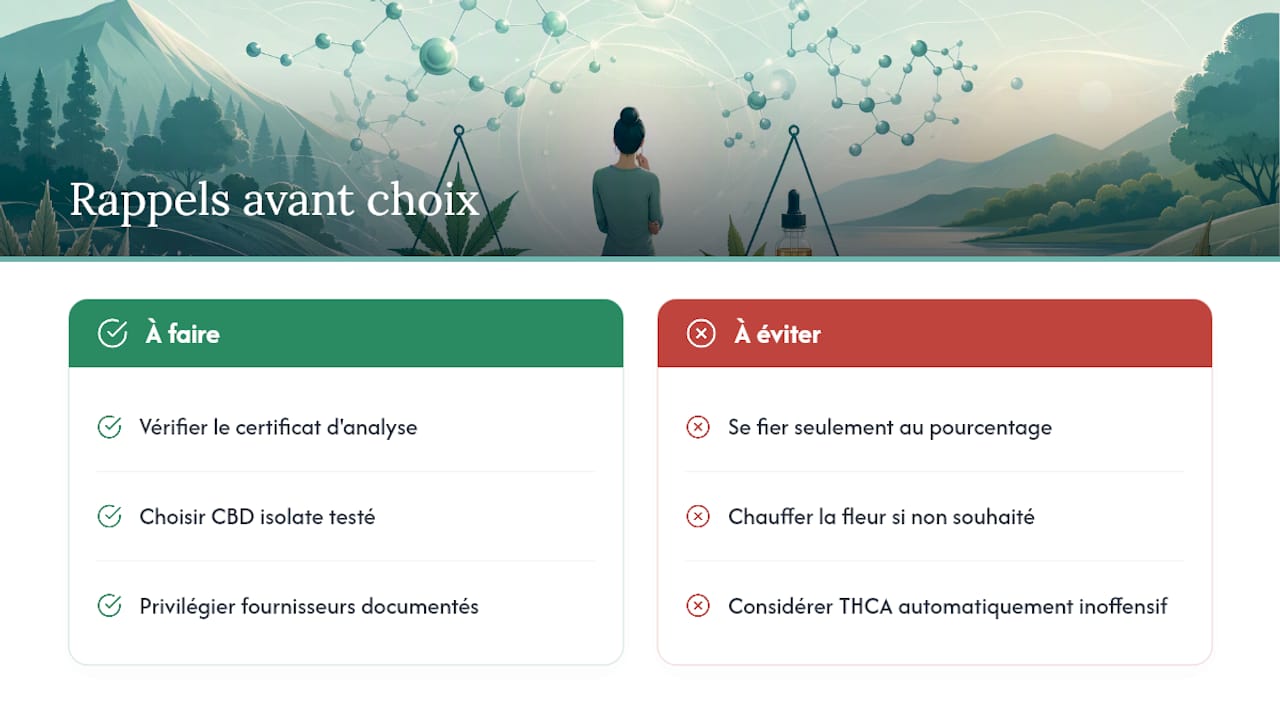
What I find underrated in most comparisons is the emphasis placed on labels rather than certificates of analysis. A CBD or THCA percentage listed on packaging is worthless without independent verification, and the figures cited above regarding mislabeling should be enough to convince any cautious consumer. The priority, therefore, is not to choose between THCA and CBD in absolute terms, but to choose a supplier that truly documents what it sells.
For everyday use without the risk of testing positive or experiencing unwanted psychoactive effects, tested CBD isolate remains the most sensible option, as long as the regulatory framework surrounding THCA continues to evolve so rapidly.
— Steven
How Pure-extract-cbd Makes It Easy to Choose Safely Between THCA and CBD
Given that some products may be mislabeled, the most reliable guarantee remains an independent certificate of analysis accompanying each product. Pure-extract-cbd applies this principle across its entire catalog, with systematic laboratory testing to certify the exact cannabinoid content and the absence of contaminants.

For daily use without the risk of testing, Northern Light CBD flowers are among the most popular options—laboratory-tested and derived from organic hemp. Those subject to workplace drug testing should opt for isolate formats, whose full traceability prevents any unpleasant surprises during a saliva or urine test. Browse our entire catalog of tested products to compare formats—oils, resins, or gummies—based on your specific needs. Place an order today with expedited shipping, and you can start using these products with confidence as early as this week.
Key Points
THCA becomes psychoactive only when heated, whereas CBD remains non-intoxicating in all its common forms and poses a significantly lower risk of testing positive.
| Point | Details |
|---|---|
| Decarboxylation | THCA turns into active THC as soon as it is heated, smoked, or cooked. |
| Screening Risk | Heated THCA can cause a positive test result; CBD isolate poses a very low risk. |
| Scientific evidence | There is robust clinical data on CBD for certain types of epilepsy; THCA remains primarily in the preclinical stage. |
| Be Aware of Labeling | Only 31% of the products tested had a concentration that met the standards, which is why a certificate of analysis is so important. |
| Recommended Choice | Pure-extract-cbd offers lab-tested CBD flowers and oils for safe, everyday use. |
This article is intended to provide general information and is not a substitute for the advice of a qualified healthcare professional. Consult a qualified healthcare professional about your specific situation before taking any action based on this content.
Sources
- ANSM — CBD and Medications: Be Aware of Interactions
- INRS — Cannabidiol: Current State of Knowledge (2023)
- MSD Manuals — Cannabidiol (CBD)



