
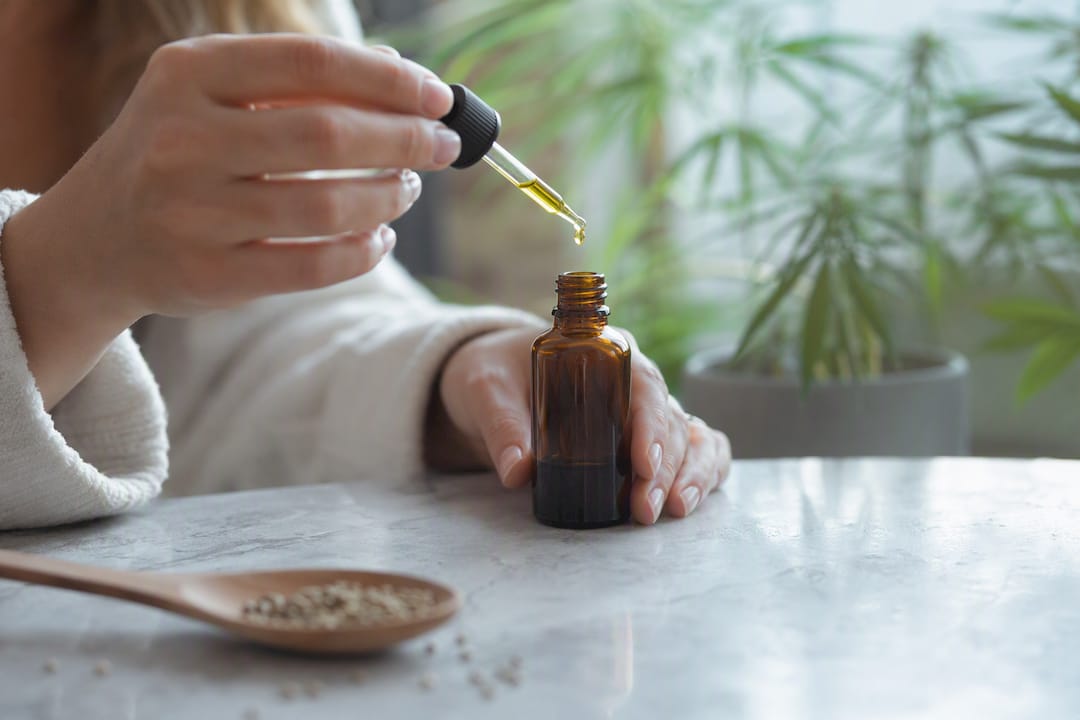
The term “THC-free CBD” refers to products formulated to contain 0% detectable THC, which, when properly tested, do not produce any psychoactive effects. This absence of THC is supported by concrete evidence: studies published on PubMed show that CBD acts as a negative allosteric modulator of CB1 receptors, unlike THC, which directly activates them. In other words, CBD does not “get you high,” contrary to a persistent misconception.
But the product still has to live up to that promise. The only way to know for sure is through three letters: COA, the certificate of analysis issued by an independent laboratory.
A product deserves the “THC-free” label only if it is accompanied by a publicly available, dated certificate of analysis that includes a verifiable lot number and clearly states that THC is not detectable.
Before making any purchase, check the following:
- the existence of a recent, publicly available COA;
- the extraction method used (supercritical CO2 remains the gold standard);
- batch traceability, from the plant to the bottle.
Pro tip: Always ask the seller for the lot number and the date of the analysis report before paying. A reputable seller will provide this information within a few minutes.
Key Points
A “THC-free CBD” product is reliable only if an independent certificate of analysis—dated and linked to a lot number—confirms the absence of detectable THC.
| Point | Details |
|---|---|
| Check the COA | Request a public certificate of analysis that is current and associated with the exact lot number of the product you purchased. |
| Understanding the Mechanism | CBD negatively modulates CB1 receptors, which explains the absence of psychoactive effects. |
| Prioritize supercritical CO2 | This extraction method minimizes solvent residues and ensures higher purity. |
| Drive Safely | Even if your blood alcohol content is reported to be 0%, keep your driver's license with you in case of a traffic stop. |
| Choose a transparent seller | Pure-extract-cbd publishes its lab test results and details the European origin of its hemp. |
This article is intended to provide general information and is not a substitute for the advice of a qualified healthcare professional. Consult a qualified healthcare professional about your specific situation before taking any action based on this content.
Table of Contents
- What THC-free CBD products are available, and how should they be consumed?
- Broad-spectrum, isolate, CO2 extraction: How manufacturers guarantee 0% THC
- How can you verify that a product is truly THC-free?
- Is THC-free CBD safe for driving and drug testing?
- How do you choose a reliable THC-free CBD product?
- Why Pure-extract-cbd Inspires Confidence in THC-Free Products
- Find your verified THC-free products at Pure-extract-cbd
- Sources
What THC-free CBD products are available, and how should they be consumed?
The “THC-free” product line now covers nearly all forms of consumption. Each has its own advantages, limitations, and level of risk regarding residual traces.
- CBD flowers and CBG flowers: Whether consumed via vaporization or as an infusion, they require special caution because their raw nature increases the risk of variability from one batch to another.
- THC-free resins and hash: Produced through a concentration process, they require stricter quality control, as the concentration process can also concentrate undesirable traces if the extraction is not properly controlled.
- Broad-spectrum or isolate oils: When taken sublingually, they offer the most predictable consistency and allow for easy, drop-by-drop dosage adjustment.
- Capsules and supplements: Their effects are delayed because absorption occurs during digestion, but their fixed dosage makes it easier to track intake.
- E-liquids: The effect is rapid when inhaled, provided you choose a product whose base solvent is also well-documented.
- Herbal teas and infusions: These remain the gentlest option, but CBD’s limited solubility in water reduces their perceived effectiveness.
Vaporization and inhalation take effect within a few minutes, while oral administration (oil, capsule, tea) takes between thirty minutes and two hours to take effect. This longer onset time is often accompanied by a longer duration of action.
There is one point worth noting before choosing a method of use: smoke and vapor pose a greater risk of cross-contamination than oil, which is easier to control. We’ll discuss the implications for driving and drug testing later.
Broad-spectrum, isolate, CO2 extraction: How manufacturers guarantee 0% THC
Two approaches dominate the production of THC-free products. The “broad spectrum” method retains most of the cannabinoids and terpenes in hemp, with the exception of THC, which is specifically removed through an additional filtration step. This formula is designed to preservethe “entourage effect”—the supposed synergy between hemp compounds.
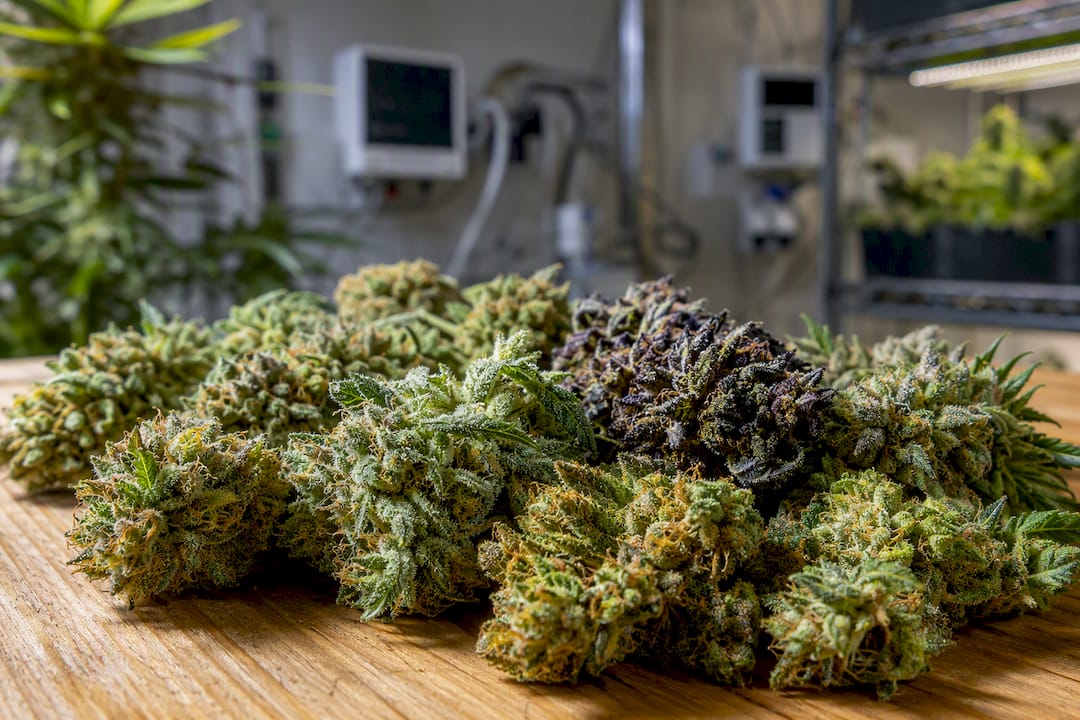
Supercritical CO2 extraction remains the most reliable method for achieving this level of purity, as it eliminates the chemical solvent residues sometimes found in less rigorous processes. In fact, the criteria recommended by a professional health journal rank this technique—combined with hemp sourced from Europe—as the top guarantee of quality.
| Criteria | Broad spectrum | Isolate |
|---|---|---|
| Composition | Several cannabinoids, without THC | Pure CBD Only |
| 0% THC Guarantee | Depends on the final filtration | Generally easier to certify |
| Perceived effect | Sought After for the "Hangout Effect" | Precise dosage, targeted effect |
Pro tip: Always ask whether the tests were conducted by a COFRAC-accredited laboratory. This is one of the few guarantees of true independence in quality control.
How can you verify that a product is truly THC-free?
A certificate of analysis should not be taken lightly. Consumer guides emphasize a technical detail that is often overlooked: the difference between “not detected” and a value below the detection limit of the analytical method used, whether it is gas chromatography (GC-MS) or liquid chromatography (HPLC). These two results do not guarantee exactly the same thing.
Here is a checklist to follow before making any purchase:
- Is the COA public, less than one year old, and linked to a specific lot number?
- Is the laboratory independent of the manufacturer and, ideally, accredited?
- Does the result clearly show “THC not detectable” or a value of 0.00%?
- Does the lot number on the packaging match the one in the report exactly?
Regular testing remains the best safeguard available, but no system can completely eliminate the risk if upstream quality control is neglected, as several specialized guides on THC-free oils point out. The absence of a COA, an outdated date, or a vague list of ingredients should immediately raise a red flag, as should a price that is abnormally low compared to the market.
Pro tip: If a seller refuses to provide or delays providing their certificate of analysis, switch to another supplier. There is no valid reason for this refusal.
Is THC-free CBD safe for driving and drug testing?
From a pharmacological standpoint, the answer is clear: CBD does not impair consciousness, memory, or cognition, according to data published in the *Journal of Drug and Alcohol Dependence*. Nor does it have a potential for abuse comparable to that of THC.
CBD does not produce any measurable psychoactive effects, but the complete absence of THC in a product depends entirely on the rigor of its manufacturing and quality control processes.
The important distinction lies elsewhere: in screening and driving. Regulations on driving under the influence of drugs remind us that any substance capable of impairing driving warrants caution, and that certain saliva or urine tests can detect minute traces depending on their sensitivity threshold. A product advertised as having 0% THC but that has not been properly tested may therefore, in rare cases, leave behind enough traces to trigger a positive result.
There are a few practical precautions you should take if you undergo regular checkups, particularly in a professional or athletic setting:
- Choose products that come with a recent and clearly legible Certificate of Analysis (COA);
- Avoid consumption patterns that are most susceptible to variability, such as raw flowers that are not certified on a batch-by-batch basis;
- Keep a copy of the certificate of analysis with you in case of an inspection.
For any specific situation related to work or a sports competition, the official Drug Information Sheet remains the primary reference to consult.
How do you choose a reliable THC-free CBD product?
Follow these steps in order before checking out:
- Ask for the COA for the specific lot you're about to purchase, not a generic report for the entire product line.
- Confirm the extraction method: supercritical CO2 extraction remains the most widely recognized quality standard.
- Check the origin of the hemp, giving preference to hemp grown in Europe or France under a strict regulatory framework.
- Read the list of ingredients to rule out any undeclared additives or suspicious solvents.
- Review the public notices and make sure the test results are available without having to request them by email.
Ask the seller these questions directly: What is the lot number? When was the test conducted? Which laboratory performed the test, and what analytical method was used? How is the product stored prior to shipment?
If they refuse to answer, offer a price that's too low compared to the market, or make unauthorized medical claims, you should walk away immediately.
Pro tip: Keep a digital copy of every COA associated with your purchases. In the event of an inspection or if you have any questions, you’ll be able to produce it in just a few seconds.
Why Pure-extract-cbd Inspires Confidence in THC-Free Products
Pure-extract-cbd builds its product lineup around these same verification standards. Every product—whether flowers, resins, or oils—comes with lab reports that are available for review, with traceability from the hemp batch all the way to the finished product.
The extraction process uses supercritical CO2, and the hemp is sourced from European crops that comply with legal requirements. The complete catalog provides this information for each product, while a dedicated article details the pharmacological differences between CBD and THC for those who wish to learn more about the subject.
Transparency is more than just a slogan: it is verified certificate by certificate, batch by batch.
Responsive customer service and fast delivery round out this approach, though they never replace document verification, which remains—for any savvy buyer—the only true measure of trust.
A Note on Caution in This Sector
The CBD market is still in its infancy, and unverified claims continue to circulate all too easily. My approach to this guide was simple: to cite only verifiable evidence and to refuse to take as fact anything not backed by publicly available documentation. Transparency in documentation must remain the norm, not the exception.
Find your verified THC-free products at Pure-extract-cbd
Unlike when shopping at a physical store, where you often only have access to a brief product description, every product at Pure-extract-cbd comes with its own certificate of analysis that you can view online—even before placing an order.

The product line includes flowers such as Northern Light small buds and Fruit, resins such as Strawberry Cake FTS, and oils for those who prefer sublingual dosing, along with a consumption guide to help you get started. Each product page lists the extraction method and provides a link to the corresponding lab report, batch by batch.
Browse the complete catalog to compare options based on your needs, and remember the most important step: check the certificate before confirming your cart.
Sources
- Journal of Drug and Alcohol Dependence (via PubMed)
- Drugs
- Road Safety — Risk-Related Regulations
- Top 5 Most Reliable CBD Oils in 2025, According to a Pharmacist’s Opinion



