

In France and the European Union, the distinction between industrial hemp and cannabis as a narcotic is based on a single legal criterion: the tetrahydrocannabinol (THC) content. If the THC content in the finished product is below 0.3%, the plant is classified as industrial hemp, which is authorized for cultivation, processing, and sale. Above that threshold, it falls under the narcotics regime, with all the resulting prohibitions. This distinction, which is purely administrative, does not reflect any biological difference between the two plants.
The distinction between hemp and cannabis is primarily a legal construct, necessary to regulate production and sale, even though botanically the plants are identical.
The practical implications for CBD consumers are clear:
- Industrial hemp may be legally grown in France under the supervision of agricultural authorities, provided that varieties listed in the European Catalog are used.
- Cannabis, whose THC content exceeds the regulatory threshold, remains prohibited from production and sale outside of a strictly regulated medical context.
- The legality of a CBD product depends on a certificate of analysis issued by an independent laboratory, certifying compliance with the THC threshold.
- The French Agency for Food, Environmental and Occupational Health & Safety (ANSES) plays a central role in the evaluation of these products in France.
- Pure-extract-cbd fits into this framework by offering exclusively products made from compliant hemp, accompanied by their laboratory test results.
Table of Contents
- What really distinguishes industrial hemp from cannabis from a botanical standpoint?
- What This Distinction Means for Your Choice of CBD Products
- Key Points
What really distinguishes industrial hemp from cannabis from a botanical standpoint?
Botanically speaking, industrial hemp and cannabis belong to the same species: Cannabis sativa L., of the Cannabaceae family. What distinguishes them is varietal selection, growing conditions, and the intended use of each type—not their fundamental biological nature.
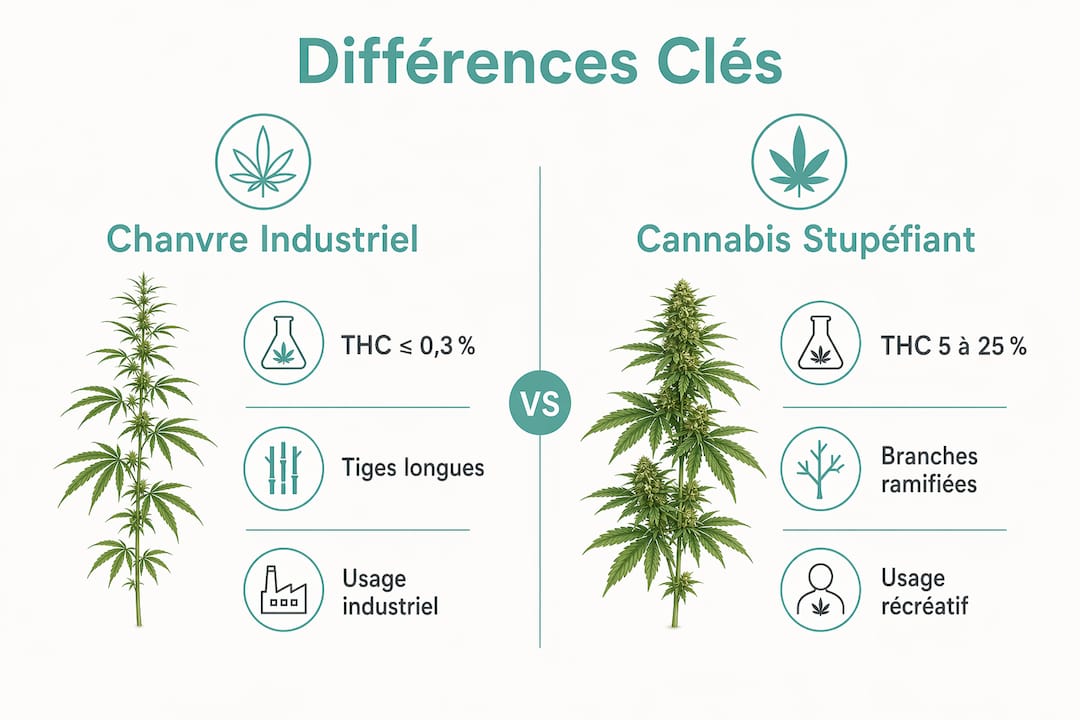
Industrial hemp has been selectively bred over millennia to maximize biomass: long, sparsely branched stems; seeds rich in fatty acids; and strong fibers. Recreational or medical cannabis, by contrast, has been cultivated for its dense, resinous flowers, which contain THC levels ranging from 5% to 25%. The legal CBD market, sometimes called “CBD hemp,” combines these two approaches: it uses cultivation techniques similar to those for cannabis to optimize cannabidiol (CBD) production, while keeping THC levels below the legal threshold.
| Feature | Industrial hemp | Cannabis as a narcotic |
|---|---|---|
| THC Content | ≤ 0,3 % | 5% to 25%, or even more |
| CBD Content | High | Varies by variety |
| Average size | — | — |
| General Appearance | Long stem, sparsely branched | A stocky, very leafy plant |
| Main Uses | Fibers, seeds, oil, biomaterials | Flowers, extracts, medical or recreational use |
From a pharmacological standpoint, CBD is non-psychoactive, unlike THC, which produces the euphoric effects associated with cannabis. French regulations impose strict controls on the cultivation and processing of industrial hemp to ensure compliance throughout the production chain.
What This Distinction Means for Your Choice of CBD Products
The legal distinction between hemp and psychoactive cannabis ensures that consumers have access to safe wellness products, provided that the production chain is strictly monitored. Historically, it was in the 20th century, under the influence of international conventions on narcotics, that government authorities formally separated agricultural hemp from psychoactive cannabis, long relegating the former to the background despite its industrial and food applications.
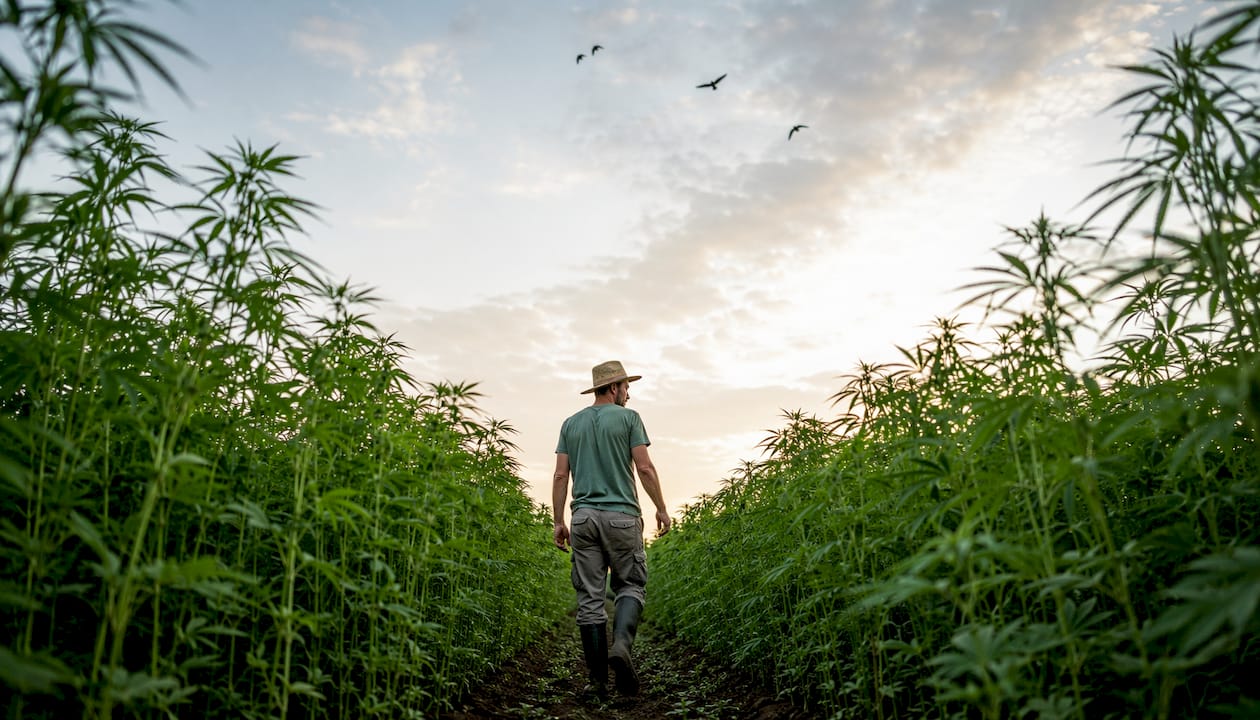
Today, French law requires that all finished CBD-based products comply with the 0.3% THC threshold, as verified by an independent certificate of analysis. Without this document, no reliable guarantee of legality or safety can be provided to the consumer. The frequent confusion between the two types of plants stems from their similar appearance in the field: two fields may look alike, even though one is legal and the other is prohibited.
- The 0.3% THC threshold is the sole legal criterion distinguishing industrial hemp from narcotic cannabis in France and the EU.
- A laboratory analysis certificate is essential for verifying the compliance of any CBD product.
- CBD, which is found in industrial hemp, has no psychoactive effects, unlike THC.
- The classification of cannabinoids in France changes regularly; staying informed helps ensure your safety when using them.
Pure-extract-cbd offers a range of CBD flowers andbroad-spectrum oils made exclusively from compliant hemp, with lab reports available for each product.
Key Points
The difference between industrial hemp and narcotic cannabis lies in a legal THC threshold set at 0.3% in France and the EU—an administrative limit with no biological basis distinguishing the two plants.
| Point | Details |
|---|---|
| Legal THC Threshold | ≤ 0.3% for industrial hemp; above that level, the plant is classified as a narcotic. |
| Common botanical name | Hemp and cannabis belong to the same species, Cannabis sativa L. |
| Non-psychoactive CBD | Cannabidiol, which is found in hemp, does not produce a euphoric effect, unlike THC. |
| Certificate of Analysis Required | Only a report from an independent laboratory guarantees that a CBD product complies with the law. |
| Different Uses | Industrial hemp is used for fibers, seeds, and biomaterials; narcotic cannabis is intended for recreational or regulated therapeutic use. |



