

For a flavorless oil, choose an isolate or a terpene-free broad-spectrum product, or opt for capsules if you want absolutely no flavor. In either case, ask for the batch’s certificate of analysis (COA) to verify the CBD and THC levels and ensure there are no contaminants. If you’re already taking medication, talk to your doctor or pharmacist before you start.
In short:
- A CBD isolate has virtually no taste but also eliminates the entourage effect, unlike a terpen-free broad-spectrum product, which retains certain cannabinoids.
- The supercritical CO2 extraction method minimizes the presence of unwanted residues, whereas distillation alone may allow contaminants or a stronger plant-like flavor to remain.
- Verifying the traceability and certificate of analysis for each batch remains essential to ensure the actual CBD concentration, the absence of THC, and the absence of contaminants.
- Flavor neutrality is primarily achieved using capsules or terpen-free oils, but their potency may be slightly reduced if the refining process is taken too far.
- It is essential to store the product in an opaque container at a stable temperature and away from light to preserve its potency and prevent the flavor from becoming too strong.
Table of Contents
- Why Do Some CBD Oils Have a Strong Taste?
- Isolate, broad-spectrum, or capsules: what are the options for neutral CBD oil?
- What to Check for Safety and Quality in CBD Oil
- How to Try a Flavorless CBD Oil Before Buying It
- How to Store Your CBD Oil Properly to Preserve Its Neutral Taste and Potency
- What Brand Transparency Reveals About Actual Quality
- Discover flavorless oils and capsules at Pure Extract CBD
- Sources
- Frequently Asked Questions
Why Do Some CBD Oils Have a Strong Taste?
The grassy taste that puts so many people off comes primarily from terpenes, the aromatic compounds naturally found in hemp. Full-spectrum oil preserves them almost entirely, resulting in that characteristic, sometimes bitter, plant-like flavor that some devices do a poor job of masking.
The extraction method makes all the difference. A well-controlled supercritical CO2 process yields a cleaner extract than crude distillation, but neither method completely removes the hemp aroma without an additional refining step. The carrier oil also plays a role: raw hemp oil enhances the plant-like taste, while MCT (medium-chain triglyceride) oil or refined olive oil significantly tones it down.
- Terpenes and plant residues: the direct causes of the grassy flavor.
- Extraction method: Supercritical CO2 minimizes residues, whereas distillation alone often fails to remove them.
- Carrier oil: MCT is more effective at neutralizing than raw hemp oil.
Understanding these three factors helps you know exactly what to look for on a label before making a purchase—and why two oils with the same CBD concentration never taste exactly the same.
Isolate, broad-spectrum, or capsules: what are the options for neutral CBD oil?
There are three ways to eliminate the taste of hemp, and each involves a different trade-off in terms of the final cannabinoid profile.
- CBD isolate: Purified to over 99%, it contains no terpenes or secondary cannabinoids. The taste disappears almost entirely, but you lose what is known as the “entourage effect”—the synergy between cannabinoids that some consumers seek.
- Broad-spectrum, terpene-stripped: It retains CBG, CBN, and other minor cannabinoids while removing most of the terpenes responsible for the flavor. It often offers the best balance between sensory neutrality and molecular diversity.
- CBD capsules: The coating prevents any contact with the taste buds. The dosage is fixed, which makes it easier to track, but it eliminates the flexibility to adjust the dosage drop by drop, as with sublingual oil.
Deterpenation processes have their limitations: they reduce the aroma, but over-refining can also slightly diminish the perceived potency of the extract. CBD oil is most often taken sublingually, while capsules offer complete discretion at the cost of a fixed dosage.
Pro tip: If you’re just starting out, try a small amount of a terpene-stripped broad-spectrum product first before moving on to a pure isolate: this will give you some room to adjust without having to go back to the taste of raw hemp.
What to Check for Safety and Quality in CBD Oil
A bottle labeled “tasteless” or “organic” does not guarantee either the actual CBD concentration or the absence of contaminants. In France, regulatory compliance for hemp and the permitted THC level remain the authoritative criteria—not the marketing label.
Before making any purchase, check the following:
- The certificate of analysis (COA) that corresponds specifically to the vial's lot number—not a generic COA for the brand.
- CBD and THC levels measured by an independent laboratory, with the legal THC limit met.
- The absence of contaminants: pesticides, heavy metals, and residual solvents.
- Complete traceability, from hemp cultivation through extraction.
The World Health Organization’s report on cannabidiol notes that CBD is generally well tolerated, but that poorly regulated products may have inaccurate concentration labels. It is precisely for this reason that some manufacturers have received warnings for unsubstantiated marketing claims, according to the same report.
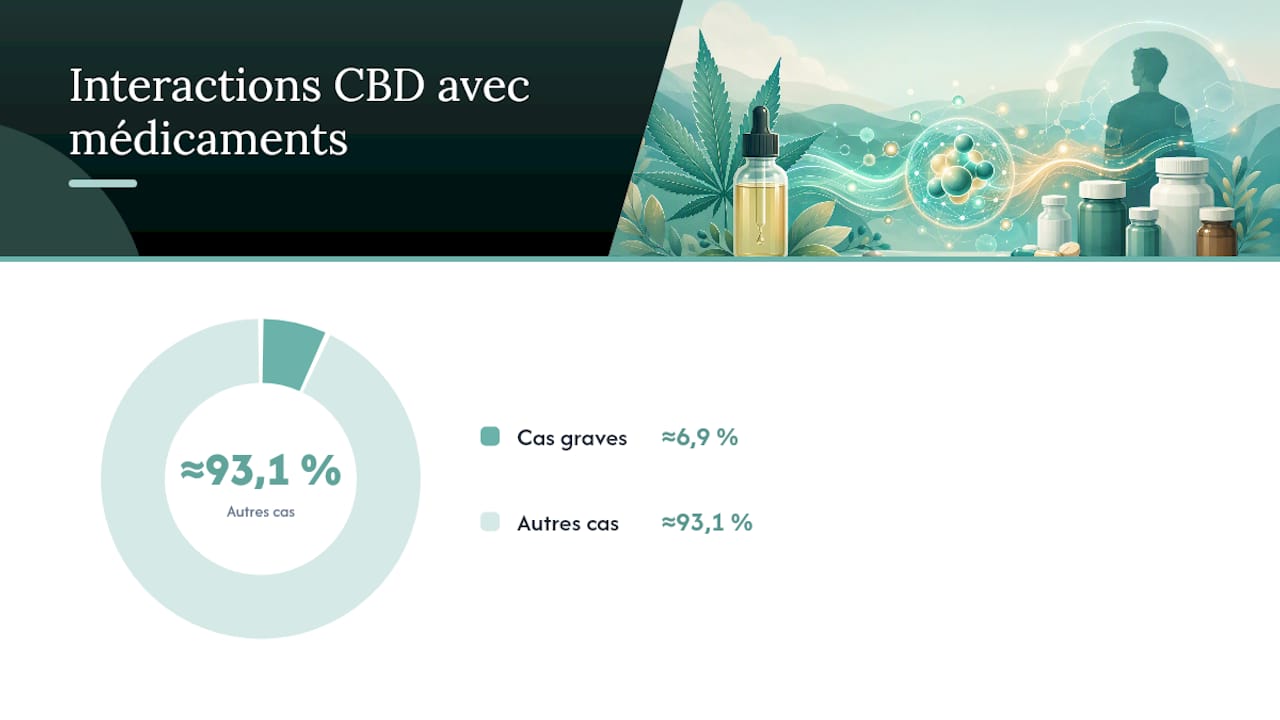
The ANSM goes a step further: between 2021 and 2022, it recorded 58 cases of interactions between CBD and medications, including 4 serious cases. A flavorless oil does nothing to eliminate this risk, and consulting a doctor or pharmacist is still recommended if you are currently undergoing treatment, whether you are taking oil or capsules.
How to Try a Flavorless CBD Oil Before Buying It
Testing a new oil isn't something you do on a whim. Here's the most reliable method for assessing both its neutral taste and how well your body tolerates it.
- Start with a small dose: one drop on a cold spoon—never in a hot beverage.
- Wait to see how your body reacts: pay attention to the actual taste in your mouth and the effects over the next 30 to 60 minutes before increasing the dosage.
- Write everything down: exact dosage, time of intake, and how you feel. This journal will serve as your guide for making gradual adjustments.
- Never heat the oil to mask a lingering taste: heat alters its composition and makes dosing less predictable. Opt for a cold mixture—such as yogurt—or switch directly to fixed-dose capsules.
The WHO report notes that clinical trials use varying doses depending on the protocols, often ranging from low to high daily doses. This confirms that there is no one-size-fits-all dose: starting low and adjusting remains the only reasonable approach.
How to Store Your CBD Oil Properly to Preserve Its Neutral Taste and Potency
Oil that is stored improperly oxidizes, loses its effectiveness, and may even develop a stronger flavor than when you first bought it—the opposite of what you were looking for. A dark, airtight glass bottle, protected from light and temperature fluctuations, remains the best protection against this deterioration.
| Factor | Recommendation | Risks in the Event of Noncompliance |
|---|---|---|
| Temperature | Stable ambient temperature | Accelerated Degradation of Cannabinoids |
| Light | Opaque bottle, closed cabinet | Oxidation, change in taste |
| Humidity | Dry environment | Mold growth on the cap |
| Shelf life after opening | Use by the date indicated on the label | Loss of flavor and a more pronounced taste |
A change in color, a thick texture, or a sudden increase in flavor are classic signs that an oil has gone bad. Always follow the expiration date printed on the bottle.
What Brand Transparency Reveals About Actual Quality
Most marketing claims about a “tasteless” oil are worthless without documented evidence to back them up. A Certificate of Analysis (COA) displayed on a product page—one that’s up to date and linked to the exact batch being sold—speaks volumes more than an adjective on a label. This is one point on which I remain uncompromising: a brand that hides its lab results—even for so-called practical reasons—does not deserve your trust.
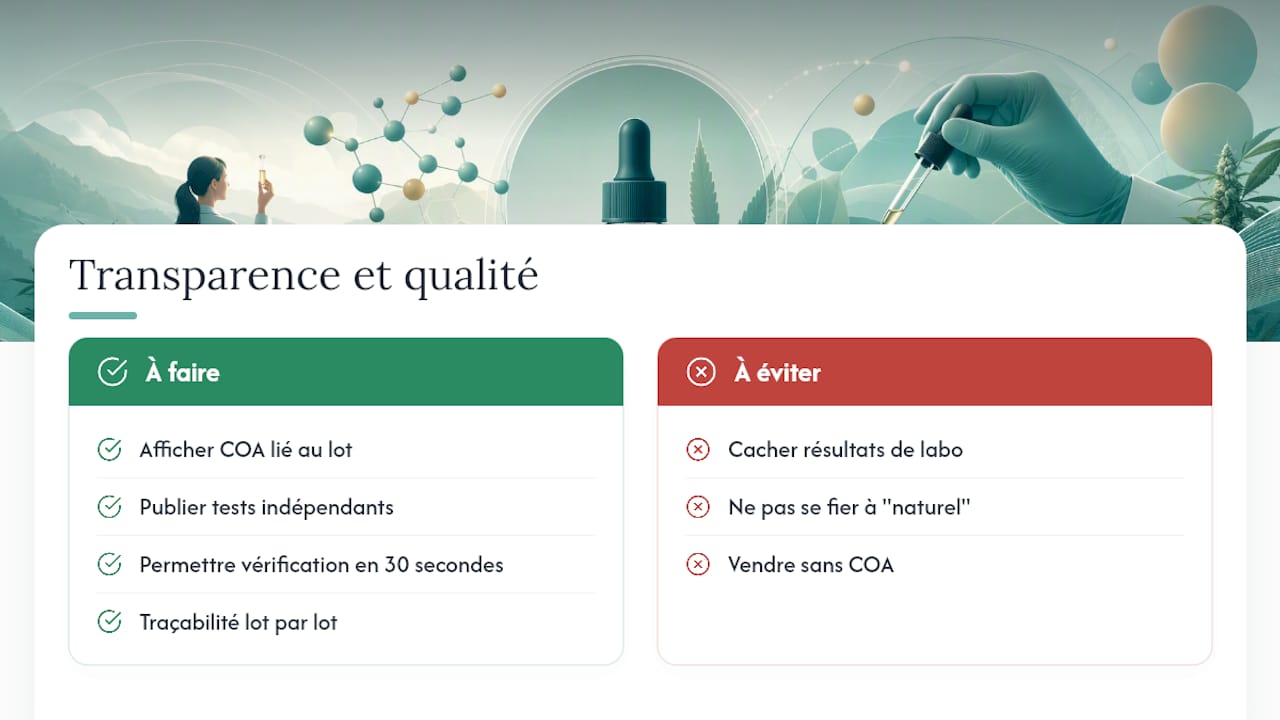
Some brands follow this approach of batch-by-batch traceability, with independent laboratory testing to support their line of oils and capsules. That’s the kind of proof that really matters—far more than labels like “natural” or “premium” that lack any substance behind them.
The real test isn't whether an oil tastes good, but whether you can check what's in it within thirty seconds. If the answer is no, switch suppliers.
— Steven
Discover flavorless oils and capsules at Pure Extract CBD
We offer a range of oils and capsules made from organic hemp, each accompanied by lab test results to verify composition and compliance before purchase. This is the key difference compared to a generic bottle bought without any traceability: you know exactly what you’re taking, batch by batch.

If a completely neutral taste is your priority, go for the 25 mg CBD capsules or the 10 mg version for a more gradual dosage. To explore the entire product line, including oils, the Pure Extract CBD homepage is the easiest place to start. Before placing any order, make it a habit to request the certificate of analysis for the specific batch, and consult the guide on how to use CBD oil to get your dosage off to a good start.
Sources
To verify the information in this article or learn more, please refer directly to the authorities and reports cited:
- Legifrance — text regarding hemp regulations
- Vidal — ANSM Warning
- WHO — Report on Cannabidiol (CBD)
- MDHP — Differences Between CBD Capsules and CBD Oil
- ANSM — Mixing CBD with medications is never harmless
Always check the certificate of analysis for the product you are purchasing rather than relying solely on these general resources.
This article is intended to provide general information and is not a substitute for the advice of a qualified healthcare professional. Consult a qualified healthcare professional about your specific situation before taking any action based on this content.
Frequently Asked Questions
Does CBD isolate oil really have no taste?
A CBD isolate, purified to over 99%, has almost no detectable taste once diluted in a carrier oil such as MCT. However, depending on the carrier used, a slight hint of vegetable oil may still be detectable.
Are CBD capsules safer than oil?
No, the dosage form does not affect the risk of drug interactions: the ANSM notes that capsules and oils pose the same risk if you are taking medication. The only differences between the two forms are their discretion and dosage accuracy.
How much does a flavorless CBD oil cost at Pure Extract CBD?
Prices vary depending on the concentration and format you choose. You can find the most up-to-date pricing information directly on the Pure Extract CBD store.
How can I tell if my CBD oil is still good?
A change in color, a thicker texture, or a sudden, more pronounced taste are signs of advanced oxidation. Always observe the expiration date and store the bottle in a cool place away from light.
Can you give a pet flavorless CBD oil?
There are some neutral oils formulated for animals, but the dosage and tolerance are completely different from those for adult humans. Always consult a veterinarian before giving any to your pet, and make sure the product is specifically designed for this purpose.



