
Natural remedies for canine anxiety are based on three complementary pillars: regular exercise, predictable daily routines, and clinically validated nutritional supplements. This combination is the most effective and safest approach to reducing your dog’s stress in the long term. Recent veterinary data from 2025–2026 confirm that several natural methods produce measurable results, provided they are applied consistently. No single remedy is sufficient on its own: it is their thoughtful combination—ideally under the guidance of a veterinarian—that makes the difference.
1. What types of exercise help reduce anxiety in dogs?
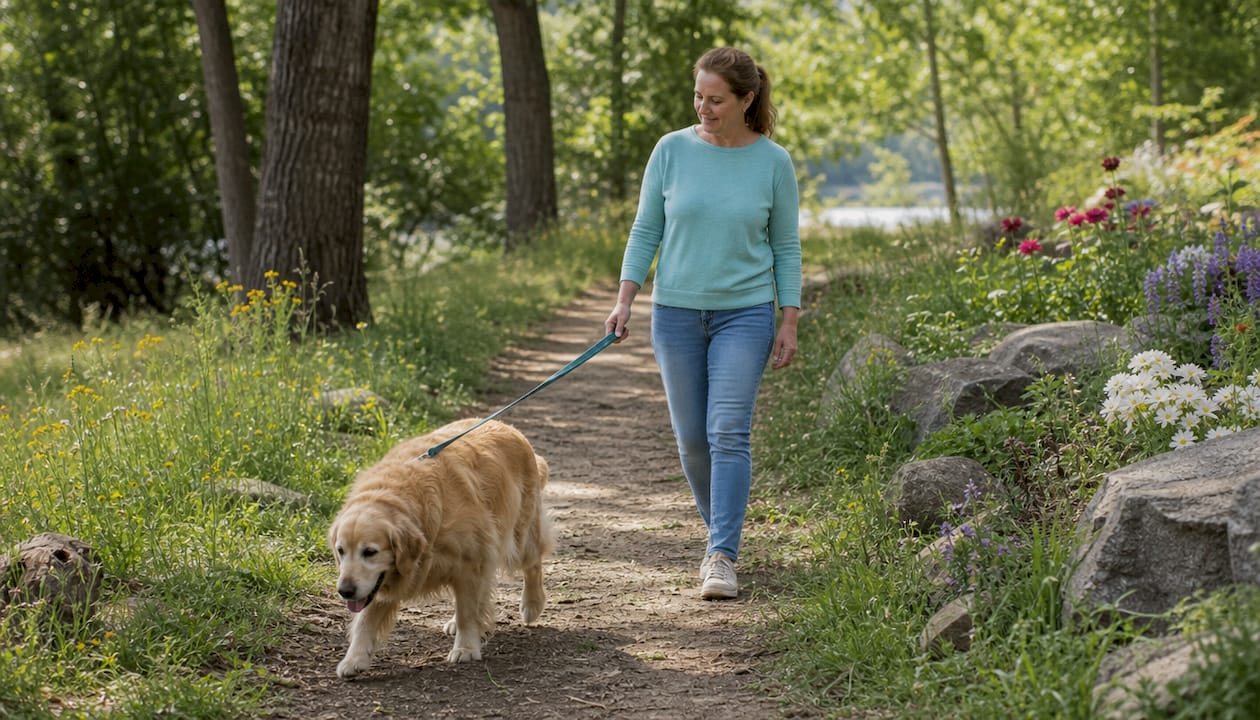
Physical activity is the most underrated natural remedy for canine stress. A dog that burns off its energy produces less cortisol—the stress hormone—and is better able to regulate its emotions. The recommended duration varies by breed: 30 minutes is enough for small, calm dogs, while active breeds need 60–90 minutes a day.
Consistency is more important than intensity. A daily walk at a set time provides both physical benefits and a reassuring routine. Fetch games, swimming, and agility courses are particularly effective for hyperactive or anxious dogs.
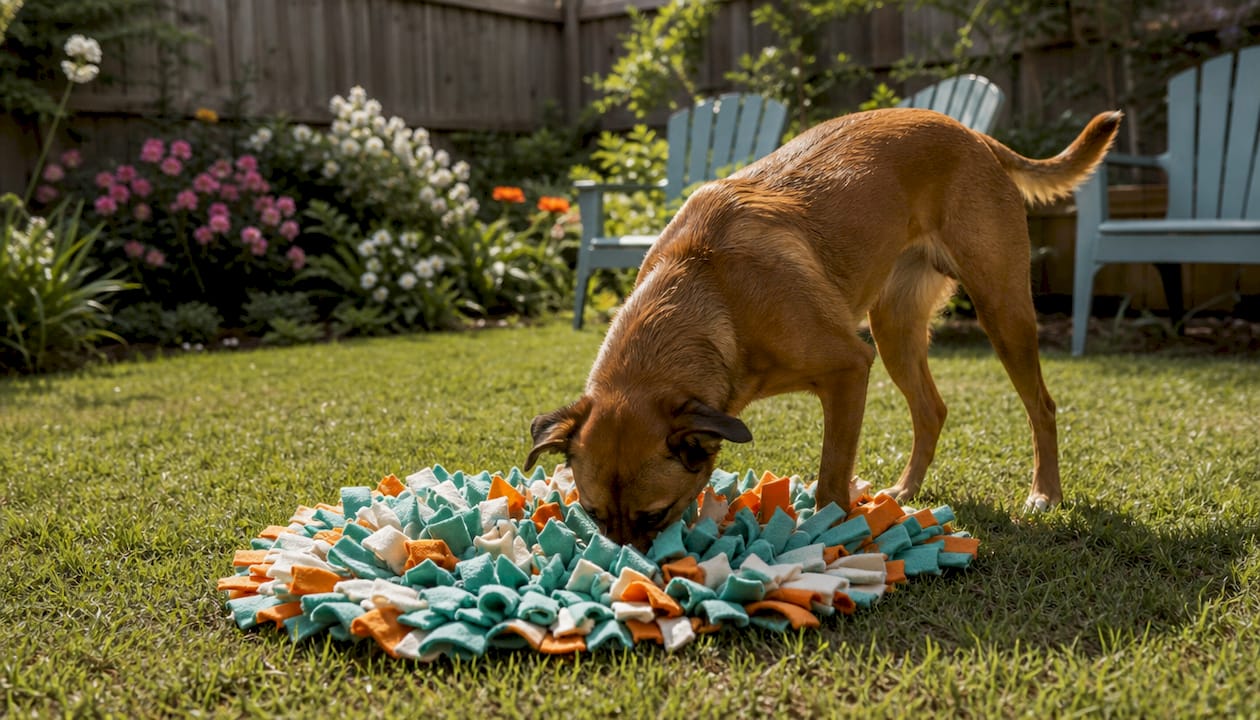
Pro tip: Incorporate scent games like “snuffle mats” into your daily routine. Searching for hidden food stimulates the brain, mentally tires the dog, and significantly reduces anxiety in just a few minutes.
2. Why do consistent routines calm a dog?
A consistent daily routine acts as a free antidote to anxiety. Dogs rely on specific time cues for reassurance: mealtimes, walks, playtime, and bedtime. When these cues disappear or change, the uncertainty causes measurable anticipatory stress.
Predictability directly reduces anxiety related to the home environment. A dog that knows the evening walk always happens at 6:30 p.m. does not become as agitated as a dog with an irregular schedule. Establishing a strict daily routine costs nothing and produces noticeable results within a few days.
3. Which natural supplements have been proven effective?
Nutritional supplements are the second line of treatment among natural remedies for canine anxiety. Several compounds now have solid clinical data to support their use.
L-theanine
L-theanine is an amino acid extracted from green tea. Clinical trials from 2026 confirm a moderate to significant reduction in anxiety in 79% of cases, with effects noticeable within 30–60 minutes. This rapid onset of action makes it a useful tool before predictable stressful situations, such as fireworks, vet visits, or car trips.
Alpha-casozepine (Zylkene)
Alpha-casozepine is a peptide derived from cow’s milk casein. It acts on GABA receptors, the same ones targeted by certain anxiolytics. Clinical studies report a 74% efficacy rate for chronic anxiety after 7–14 days of regular use. This supplement is particularly suitable for dogs suffering from separation anxiety or generalized fear.
Soothing Plants
Chamomile, valerian, and passionflower affect the calming neurotransmitters in the nervous system. These herbs influence cortisol levels and reduce stress-related muscle spasms. However, robust clinical evidence for these herbs remains limited. They work best as a complementary support rather than as a primary treatment.
Other supplements combine bovine colostrum, magnolia extract, and phellodendron to provide a synergistic effect on anxiety. These formulations are available in tablet form or as a powder to be mixed into food.
| Supplement | Timeframe for Action | Reported Efficacy | Recommended Use |
|---|---|---|---|
| L-theanine | 30–60 min | 79 % | Situational Anxiety |
| Alpha-casozepine | 7–14 days | 74 % | Chronic Anxiety |
| Chamomile / Valerian | Variable | Limited data | Additional Support |
| Colostrum Complex | 7–21 days | Not quantified | Moderate anxiety |
Pro tip: Always consult a veterinarian before introducing a supplement, even a natural one. Some plants can interact with existing medications or are contraindicated for dogs with liver disease.
To learn more about the role of soothing plants when combined with other natural active ingredients, the article on CBD for dogs by Pure-extract-cbd provides a helpful overview.
4. What behavioral and environmental tools complement de-escalation?
A dog's environment has a direct impact on its anxiety levels. Several physical and behavioral interventions have produced documented results.
Harnesses and compression garments
ThunderShirts and other compression vests apply gentle, constant pressure to a dog’s chest. Veterinary data from 2025 shows a moderate to significant improvement in 82% of cases. This mechanism is similar to the calming effect of a firm hug in humans.
Pheromone diffusers
Diffusers of synthetic calming pheromones, such as Adaptil, mimic the natural pheromones released by the mother after birth. Studies show a 74% reduction in symptoms related to thunderstorm phobias. These diffusers should be used continuously in the dog’s main living area.
Sound Management
- Classical music and white noise mask anxiety-inducing sounds from outside.
- 70% of anxious dogs remain calmer during isolation thanks to specially curated playlists.
- Specialized apps offer sounds tailored to canine auditory physiology.
Safe Haven
- A covered basket or a closed crate creates a safe space that the dog can choose to enter on its own.
- Placing this space in a quiet corner, away from high-traffic areas, enhances its calming effect.
- Never force the dog to go inside: it must enter of its own free will for the method to be effective.
| Tool | Mechanism | Reported Efficacy |
|---|---|---|
| Compression harness | Gentle chest pressure | 82% improvement |
| Pheromone Diffuser | Synthetic calming pheromones | 74% reduction in symptoms |
| Classical music / white noise | Masking Anxiety-Inducing Sounds | 70% more peace and quiet |
| Safe Haven | Security of One's Own Choosing | Not quantified |
5. How can these remedies be combined for maximum effectiveness?
Without addressing the environment and basic needs, supplements alone are insufficient to alleviate canine anxiety. The most effective approach follows a layered strategy.
The first layer focuses on lifestyle: appropriate daily exercise and a consistent daily routine. These two elements form the foundation without which no other remedy can be fully effective. The second layer introduces natural supplements once the foundation has been established. The third layer adds physical and environmental tools for situations of intense or occasional stress.
Pro tip: Wait two weeks of a consistent routine and regular exercise before introducing a supplement. This allows you to isolate the supplement’s actual effect and avoid overwhelming your dog with too many changes at once.
Here are the principles to follow for an effective combination:
- Maintain absolute consistency in the schedules, even on weekends.
- Give the supplements at set times to maintain a steady concentration in the body.
- Observe the dog's behavior each week and note any changes.
- Adjust the dosage or treatment methods based on the observed results, in consultation with your veterinarian.
- Don't expect chronic supplements to have an immediate effect: patience is key to success.
The effectiveness of CBD in combating stress follows this same principle of a gradual and consistent approach.
Key Points
Natural remedies for canine anxiety produce lasting results only when exercise, routine, and supplements are combined in a consistent and gradual manner.
| Point | Details |
|---|---|
| Exercise and routine come first | Establish 30–90 minutes of activity and a fixed schedule before providing any additional services. |
| L-Theanine for Emergencies | Takes effect in 30–60 minutes and is 79% effective against situational anxiety. |
| Alpha-casozepine for long-term use | 74% effective against chronic anxiety after 7–14 days of regular use. |
| Physical Tools as Reinforcement | Compression harnesses and pheromone diffusers are effective in 82% and 74% of cases, respectively. |
| Veterinary consultation required | No natural supplements should be taken without first seeking professional advice. |
What My Experience Has Taught Me About Natural Remedies for Anxious Dogs
Owners who seek advice for an anxious dog are often looking for a quick fix. That’s understandable. But the most common mistake I see is introducing a supplement before the dog’s routine has even stabilized. A natural supplement given in a chaotic environment has virtually no measurable effect.
What has struck me over time is that dogs respond better to predictability than to any chemical compound. A dog that knows exactly what’s going to happen during the day is inherently less anxious. Supplements like L-theanine or alpha-casozepine amplify a state of calm that’s already been established by routine. They don’t create that calm from scratch.
Another point that is often overlooked: every dog is different. An Australian Shepherd and a French Bulldog do not respond to the same stimuli or the same treatments. The approach must be tailored to each individual dog, adjusted week by week, and documented. Keeping a simple behavioral log, with a daily note on the dog’s condition, dramatically improves the quality of monitoring.
Finally, “natural” does not mean “risk-free.” High doses of valerian can cause excessive sedation. Certain plant extracts interact with antiparasitic treatments. A veterinary consultation is not just a formality—it is essential for proper care.
— Steven
Pure CBD Extract and Your Dog's Natural Well-Being
Pure-extract-cbd offers a range of products made with cannabidiol derived from organic hemp, which are lab-tested and comply with French and European regulations. CBD acts on the endocannabinoid system, which is present in mammals, and may help reduce signs of stress in dogs when incorporated into an established calming routine. Each product comes with test results guaranteeing the absence of THC and the purity of the formulation. Before using any product on your pet, consult your veterinarian to adjust the dose according to your pet’s weight and health condition. Explore the entire product line on the Pure-extract-cbd products page.
Frequently Asked Questions
What is the fastest natural remedy for anxiety in dogs?
L-theanine is the fastest-acting natural supplement: it takes effect within 30–60 minutes and has a reported 79% effectiveness rate for moderate to severe anxiety.
Do compression harnesses really work?
The 2025 veterinary data show a moderate to significant improvement in 82% of cases. They are particularly effective during one-time stressful situations such as thunderstorms or fireworks.
Can you give valerian to a dog?
Valerian affects calming neurotransmitters, but clinical data remain limited. A consultation with a veterinarian is essential before use, as an excessive dose can cause excessive sedation.
How long does it take to see results with natural remedies?
Chronic supplements such as alpha-casozepine require 7–14 days of regular use to produce a measurable effect. Changes in routine and environment show visible results within a few days.
Is CBD safe for anxious dogs?
CBD derived from organic hemp—which is THC-free and lab-tested—is considered safe for dogs when used in doses appropriate for the animal’s weight. It is still essential to consult your veterinarian before introducing it into your dog’s routine.



