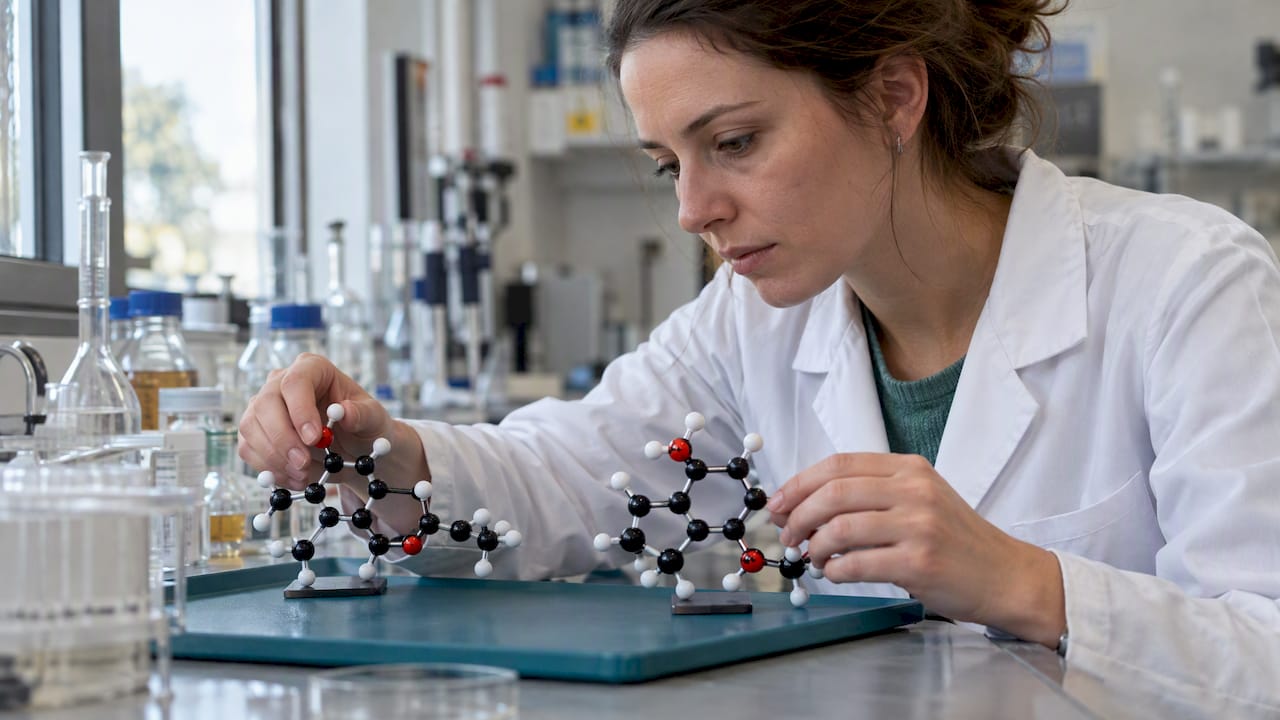
Today’s hemp and cannabinoid market is based on an increasingly detailed understanding of its active molecules. Among these, three compounds dominate scientific, medical, and regulatory discussions: THCA, CBD, and THC.
These three cannabinoids are closely related, but their effects, mechanisms of action, and legal status differ significantly. Understanding these differences is essential for analyzing how cannabis works, anticipating market trends, and grasping the regulatory challenges in Europe.
This guide provides an in-depth, structured analysis based on current scientific data.
Definition of Cannabinoids: A Common Framework
Cannabinoids are natural molecules produced by the plant Cannabis sativa L., which interact with the human endocannabinoid system.
Of the more than 100 identified cannabinoids, three stand out:
- THCA (tetrahydrocannabinolic acid)
- THC (tetrahydrocannabinol)
- CBD (cannabidiol)
They share a common origin: CBGA (cannabigerolic acid), often referred to as the “parent molecule.”
THCA: the non-psychoactive acid form of THC
THCA is the predominant cannabinoid in fresh cannabis plants.
Key features
- The acidic form of THC
- Found in unheated flowers
- Non-psychoactive
- A direct precursor of THC
THCA does not produce psychoactive effects because it does not bind effectively to the brain’s CB1 receptors.
Conversion to THC: decarboxylation
When THCA is exposed to heat, it loses a carboxyl group (COOH) and becomes active THC.
👉 This is key to understanding the differences between THCA and THC.
THC: the primary psychoactive cannabinoid
THC is the molecule responsible for the psychoactive effects of cannabis.
Key features
- Active compound derived from THCA
- High affinity for CB1 receptors
- Effects on the central nervous system
Observed effects
THC affects several functions:
- Sensory perception
- Mood
- Thesis
- Coordination
It is also being studied for its medical applications in certain contexts.
CBD: the non-psychoactive cannabinoid
CBD is currently the most studied cannabinoid after THC.
Key features
- Non-psychoactive
- Different structure from THC
- Indirect interaction with the endocannabinoid system
Unlike THC, CBD does not cause euphoria.
Mechanism of action
CBD works in complex ways:
- Modulation of CB1 and CB2 receptors
- Interaction with serotonergic receptors
- Effects on inflammation and stress
Comprehensive Comparison: THCA vs. CBD vs. THC
Summary table
| Criteria | THCA | CBD | THC |
|---|---|---|---|
| Type | Cannabinoid acid | Neutral cannabinoid | Active cannabinoid |
| Psychoactivity | No | No | Yes |
| Natural presence | Raw cannabis | Cannabis | Heated cannabis |
| CB1 Interaction | Low | Indirect | Strong |
| Neurological effects | No | No | Yes |
| Regulatory status | Complex | Permitted under certain conditions | Strictly regulated |
Fundamental biochemical differences
Molecular structure
- THCA has a carboxyl group (COOH)
- THC does not own this group
- CBD has a different structure and lacks direct CB1 affinity
👉 This structural difference accounts for all variations in the effects.
Receptor affinity
- THC → strong CB1 activation
- CBD → indirect modulation
- THCA → low interaction
Interaction with the endocannabinoid system
The endocannabinoid system regulates many biological functions:
- Pain
- Mood
- Appetite
- Sleep
- Inflammation
THC
- Direct activation of CB1 receptors
- Fast and noticeable results
CBD
- Indirect control
- More subtle effects
THCA
- An interaction that is still poorly understood
- Potential via other receptors (PPAR, TRP)
Physiological effects: what the science says
THC
Known effects:
- Euphoria
- Cognitive impairment
- Relaxation
- Stimulation of the appetite
CBD
Effects studied:
- Stress reduction
- Anti-inflammatory effects
- Effect on certain types of epilepsy
THCA
Potential effects (preclinical research):
- Anti-inflammatory
- Neuroprotective
- Anti-nausea medication
👉 Important: Human data on THCA remains limited.
THCA vs. CBD vs. THC: Uses and Applications
THCA
- Studies in pharmacology
- Medical research
- Scientific Analysis of Cannabis
CBD
- Wellness products
- Cosmetics
- Medical research
THC
- Supervised medical use
- Neuroscience research
- Specific therapeutic applications
Legal status in Europe and France
CBD
- Permitted if derived from legal varieties
- THC ≤ 0.3%
- Submitted under the Novel Food Regulation for food products
THC
- Substance classified as a narcotic
- Strictly regulated use
THCA
- Legal gray area
- Can be equated with potential THC
- Included in the calculation of total THC
👉 Key point:
Authorities are increasingly basing their assessments on total THC content after decarboxylation.
Analytical and Industrial Challenges
Measurement of total THC
Laboratories use the following formula:
Total THC = THC + (THCA × 0.877)
This allows us to anticipate the conversion of THCA into THC.
Market Impact
- Products high in THCA = regulatory risk
- CBD products = greater legal certainty
- THC products = strictly regulated
Differences in terms of security
THC
- Psychoactive effects
- Neurological risks at high doses
- Strict supervision
CBD
- Favorable safety profile
- Few side effects
THCA
- Limited data
- Profile still under review
THCA vs. CBD vs. THC: A Strategic Market Analysis
The market is moving toward clear segmentation:
- CBD → Well-being and Regulatory Compliance
- THC → medical and regulated use
- THCA → Innovation and the Gray Area
This development is directly linked to:
- in European decisions
- to scientific positions
- national inspections
Key Takeaways
THCA, CBD, and THC are three compounds derived from the same plant, but there are significant differences between them.
- THCA is a non-psychoactive precursor of THC
- THC is the primary psychoactive compound
- CBD is a non-psychoactive cannabinoid with a wide range of uses
Understanding them allows us to:
- to analyze the products
- to anticipate regulatory changes
- to better understand the effects of cannabis