

Legal psychoactive cannabinoids are regulated substances in France, and their use requires heightened caution due to their effects on the central nervous system and documented health risks. Cannabinoid regulations clearly distinguish between tolerated natural compounds—such as CBD containing less than 0.3% THC—and semisynthetic and synthetic cannabinoids, which are now classified as narcotics by the ANSM. Understanding these legal limits protects against mistakes with serious consequences. This guide outlines the French legal framework in effect in 2026, the proven clinical risks, and the essential practical precautions for safe use.
Which psychoactive cannabinoids are legal or illegal in France?
CBD (cannabidiol) remains legal in France provided that the final product contains less than 0.3% THC. This limit is set by the decree of August 22, 1990, and confirmed by subsequent regulations governing hemp. CBD is not classified as a narcotic because it does not produce any significant psychoactive effects at typical doses.
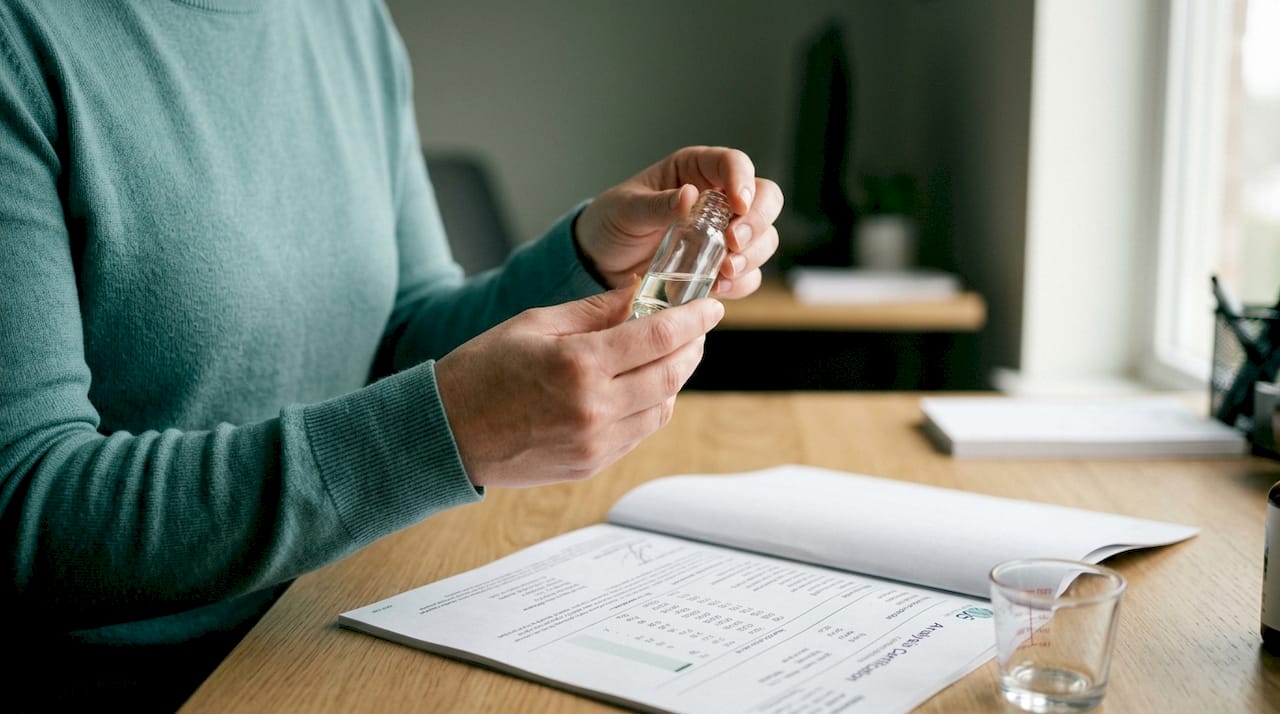
As of January 16, 2026, the ANSM has classified several semisynthetic and synthetic cannabinoids as controlled substances. Their sale, possession, and use are now illegal in France. This decision follows the 2020 law that transferred the authority to classify substances from the Minister of Health to the ANSM, allowing for more timely updates.
The substances covered by this ban include, among others:
- HHC (hexahydrocannabinol) and its derivatives, including 10-OH-HHC
- THCP (tetrahydrocannabiphorol), which is more potent than natural THC
- H4CBD (hexahydrocannabidiol), falsely marketed as a legal alternative to CBD
- HHCPO and other semisynthetic esters
The table below summarizes the legal status of the main molecules:
| Cannabinoid | Origin | Legal Status in France (2026) |
|---|---|---|
| CBD | Natural | Legal if THC content is below 0.3% |
| THC | Natural | Narcotics (illegal) |
| HHC | Semi-synthetic | Stupéfiant since January 2026 |
| THCP | Semi-synthetic | Stupéfiant since January 2026 |
| H4CBD | Semi-synthetic | Stupéfiant since January 2026 |
| Synthetic cannabinoids | Synthetic | Narcotics |
The regulations governing the sale of CBD in France also specify the obligations of industry professionals.
What are the health risks associated with psychoactive cannabinoids?
Synthetic cannabinoids are manufactured in laboratories and have much more potent and unpredictable effects than natural cannabis. They mimic the effects of THC on the endocannabinoid system, but with increased toxicity and chemical variability that makes each batch potentially different. Even a regular user of natural cannabis cannot anticipate their intensity.
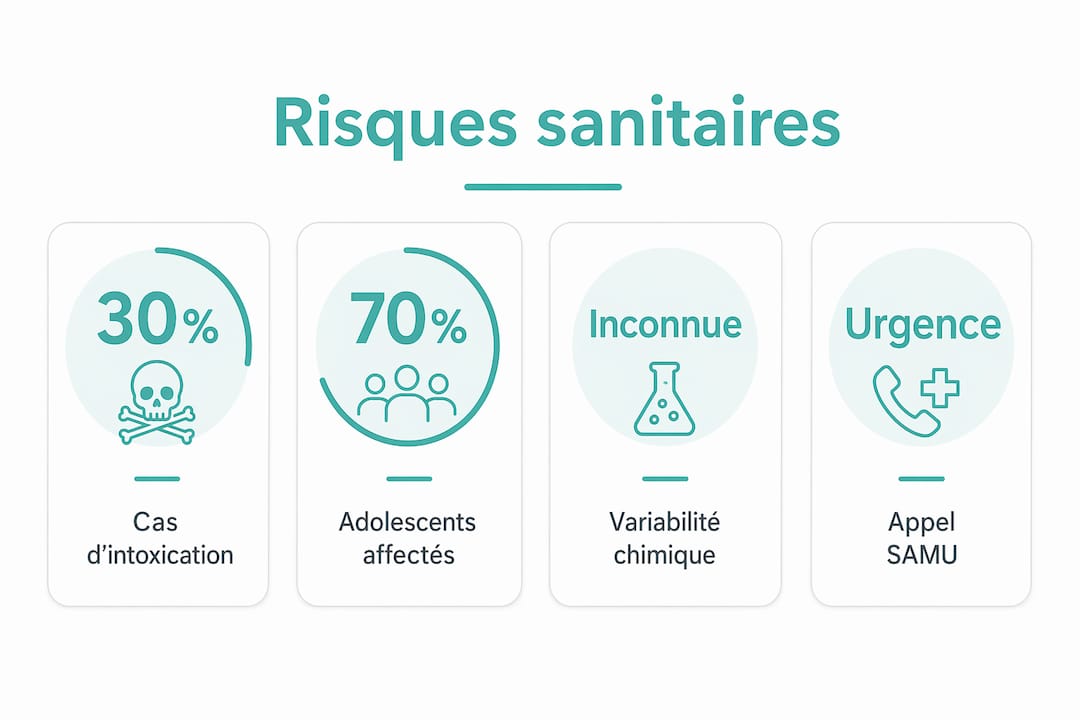
The figures released in 2025 are alarming. Nearly 500 cases of synthetic cannabinoid poisoning have been reported in France since the beginning of 2025, with 71 percent of cases classified as severe and two deaths. This severity rate illustrates just how much these substances cannot be considered harmless recreational products.
“70 percent of cases of synthetic cannabinoid poisoning involve adolescents aged 13 to 18. This overrepresentation of minors underscores the urgent need for targeted education in schools and among families.”
The clinical manifestations observed in these cases of poisoning are varied and severe:
- Neurological disorders: seizures, loss of consciousness, coma
- Psychiatric disorders: agitation, hallucinations, dissociative states
- Cardiovascular disorders: tachycardia, hypertension, arrhythmias
- Digestive problems: nausea, severe vomiting
- Atypical symptoms that do not resemble the typical effects of cannabis
The varying chemical compositions of these products further complicate medical management. Some are odorless and colorless, making them undetectable to the naked eye. The lack of a specific antidote forces medical teams to provide purely symptomatic treatment, which underscores the importance of prevention.
Pro tip: If you suspect poisoning, do not consume the remaining product to “check.” Keep it intact in its original packaging so that the appropriate authorities can conduct a rapid toxicological analysis.
How do regulations govern these substances, and what are their limitations?
French regulations are based on an administrative classification system administered by the ANSM. Since the 2020 law, the list of controlled substances has been updated by decision of the agency, without requiring parliamentary approval. This system speeds up the response to new substances, but it has structural limitations.
Here's how this regulatory framework works in practice:
- Molecule Detection: Poison control centers, emergency rooms, and laboratories are reporting the appearance of a new substance.
- Scientific evaluation: The ANSM analyzes the chemical structure, pharmacological effects, and available toxicity data.
- Official classification: The substance is included on the consolidated list of controlled substances, as published in the Official Gazette.
- Enforcement by authorities: Customs, the police, and the DGCCRF monitor the compliance of products for sale.
This process remains reactive rather than preventive. Manufacturers slightly modify the chemical structure of a banned molecule to create a new substance that has not yet been classified. This phenomenon, which is well documented in the field of new psychoactive substances (NPS), fuels an ongoing race between clandestine laboratories and health authorities.
Misleading marketing is another major issue. Some e-liquids and products sold as “legal CBD” actually contain undeclared synthetic cannabinoids. The DGS issued a warning about this phenomenon after 500 cases of poisoning were reported. The brand names chosen for these substances are often deliberately appealing, which masks their highly toxic nature.
Pro tip: Before buying a CBD product, always ask for the certificate of analysis (COA) for the specific batch being sold. A reputable seller will provide it right away.
What practical precautions should be taken to ensure safe consumption?
The first precaution is to verify the product’s source. A CBD product that is legal in France must be derived from a hemp variety listed in the European catalog and have a THC content of less than 0.3% in the finished product. The side effects of CBD are minimal when these conditions are met.
Consumers are often unaware of the actual chemical composition of the products on the market, which increases the risk of serious poisoning. This lack of awareness is particularly dangerous when it comes to e-liquids, whose formulation can vary from one batch to another without this being indicated on the label.
The essential precautions to take are as follows:
- Check the certificate of analysis: Each batch must have a COA issued by an independent laboratory, stating the CBD and THC levels and confirming the absence of synthetic cannabinoids.
- Buy from registered sellers: Reputable online stores display their legal information and test results.
- Avoid e-liquids of questionable origin: Products sold without complete labeling or at abnormally low prices pose a high risk.
- Do not consume if you have any doubts: if a product causes unusual effects, stop consuming it immediately.
- Report any cases of poisoning: Contact the Drogues Info Service at 0 800 23 13 13—a toll-free, anonymous number available 7 days a week. In case of an emergency, call 15 (SAMU) or 112.
- Keep the suspicious product: do not throw it away. Health authorities recommend keeping it intact to allow for a prompt toxicological analysis.
Special attention must be paid to adolescents. Seventy percent of the cases of severe poisoning reported in 2025 involved young people aged 13 to 18. Parents and teachers play a key role in raising awareness of these risks, particularly regarding products marketed as “legal” on social media.
Pro tip: For those who wish to use CBD, consult the recommendations on the appropriate dosage before starting, to minimize any risk of an accidental overdose.
Key Points
French regulations on psychoactive cannabinoids are based on a dynamic classification system maintained by the ANSM, but consumers must remain vigilant in the face of products with varying compositions and misleading marketing.
| Point | Details |
|---|---|
| Legal Status in 2026 | HHC, THCP, and H4CBD have been classified as controlled substances by the ANSM since January 16, 2026. |
| Severity of poisoning cases | 71% of the 500 cases of poisoning reported in 2025 were severe, with two deaths. |
| Most Vulnerable Population | 70% of the victims are teenagers between the ages of 13 and 18, who are often misled by marketing. |
| Regulatory Limit | Manufacturers modify molecules to circumvent bans, creating a constant lag. |
| Top Priority Precaution | Require a laboratory analysis certificate for each batch of CBD product purchased. |
What I've learned from following this story closely
The confusion between legal CBD and synthetic cannabinoids is no accident. It is deliberately perpetuated. The brand names chosen for these products, the colorful packaging, and the claims of legality displayed in bold—all of this is designed to blur the line between a well-tolerated natural compound and a chemical substance with potentially devastating effects.
What strikes me most about the 2025 data is how quickly the situation has changed. In just a few months, hundreds of teenagers were hospitalized for poisoning from products they believed to be safe. Two of them did not survive. These figures are not abstract. They reflect a real breakdown in the flow of information between authorities, retailers, and consumers.
ANSM regulations are necessary, but they remain structurally behind the creativity of manufacturers. Classifying a molecule takes time. Slightly modifying its structure takes much less time. This imbalance cannot be resolved by additional regulations alone. It requires serious public education, stricter controls at points of sale, and better training for healthcare professionals in recognizing atypical symptoms of poisoning.
Consumers who choose legal, tested CBD products are making the right choice. But they must remain proactive in this process: check certificates, buy from transparent sources, and never assume that a product is safe just because it is sold legally.
— Steven
Pure-extract-cbd: Legal and Certified CBD Products
Pure-extract-cbd offers a range of CBD products made from organic hemp, all of which comply with the legal limit of 0.3% THC in effect in France. Each product comes with a certificate of analysis from an independent laboratory, guaranteeing the absence of synthetic cannabinoids and full traceability of the batch.
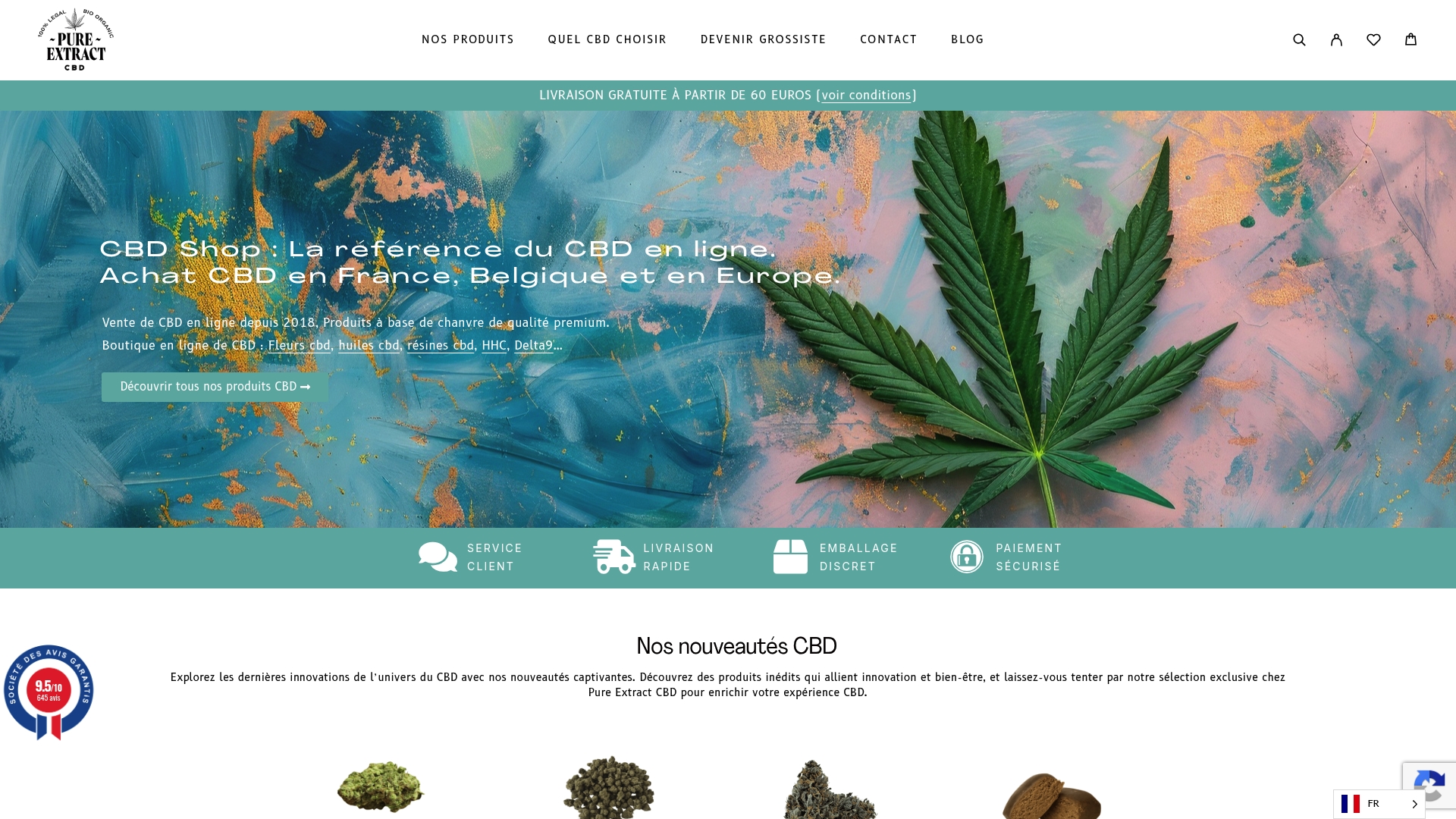
The store carries flowers, oils, resins, and infused products, with fast shipping and customer service available to answer any questions about ingredients or regulations. For consumers who want to shop with confidence, the official Pure-extract-cbd store offers complete transparency on every item in its catalog.
Frequently Asked Questions
Is CBD legal in France in 2026?
Yes, CBD is legal in France as long as the finished product contains less than 0.3% THC. CBD flowers, oils, and resins that comply with this limit may be sold and consumed legally.
Which cannabinoids have been banned in France since 2026?
As of January 16, 2026, the ANSM has classified HHC, THCP, H4CBD, and 10-OH-HHC as controlled substances. Their sale, possession, and use are illegal in France.
How can you tell if a CBD product is safe?
A safe CBD product comes with a certificate of analysis from an independent laboratory that lists the THC content, the CBD content, and confirms the absence of synthetic cannabinoids. The absence of this document is a red flag.
What should you do if you suspect a cannabinoid poisoning?
Call SAMU (15) or 112 immediately in case of an emergency. You can also contact the Drug Information Service at 0 800 23 13 13, a toll-free and anonymous number available 7 days a week. Keep the suspicious product intact for analysis.
Why are synthetic cannabinoids more dangerous than natural cannabis?
Synthetic cannabinoids mimic the effects of THC but with much greater potency and chemical variability. Their effects are unpredictable, their compositions vary from batch to batch, and there is no specific antidote in cases of severe poisoning.
Recommendation
- Is the End Nearing for THV+ and THV-N10 in France? A New Regulatory Turning Point for Neo-Cannabinoids – Pure Extract CBD
- CBD: Definition, Potential Effects, Legality, and Scientific Opinion – Pure Extract CBD
- All About CBD Cannabis: The Blog – Pure CBD Extract
- Glossary – The ABCs of CBD – Pure Extract CBD



