
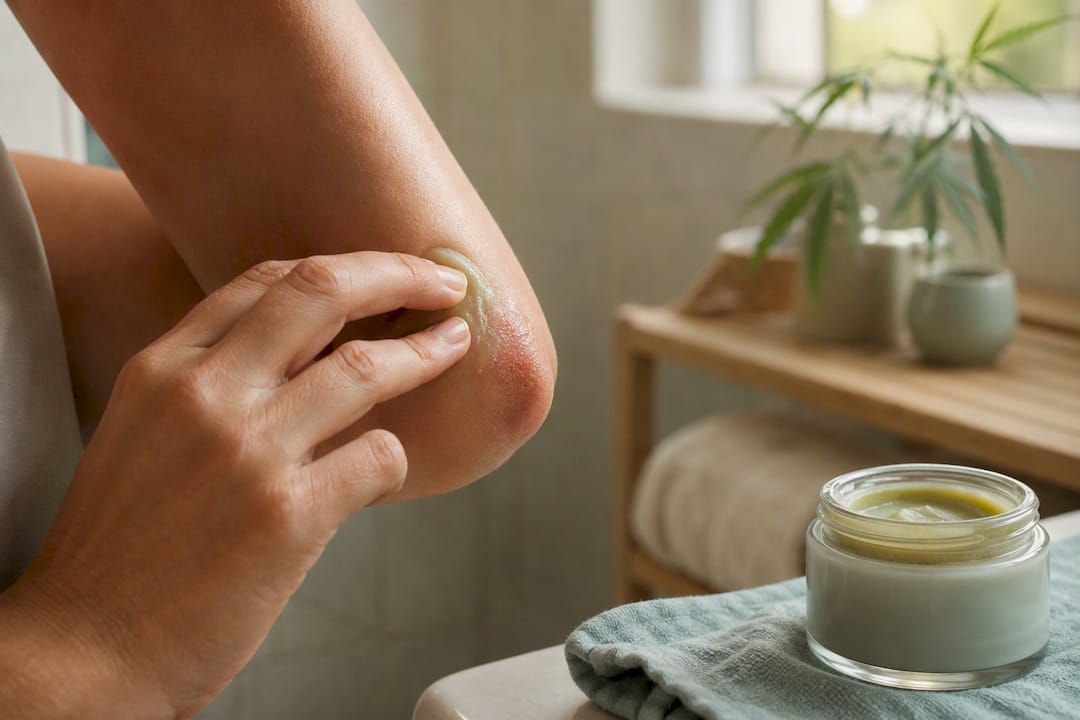
CBD may help some people better manage joint pain, particularly during the inflammatory stages of osteoarthritis, but it should be used to support comfort, never as a substitute for prescribed treatment. Evidence from human studies remains limited and is sometimes contradictory. Before trying it, it’s best to check for drug interactions and choose a lab-tested product.
In short:
- CBD may provide temporary relief from inflammatory pain associated with osteoarthritis, but its effects in humans remain variable and poorly established.
- Topical formulations and sublingual oil are generally preferred depending on the site of application and the desired onset of action.
- There is no one-size-fits-all dosage; a gradual “start low, go slow” approach is recommended, with close monitoring.
- CBD may interact with certain medications, including blood thinners and psychotropic drugs, so it is important to consult a doctor before use.
- Product quality—including compliance with the certificate of analysis and traceability—is essential to ensuring safety and efficacy.
Table of Contents
- Understanding How CBD Works to Relieve Joint Pain
- Which form of CBD should you choose based on your pain?
- What is the recommended CBD dosage for joint pain?
- CBD and Medications: What Interactions Should You Watch Out For?
- How can you tell if a CBD product is reliable?
- What else can you do, in addition to taking CBD, to relieve osteoarthritis?
- What Pure Extract CBD Offers—and What It Doesn't Replace
- Laboratory-tested oils and balms to support your joint comfort
- Sources
Understanding How CBD Works to Relieve Joint Pain
The human body has an endocannabinoid system, a network of receptors found in the joints, muscles, and nervous system. Two types of receptors play a central role in this process: CB1 receptors, located primarily in the nervous system, and CB2 receptors, found mainly in immune cells and joint tissues. CBD does not act directly on these receptors as THC does. Rather, it modulates their activity and influences pathways involved in the inflammatory response, which may explain some of its potential benefits for pain associated with osteoarthritis.
Preclinical data provide a solid basis for this hypothesis. In animal models, CBD has demonstrated measurable anti-inflammatory and analgesic effects, with a reduction in local inflammatory markers in affected joint tissues, as reported in a review published on PubMed Central. These results are consistent across animal studies.
The shift to human trials is a game-changer. Available clinical trials show mixed results: some small studies report a noticeable improvement in pain, while others find no significant difference compared to a placebo, according to a review of preclinical and clinical data on CBD and pain. This variability is often due to differences in dosage, the chemical spectrum used, and study methodology.
What the research shows today:
- Well-documented anti-inflammatory and analgesic effects in animals
- Human results remain mixed, with small-scale trials
- Lack of consensus on an optimal dose or form
- Larger randomized trials are needed to reach a conclusion
Key takeaway: A systematic review on cannabinoids and chronic non-cancer pain highlights that the methodological quality of the studies remains variable, which calls for caution when making promises to patients.
This caution does not negate the benefits of CBD; it simply suggests that it should be viewed as a complementary approach rather than a 100% proven solution .
Which form of CBD should you choose based on your pain?
Not all forms of CBD are equally effective for joint pain. The choice depends mainly on the location of the discomfort, its nature (localized or widespread), and the desired onset of action.
Sublingual oil remains the most versatile form. When placed under the tongue, it enters the bloodstream directly and takes effect in 15 to 45 minutes, with the effects spreading throughout the body. It is well-suited for diffuse pain, such as that affecting multiple joints at the same time in generalized osteoarthritis. Its drawback: the strong taste of hemp isn’t to everyone’s liking, and getting the dosage just right takes a little getting used to.
Topical products (balms and gels) target a specific area: a swollen knee, stiff fingers in the morning, or a sore shoulder after exercise. Applying them locally, combined with a light massage, promotes absorption through the skin and concentrates the effect where you need it most. A study on the topical application of cannabinoids shows a reduction in inflammatory markers in preclinical trials, with promising signs in humans for localized relief. A CBD sports balm or CBD muscle balm works on the same principle for muscle tension related to joint overcompensation.
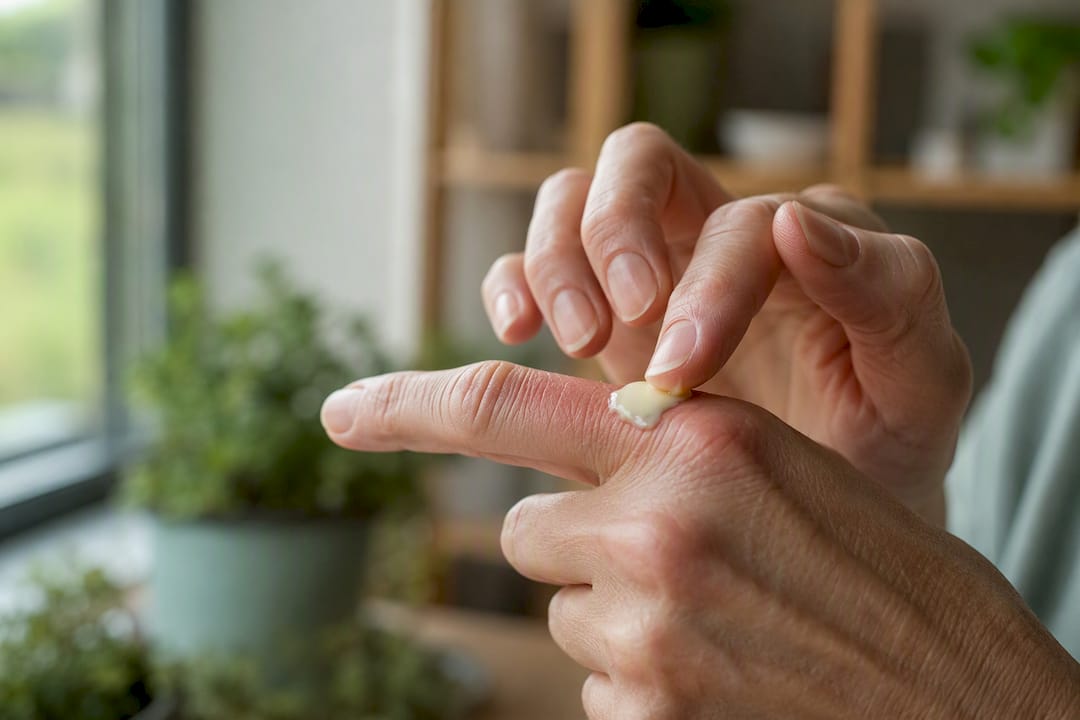
Capsules offer a simple routine and a consistent dosage, which is useful for a steady daily intake, whether in the morning or evening. Herbal tea takes effect more slowly but appeals to those seeking a soothing ritual at the end of the day. Inhalation produces an almost immediate effect, which can be appealing during an occasional bout of pain, but it puts strain on the respiratory tract and is not suitable for prolonged use or for everyone.
Pro tip: Many users combine an oil in the morning for a systemic effect with a balm in the evening on the most sensitive joint. This two-pronged approach—one systemic and the other localized—is frequently mentioned in user feedback. For practical guidance on sublingual use, this guide to CBD oil details the mistakes to avoid.
What is the recommended CBD dosage for joint pain?
There is no one-size-fits-all CBD dosage for joint pain. The response varies depending on body weight, individual sensitivity, metabolism, and the severity of the pain. That is why the method recommended in the literature remains “start low, go slow”: start with a low dose and increase it gradually—an approach also highlighted in studies on the practical considerations of cannabinoid dosing.
Here is a typical training plan to get started safely:
- Week 1: Start with a low dose, usually around 5 to 10 mg of CBD per dose, once or twice a day.
- Week 2: If there is no improvement or if no side effects occur, gradually increase the dose in 5 mg increments.
- Weeks 3 and 4: Adjust the dosage based on how you feel, noting the intensity of the pain, the time you take it, and how long the effect lasts in a logbook.
- After one month: If no improvement is noticeable despite gradually increasing the dosage, it is likely that CBD is not the right treatment for you, and you should seek medical advice.
A tracking log—even a brief one—can often make all the difference. Recording the dose, the time, and the level of pain experienced over ten days helps distinguish a genuine effect from a mere fluke of having a good day.
Helpful note: The clinical protocols tested in research vary widely, ranging from a few milligrams to several hundred per day depending on the context, which confirms that there is no single dose that works for everyone.
Certain signs should prompt you to stop and consult a doctor: marked drowsiness, persistent digestive problems, or a complete lack of effect after a month of structured use.
CBD and Medications: What Interactions Should You Watch Out For?
CBD is not pharmacologically inert. It can inhibit certain liver enzymes in the CYP450 group, which alters the way the body metabolizes other substances, as outlined in an analysis of drug interactions with cannabinoids. In practical terms, this means that the blood concentration of certain medications may increase or decrease in unpredictable ways.
The drug classes most commonly affected:
- Anticoagulants (such as warfarin): risk of changes in their effectiveness, with a risk of bleeding or blood clots.
- Antiepileptic drugs: CBD may interact with their metabolism and alter their active concentration.
- Psychotropic drugs (antidepressants, anxiolytics): Combined effects may sometimes be amplified, particularly with regard to drowsiness.
Certain groups should avoid CBD or use it only under strict supervision: pregnant or breastfeeding women, minors, and people undergoing intensive treatment for a chronic illness.
Before trying CBD, tell your doctor or pharmacist that you plan to use it, especially if you are already taking regular medication. Always start with the lowest possible dose and watch for any unusual symptoms during the first few weeks.
How can you tell if a CBD product is reliable?
The quality of a CBD product directly determines its safety and perceived effectiveness. There are three key checks to perform before making a purchase.
- Request a certificate of analysis (COA) issued by an independent laboratory. This document confirms the actual cannabinoid content and the absence of contaminants such as heavy metals or pesticides.
- Verify that the THC content complies with the Public Health Code, and understand the difference between isolate (CBD alone) and broad-spectrum or full-spectrum products (other associated cannabinoids and terpenes).
- Verify traceability: the origin of the hemp, the extraction method used (supercritical CO2 remains a benchmark for quality), and whether microbiological testing has been performed.
Pro tip: If a COA is more than a year old or missing from the seller’s website, that should raise a red flag. A reputable seller makes this document easily accessible, product by product. To better understand the legal framework, this article on the differences between CBD and THC provides useful guidance.
What else can you do, in addition to taking CBD, to relieve osteoarthritis?
CBD works best when incorporated into a holistic approach, never on its own. Appropriate physical activity remains the most well-documented strategy for combating joint stiffness: walking, swimming, or light cycling—done three to five times a week—help maintain mobility without putting strain on the joints.

Physical therapy provides targeted support through muscle-strengthening exercises focused on the affected joint. Physical aids such as orthotics or a cane help reduce the strain on the most vulnerable areas during daily activities.
Three simple tools round out the package:
- Get a good night's sleep, because fatigue increases the perception of pain.
- Weight management, which automatically reduces pressure on the knees and hips.
- Apply heat or cold locally, depending on the stage of inflammation, alternating with a CBD balm as needed.
What Pure Extract CBD Offers—and What It Doesn't Replace
At Pure-extract-cbd, transparency is ensured through systematic laboratory testing of every product, guaranteeing legal compliance and the safety claimed. This rigor meets the legitimate expectations of people seeking a reliable solution for joint pain in a market where quality varies greatly from one seller to another.
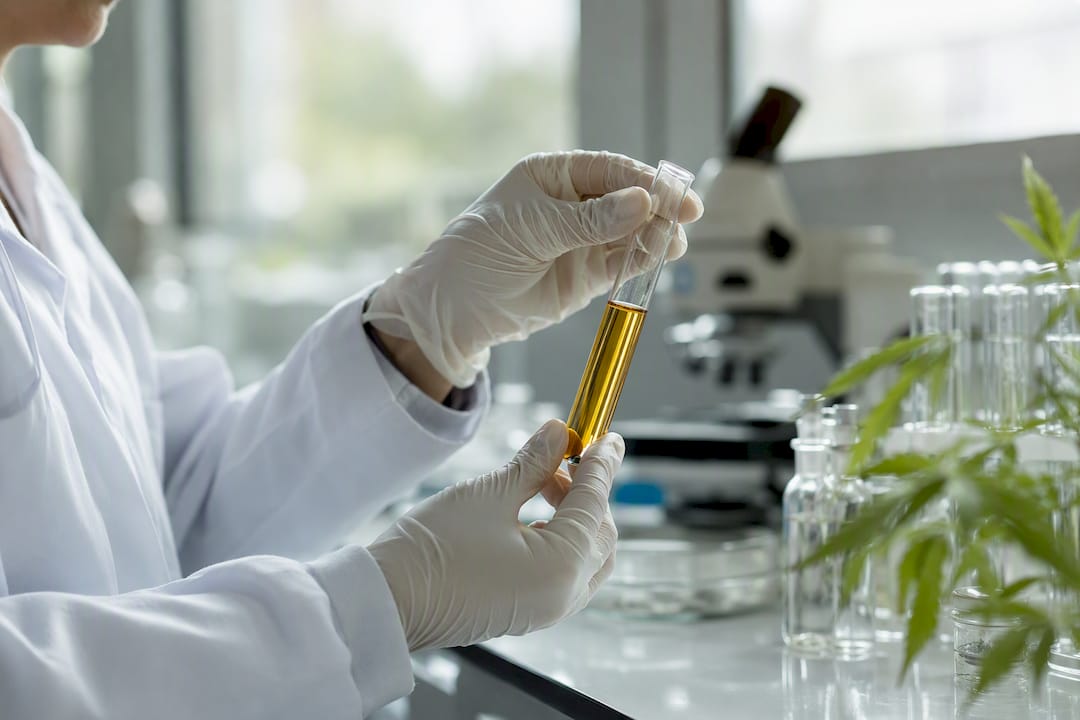
But honesty demands a clear limitation: human studies on CBD and joint pain are still insufficient to speak of a validated treatment. No product, no matter how thoroughly tested, can replace a medical diagnosis or a prescribed treatment for advanced osteoarthritis. If the pain worsens, if a joint suddenly swells, or if mobility rapidly deteriorates, consulting a healthcare professional takes precedence over any attempt to use CBD.
CBD remains a tool for comfort, not a miracle cure. It is precisely this honesty that builds a lasting relationship of trust with people who are looking for reliable information rather than marketing promises.
— Steven
Laboratory-tested oils and balms to support your joint comfort
Pure-extract-cbd offers a range of oils, balms, and capsules, each batch of which is verified by an independent certificate of analysis, so you don’t have to guess whether the stated CBD content actually matches what’s in the bottle.

When trying it for the first time, a low-concentration oil is the safest place to start: adjust the dose gradually while keeping a balm on hand for the most sensitive areas, such as a knee or shoulder. This combination of oil and topical balm is a common choice for people seeking both a general effect and targeted relief. Find detailed advice on using CBD oil before placing your order, then browse our entire lineup to choose the format that best fits your routine.
Sources
- Cannabidiol in Inflammatory Bowel Diseases: A Brief Overview — PMC7204604
- Cannabidiol and Pain: An Overview of Preclinical and Clinical Data — PMC8107012
- Drug Interactions with Cannabinoids — NBK224384
- Topical Application of Cannabinoids: Potential Clinical Utility — PMC7893882
- Public Health Code — Légifrance



