

CBD may reduce anxiety and the compulsive urge to smoke in some people, but no rigorous studies have established it as a treatment for smoking cessation. The available pilot studies show encouraging results regarding cravings and sleep, though CBD does not replace nicotine replacement therapies or follow-up with a smoking cessation specialist. For personalized support, Tabac Info Service remains the go-to resource at 39 89. A simple protocol exists for testing CBD without risk: take a daily dose of oil combined with a vaporizer to mimic the act of smoking, and monitor the effects over one to three weeks.
In short:
- CBD may reduce the number of cigarettes smoked in the short term by affecting stress, anxiety, and attentional bias toward tobacco-related stimuli.
- The available studies are based on small sample sizes and have not yet confirmed any lasting or significant effects over several months.
- French regulations limit the THC content of CBD products, and their quality must be verified by an independent certificate of analysis.
- CBD does not replace nicotine replacement therapies for physical cravings, but it can complement a comprehensive treatment plan that combines these products with medical supervision.
- Smoking CBD mixed with tobacco perpetuates addiction, so it is best to vape it on its own or take it orally to minimize the risks.
Table of Contents
- What does the science say about CBD and smoking cessation?
- How to Use CBD in Practice to Support Smoking Cessation
- What are the risks and the legal framework surrounding CBD in France?
- Can CBD replace nicotine replacement therapies?
- What Pure-extract-cbd Brings to This Initiative
- Where to Find Reliable CBD Products to Help You Quit Smoking
- Sources
- Frequently Asked Questions
What does the science say about CBD and smoking cessation?
Scientific evidence on CBD and smoking cessation remains limited, but two pilot studies have laid the first solid groundwork for further research. In 2013, a British team tested an on-demand CBD inhaler on smokers who wanted to cut back on their smoking. Participants who used CBD reduced their cigarette consumption by about 40% in one week compared to the placebo group—a notable result given the small sample size.
Five years later, a second study examined a different mechanism: attentional bias. Smokers undergoing withdrawal who received 800 mg of CBD orally showed reduced attention toward stimuli associated with cigarettes, such as a visible pack or lighter. This type of response suggests that CBD acts less on physical nicotine dependence than on the psychological mechanisms that sustain it: stress, habitual behaviors, and the pursuit of reward.
In practical terms, what these studies suggest is:
- A possible reduction in the number of cigarettes smoked in the short term
- A decrease in attention to visual cues associated with tobacco
- A soothing effect that could help reduce withdrawal-related irritability
Key point: Both trials involved small sample sizes, which limits the scope of their conclusions. No large-scale studies have yet confirmed these effects over a period of several months.
The World Health Organization also concluded in 2018 that CBD has no potential for abuse or dependence, which at least rules out the risk of replacing one addiction with another. This does not make CBD a clinically validated natural smoking cessation aid, but it does justify considering it as a supplement—not as a standalone solution.
How to Use CBD in Practice to Support Smoking Cessation
Before making any purchase, make sure the product has a certificate of analysis (COA) issued by an independent laboratory, with a THC level that complies with French regulations. Opt for a broad-spectrum extract or an isolate rather than a full-spectrum CBD product if you’re concerned about drug testing, even though traces of THC in these products are generally negligible.
Three approaches complement each other well in a natural smoking cessation strategy:
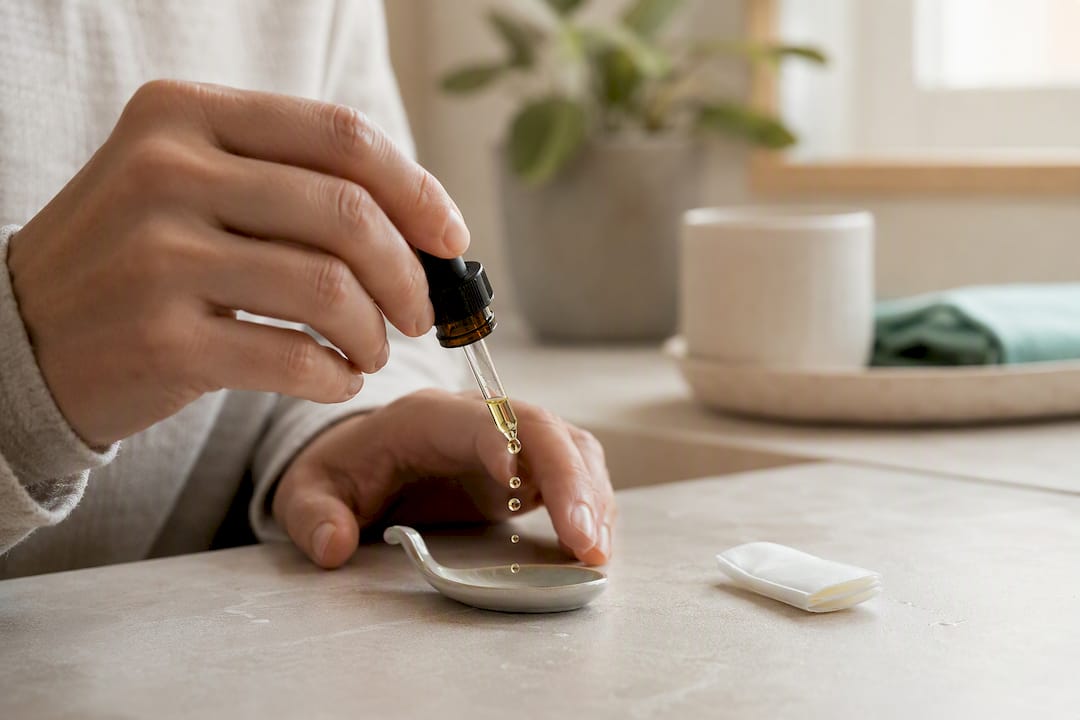
- CBD oil taken orally, morning and night, to stabilize baseline stress levels throughout the day.
- A CBD vaporizer or e-liquid, to be used the moment you feel the urge to smoke, as a smoke-free alternative.
- CBD gummies are a convenient way to maintain a regular intake without having to think about it, especially when you're away from home.
Regarding dosage, it is best to start cautiously: a dose of 10 to 20 mg per day, divided into two doses, allows you to assess your tolerance over a period of seven to fourteen days. This is generally the time it takes for the anxiolytic effects to begin to stabilize. If necessary, the dose can be gradually increased to 30 or 40 mg per day, while always monitoring individual responses, which vary significantly from person to person.
Pro tip: Start taking CBD seven to ten days before your planned quit date, rather than on the day itself. This gives the anxiety-relieving effects time to take hold, making the transition less abrupt.
If physical dependence on nicotine is strong, combining CBD with a traditional nicotine replacement therapy is often a more realistic approach than using CBD alone. For precise dosing of the oil, a detailed usage guide helps you adjust the number of drops based on the concentration of the bottle.
What are the risks and the legal framework surrounding CBD in France?
Smoking CBD—by burning it—poses health risks comparable to those of tobacco itself: combustion produces toxic substances regardless of what is being burned. Tabac Info Service points out that mixing CBD and tobacco in the same joint perpetuates nicotine addiction, which runs counter to the goal of quitting. It is better to opt for tobacco-free vaporization or oral ingestion.
Drug interactions also deserve your attention:
- CBD may interact with anticoagulants and affect their effectiveness
- Special caution is required when using psychotropic or anxiolytic medications
- Anyone undergoing long-term treatment should discuss it with their doctor before starting
From a regulatory standpoint, the French Public Health Code strictly regulates the permitted THC levels in CBD products sold in France. Always request a recent certificate of analysis and keep it on file, especially if you work in a profession that requires drug testing. No reputable seller should make any therapeutic claims about their products—a point to verify before making any purchase, as detailed in this analysis of the possible adverse effects of CBD.
Can CBD replace nicotine replacement therapies?
No. Nicotine patches and gum remain the gold standard for managing physical cravings, as they directly target the nicotinic receptor, which CBD does not reach. A tobacco specialist or cognitive behavioral therapy (CBT) remains the first-line treatment for long-standing addictions or repeated unsuccessful attempts to quit.
A realistic combination diagram looks like this:
- Nicotine replacement therapy to address physical nicotine withdrawal
- Oral CBD to alleviate anxiety and underlying irritability
- CBD spray to keep your hands and mouth occupied during peak cravings
- Psychological counseling if the behavioral addiction is severe
CBD addresses an aspect that nicotine replacement therapies largely overlook: the physical act of smoking and the emotional management of cravings, rather than just chemical dependence.
What Pure-extract-cbd Brings to This Initiative
At Pure-extract-cbd, every CBD product for smokers comes with a verifiable certificate of analysis—a non-negotiable requirement before any recommendation can be made in the context of smoking cessation. Neither the brand nor this article claims that CBD cures tobacco addiction: the evidence remains preliminary, and medical supervision is still recommended for severe addictions. Our article on CBD as a smoking cessation aid clearly outlines this position.
— Steven
Where to Find Reliable CBD Products to Help You Quit Smoking
Some stores offer oils, e-liquids, and capsules made from organic hemp, sometimes accompanied by a certificate of analysis from an independent laboratory.

To try out the protocol described above without breaking the bank, it’s best to start small: a trial-size bottle of oil and a vape cartridge are enough to assess your tolerance over two weeks before investing more. A dedicated customer service team can help guide you toward the right concentration for a beginner. Find all the oils, capsules, and formats suitable for withdrawal in the store, or check out the 10 mg CBD capsules directly for an easy-to-dose daily intake.
This article is intended to provide general information and is not a substitute for the advice of a qualified healthcare professional. Consult a qualified healthcare professional about your specific situation before taking any action based on this content.
Sources
- Smoking CBD — Tobacco Info Service
- Morgan et al., pilot study (2013) — PubMed
- CBD and Smoking Cessation — I'm Quitting Smoking
- Public Health Code — Légifrance
Frequently Asked Questions
What effects does CBD have on the urge to smoke?
CBD can reduce anxiety and attentional bias toward cigarette-related stimuli, thereby mitigating certain triggers of cravings without affecting physical dependence on nicotine.
What is the best CBD product to help you quit smoking?
There is no single clinically validated product, but a combination of an oral oil for stability and a spray to replace the manual application is among the best-documented approaches. Both of these formats are often available with certificates of analysis.
Is CBD the most effective product for quitting smoking?
No, nicotine replacement therapies and support from a smoking cessation specialist remain the most widely recognized methods for addressing physical cravings. CBD can complement this approach on an emotional level, but it does not replace it.
Can you mix CBD and tobacco?
Smoking a mixture of CBD and tobacco perpetuates nicotine addiction and exposes users to the same risks associated with combustion as traditional cigarettes. It’s better to keep the two separate and opt for tobacco-free vaping.



