

Which authorities regulate CBD products, and how?
Regulation of CBD products in France rests on three institutional pillars: the General Directorate for Food (DGAL), the General Directorate for Competition, Consumer Affairs, and Fraud Control (DGCCRF), and law enforcement agencies. Each plays a role at a different stage of the process—from laboratory testing to roadside inspections—with the common goal of ensuring compliance with the legal limit of 0.3% THC in finished products.
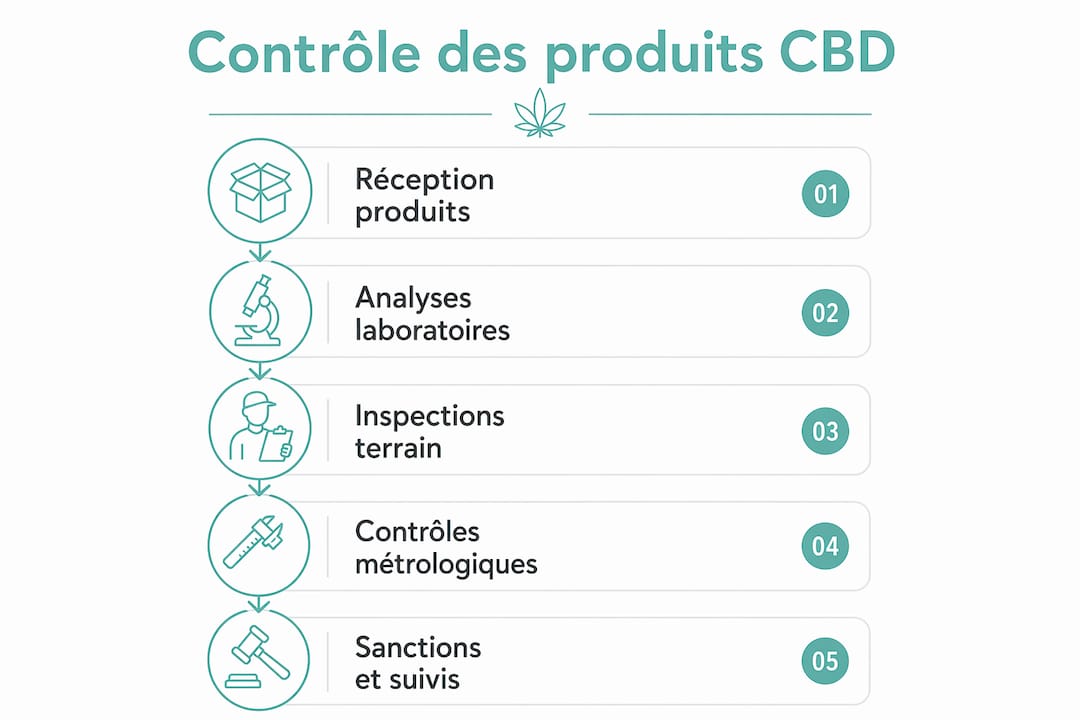
The main control mechanisms implemented are as follows:
- Saliva tests: Used by the police and gendarmerie during traffic stops, these tests detect the presence of THC without distinguishing its source (illegal cannabis or legal CBD containing residual traces).
- Laboratory analyses: Samples are collected at points of sale or at customs, followed by chromatographic analyses to quantify THC and CBD levels.
- Point-of-sale inspections: review of documentation, verification of labeling, marketing claims, and certificates of analysis provided by operators.
- Metrological inspections: verification of weighing instruments used in CBD stores, particularly for the sale of flowers by weight.
- Customs inspections: monitoring imports of CBD products to ensure their compliance before they are placed on the French market.
In the event of noncompliance, measures range from the seizure and destruction of products to criminal prosecution for deceptive business practices, or even drug trafficking if the THC level exceeds the legal threshold.
Key findings: 81% of CBD products analyzed in 2023 showed discrepancies between the advertised CBD content and the actual content, exposing their sellers to legal action for deceptive business practices. Furthermore, during a legal metrology campaign conducted in Bourgogne-Franche-Comté in 2023, a significant proportion of the weighing instruments inspected in CBD stores did not comply with regulations.
What regulatory framework applies to CBD products in France?
French regulations on CBD are diverse: there is no single piece of legislation governing the entire sector. Products are subject to different rules depending on their nature, which creates real complexity for businesses.
The common standard: a THC threshold of 0.3%
All products containing CBD must have a THC content of less than 0.3% to be exempt from narcotics laws. This threshold stems from the decree of December 30, 2021, issued pursuant to Article R. 5132-86 of the Public Health Code, which was itself adopted to bring French law into compliance with the European Court of Justice’s “Kanavape” ruling of November 19, 2020. Any product exceeding this threshold is legally classified as a narcotic, regardless of its commercial presentation.
Depending on the type of product, the rules vary:
- Foods and dietary supplements: CBD is classified as a “novel food” under the European Novel Food Regulation (EU) No. 2015/2283. No food product containing CBD may be marketed without prior authorization from the European Commission, based on an assessment by EFSA. To date, no such authorization has been granted.
- Cosmetics: Pure CBD is permitted as an ingredient, provided that the THC content remains below 0.3% and that cannabis derivatives comply with the prohibitions listed in Annex II of the European Cosmetics Regulation.
- E-liquids: permitted if suppliers have met their reporting obligations under the REACH Regulation and the THC content is less than 0.3%.
- Raw flowers and leaves: Their sale to end consumers remains prohibited, even though the Council of State overturned the provisions of the 2021 decree that banned their sale in December 2022. A partial legal vacuum persists on this issue, which the authorities are addressing on a case-by-case basis.
Therapeutic claims: an absolute red line
No non-pharmaceutical CBD product may claim to have medical or therapeutic properties. This prohibition applies to all distribution channels, including online retail sites. Only the drug Epidyolex®, approved by the French National Agency for Medicines and Health Products Safety (ANSM) for the treatment of certain forms of epilepsy, has been granted marketing authorization in France. To learn more about the rules applicable to sellers, the dedicated page on Pure-extract-cbd about who can sell CBD details the current legal requirements.
How do the authorities actually carry out their inspections?
Inspection methods vary depending on the competent authority and the type of product being inspected, but they all follow a common process: sampling, analysis, and then an administrative or judicial decision.
Laboratory Tests
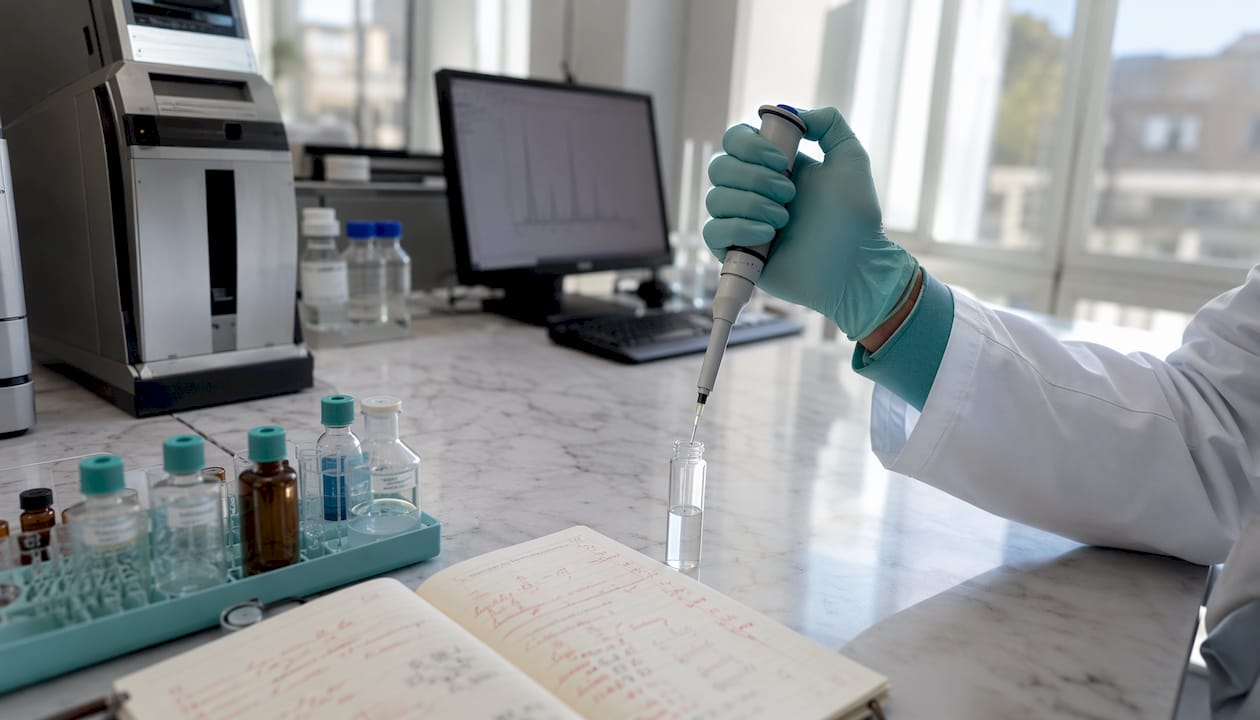
Gas-phase chromatography coupled with mass spectrometry (GC-MS) and high-performance liquid chromatography (HPLC) are the standard techniques for quantifying THC and CBD levels in a sample. These analyses are performed in accredited laboratories. The burden of proof lies with the operator: if a product is tested and the operator’s own analyses do not match the official results, the authorities’ measurements take precedence. A laboratory accredited to the ISO 17025 standard provides the strongest methodological basis for challenging or confirming a result.
Inspections of retail locations and document reviews
The DGCCRF conducts unannounced inspections at brick-and-mortar stores and on online retail sites. Inspectors verify that labeling complies with regulations (including THC content, absence of therapeutic claims, and information on the origin of the hemp), check for the presence of certificates of analysis, and ensure product traceability. A study of 33 online retailers revealed that many sellers were making therapeutic claims about their products, in direct violation of the regulations.

Metrological Inspections
Stores that sell CBD flowers by weight are subject to specific inspections by the legal metrology departments of the DREETS (Regional Directorates for the Economy, Employment, Labor, and Solidarity). In 2023, a campaign conducted in Bourgogne-Franche-Comté inspected 130 establishments throughout the region, representing 220 hours of fieldwork. Inspectors verify that the scales used bear the required regulatory markings and have undergone the mandatory periodic inspections.
Saliva Tests Conducted by Law Enforcement
Saliva tests detect the presence of THC in saliva, but they do not distinguish between THC derived from illicit cannabis and residual THC found in certain CBD products. A consumer who has used a CBD oil containing traces of THC could theoretically test positive, even if the amount ingested is minuscule. This poses a real risk for regular users of broad-spectrum CBD products.
Documentation Requirements for Operators:
- Certificates of Analysis (CoA) issued by an accredited laboratory, certifying the THC and CBD content
- Complete traceability throughout the supply chain, from producer to distributor
- Compliance of labeling with the requirements of the Consumer Code
- Regulatory Filings for Vaping Products (REACH Requirements)
Pro tip: Always keep the analysis certificates for each batch, dated and issued by an ISO 17025-accredited laboratory. In the event of an unannounced inspection, these documents serve as your first line of defense in demonstrating your products’ compliance.
What are the penalties for noncompliance?
The consequences of noncompliance vary depending on the nature of the violation, but they can be severe for both consumers and businesses.
For sellers and operators:
- Seizure and Destruction of Products: The DGCCRF may order the immediate removal from the market of any product with a THC content exceeding 0.3% or whose labeling includes unauthorized therapeutic claims.
- Legal Action for Deceptive Business Practices: Discrepancies between the advertised and actual CBD content expose sellers to criminal penalties under the Consumer Code.
- Prosecution for drug trafficking: If a product exceeds the legal THC threshold, it is reclassified as a controlled substance, and its possessor or seller faces the penalties provided for in the Public Health Code for drug trafficking.
- Administrative sanctions: fines, orders to comply, suspension of operations.
Prohibited therapeutic claims are one of the most frequently cited violations during DGCCRF inspections, with penalties that can include the administrative closure of the retail location.
For consumers:
The main risk involves driving under the influence. Driving after using narcotics is punishable by up to 3 years in prison and a fine of up to 9,000 €. If combined with an alcohol-related offense, these penalties can increase to up to 5 years in prison and a fine of up to €15,000. In addition, the offender’s driver’s license may be suspended or revoked, they may be required to complete a drug awareness course at their own expense, and their vehicle may be confiscated.
Important note: The saliva tests used during traffic stops cannot distinguish between residual THC from a legal CBD product and THC resulting from the use of illegal cannabis. A positive result is sufficient to trigger legal proceedings, regardless of the source.
Traceability Requirements for Operators:
Regulations require professionals to ensure full traceability of their products, from raw materials to finished goods. In the absence of supporting documentation (contracts with producers, batch analysis certificates, inventory records), authorities may presume non-compliance and take legal action. Industry organizations recommend retaining these documents for at least five years.
What regulatory changes will shape the 2023–2026 period?
Since 2023, French regulations on CBD have become significantly stricter, driven primarily by the DGAL and the EFSA’s positions on the food safety of CBD.
The DGAL's 2026 Inspection Plan
Since May 2026, the DGAL has expanded its inspections to cover all food products containing or promoting CBD, regardless of the distribution channel: specialty stores, mass retailers, online sales, and vending machines. The stated objective is to remove from the market any CBD food product that is not authorized under the Novel Food Regulation. These inspections are carried out in particular through the Departmental Anti-Fraud Operational Committees (CODAF), which requires coordination among several government agencies.
EFSA’s Position: Persistent Uncertainty
In June 2022, the European Food Safety Authority concluded that it was unable to rule on the safety of CBD as a novel food due to gaps in the available scientific data. In a second statement adopted in February 2026, EFSA confirmed that these gaps persist. Until authorization is granted, any food product containing CBD remains illegal on the European market.
Disputes in the Vocational Education Sector
The French CBD industry is challenging the 2026 regulatory plan in court, citing a lack of prior consultation and an application of the plan that it considers too indiscriminate. Trade organizations argue that certain products—particularly hemp-based dietary supplements with CBD levels close to the plant’s natural levels—should not be subject to the same restrictions as concentrated extracts. These legal challenges are creating real uncertainty for industry operators, who must navigate between current regulations and pending court decisions.
The Rise in Reports of Poisonings
Health authorities cite, in part, an increase in reports of poisoning linked to certain synthetic cannabinoids or products marketed as CBD but containing other active ingredients as justification for tightening controls. Consumers should exercise caution when dealing with products whose actual composition may differ from what is listed on the label, as illustrated by data from the MILDECA 2023 study. Regulations governing legal cannabinoids are evolving rapidly, and regular monitoring of legal developments remains essential for all industry stakeholders.
Why are transparency and quality crucial for players in the CBD industry?
Professor Joëlle Micallef, a pharmacologist, points out that CBD has pharmacological effects on dopaminergic and serotonergic receptors and may interact with certain medications. This pharmacological reality justifies strict health controls and strengthens the case for accurate labeling and systematic laboratory testing. A product with incorrect dosing is not just a regulatory issue: it can have real consequences for the health of those who consume it.
Data from the 2023 MILDECA study illustrate the scale of the problem: 81% of the products analyzed showed discrepancies between the declared and actual content. In this context, operators who invest in batch-by-batch analysis conducted by accredited laboratories stand out not only in terms of regulatory compliance but also in terms of consumer trust.
Best practices recommended by professional organizations:
- Have each production batch analyzed by an ISO 17025-accredited laboratory and make the analysis certificates available to consumers
- Update the labeling as soon as a change in formulation occurs
- Train sales teams on the rules governing marketing claims
- Monitor developments in European regulations, particularly EFSA decisions and updates to the Novel Food catalog
Pro tip: Before listing a new CBD product, always verify that the supplier has a recent certificate of analysis (less than six months old) for the specific batch, including quantification of total THC and CBD via chromatography. A generic or undated certificate is not sufficient in the event of an inspection.
Pure-extract-cbd applies this approach across its entire product line: each product comes with independent lab results, guaranteeing compliance with the legal THC limit and the accuracy of the stated concentrations. This allows consumers to verify for themselves the composition of the products they purchase, whether it’s a broad-spectrum CBD oil or other items in the line.
Discover the full range of compliant, lab-tested CBD products available on Pure-extract-cbd.
Key Points
French regulations governing CBD are based on a THC threshold of 0.3 percent, a complete ban on therapeutic claims, and a multi-agency oversight system whose scope was expanded in 2026 to include all food products containing CBD.
| Point | Details |
|---|---|
| Legal THC Threshold | Any CBD product must contain less than 0.3% THC to avoid being classified as a controlled substance. |
| Competent Authorities | The DGAL, the DGCCRF, and law enforcement agencies each take action within their respective areas of jurisdiction. |
| 2026 Inspection Plan | The DGAL now monitors all food products containing CBD that do not have Novel Food authorization. |
| Penalties for Violations | Driving after using narcotics is punishable by up to 3 years in prison and a fine of 9,000 euros. |
| Quality and Traceability | 81% of the CBD products tested in 2023 showed discrepancies between the stated CBD content and the actual CBD content. |



