For a quick and measurable effect, opt for vaporization at an appropriate temperature, which is less harsh than combustion. For longer-lasting relaxation, ingestion after decarboxylation works best, provided it’s combined with a fat source. In both cases, always check the certificate of analysis and make sure the THC content complies with legal limits—specifically, that it does not exceed 0.3%—and start with a low dose.
In short:
- Vaporization should be performed at a temperature between 170 °C and 220 °C to effectively release CBD without producing irritating substances.
- The recommended starting dose is between 5 and 10 mg of CBD; monitor the effects carefully before increasing the dose.
- CBD resin must always have a THC content of less than 0.3% to comply with French law, and a certificate of analysis is required.
- The method of ingestion via infusion or sublingual administration provides prolonged relaxation, but requires prior decarboxylation to activate the CBD.
- Vaporizing remains the most controllable method for beginners, as it allows you to adjust the effect in real time and avoid overdoses.
Table of Contents
- What is CBD resin, and why should you choose it?
- What are the best ways to consume CBD resin?
- How do you prepare resin at home?
- What dosage should be used, and what side effects should be monitored?
- How can you tell if a CBD resin is reliable?
- What Vaping and Ingestion Teach Us About Responsible Use
- Where can I find a tested, clear resin?
- Official Sources for Verifying the Legality and Science Behind CBD
What is CBD resin, and why should you choose it?
CBD resin is a cannabinoid concentrate obtained by pressing or extracting hemp flowers, and it generally has a higher CBD content than raw flowers.
Compared to other formats, resin offers a more pronounced flavor profile—thanks to the terpenes preserved during the pressing process—and a versatility that oil doesn’t always have.
- Pressed resin: compact, easy to handle, with a gradual effect.
- Raw resin: crumbly, often richer in its original terpenes.
- Powdered resin (kief): precise dosing, ideal for vaporizing.
To understand what truly sets this THC concentrate apart, the chemical difference between CBD and THC explains why the legal resin does not produce a comparable psychotropic effect.
What are the best ways to consume CBD resin?
Each method serves a different purpose: speed, duration, or localized action. Here's how to put them into practice.
- Vaporization. Crumble a small piece of resin into the device’s chamber, set the temperature between 170 °C and 220 °C depending on the model, and inhale in short puffs lasting two to three seconds. The cannabinoids are released without combustion, which reduces exposure to the irritants produced by smoke.
- Smoking or burning. Technically possible, but strongly discouraged: Burning the resin mixed with tobacco exposes you to toxic compounds resulting from the combustion itself, regardless of the CBD. Vaping or making an infusion remain safer alternatives.
- Infusions and cooking. The resin must first be decarboxylated, then mixed with a fat (butter, oil), since CBD is fat-soluble and does not dissolve in water. The effects generally set in after thirty minutes to two hours, but last longer than when inhaled.
- Sublingual route. A small amount of resin dissolved in oil can be placed under the tongue and held there for one minute before being swallowed. Absorption occurs more quickly this way than with conventional ingestion, as it bypasses complete digestion.
- Topical application. A resin-infused balm acts locally on an area of muscle tension or irritated skin without entering the systemic circulation to any significant degree.
- Dabbing. This technique involves vaporizing a small amount of resin on a heated surface (banger or chillum) to produce an intense, immediate inhalation. It requires experience: if the temperature is too high, it breaks down the terpenes and can irritate the respiratory tract.
Specialized guides recommend vaporization as the most controlled method of inhalation for preserving cannabinoids and terpenes, provided that the temperature ranges specific to each device are followed.
Pro tip: Always start with the lowest temperature recommended by your vaporizer, then gradually increase it during subsequent sessions. This will help you find the right balance between flavor, effect, and breathing comfort.
How do you prepare resin at home?
Decarboxylation converts the acid forms of cannabinoids into their active forms, which directly determines the effectiveness of any culinary preparation. Resin that has not been properly decarboxylated loses some of its potency, even if the initial dosage seemed correct.
- Decarboxylation. Spread the crumbled resin on a baking sheet lined with parchment paper and bake it in the oven at a moderate temperature—typically around 100 to 110 °C—for a sufficient amount of time, keeping an eye on it to avoid any burning smell.
- Infused oil or butter. Melt 100 g of butter or oil over low heat, add the decarboxylated resin, let it infuse for about an hour without exceeding 100 °C, then strain. Use a base of 1 gram of resin per 100 g of fat, adjusting as needed depending on the desired concentration.
- Homemade topical balm. Mix the cooled infused oil with melted beeswax in a ratio of about one to four, then pour the mixture into a small jar before it solidifies.
- Storage. Store your preparations in an airtight container, away from light and heat; an infused oil generally keeps for a few weeks in the refrigerator.
Always ventilate the room during decarboxylation and monitor the temperature: overheating breaks down the cannabinoids and leaves a bitter aftertaste in the final product. The same principles apply if you’re using CBD crystals instead of raw resin.
What dosage should be used, and what side effects should be monitored?
The basic rule can be summed up in one sentence: start with 5 to 10 mg of CBD, wait for the full effect to set in before increasing the dose, and never take two doses on the same day. This gradual approach remains the gold standard for avoiding any unpleasant surprises, especially for first-time users.
Key point: Resin that complies with French regulations must have a THC content of less than 0.3 percent, the threshold set for products derived from authorized hemp varieties.
Converting an amount of resin into milligrams of CBD remains an approximation without information from the manufacturer: always rely on the percentage listed on the packaging or the certificate of analysis rather than a visual estimate.
The most common side effects are mild, but should be taken seriously:
- drowsiness or decreased alertness;
- dry mouth;
- a slight drop in blood pressure;
- digestive problems at high doses.
These reactions, documented in several user reports, warrant special caution among people undergoing medical treatment. CBD interacts with certain liver enzymes, particularly those in the cytochrome P450 system, which can alter the effects of common medications such as anticoagulants or certain antiepileptic drugs. Prior medical consultation is required in these cases, as well as for pregnant or breastfeeding women.
How can you tell if a CBD resin is reliable?
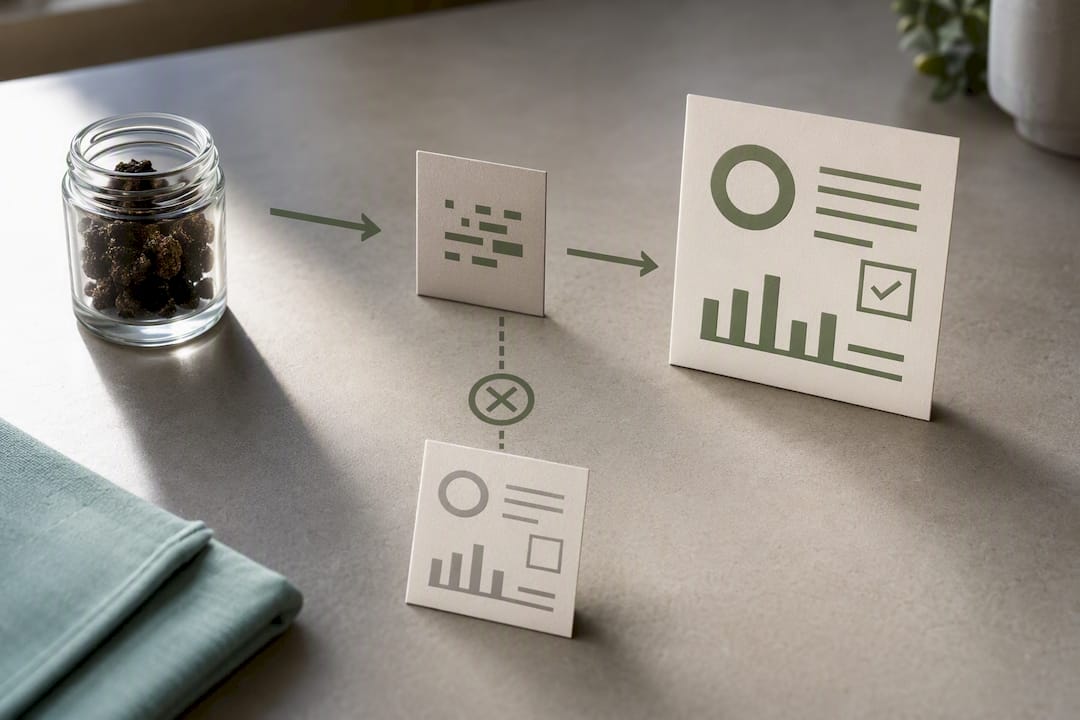
A certificate of analysis (COA) remains the standard reference for assessing the actual quality of a resin; it is far more reliable than a product description. Always check these four points before making a purchase.
- the exact CBD and THC content, expressed as a percentage;
- the absence of residual solvents if the product was chemically extracted;
- the absence of heavy metals and pesticides;
- the lot number, which links the product to its analysis by an independent laboratory.
Solvent-free or strictly controlled extraction methods minimize the risk of chemical residues in the finished product. Laboratory test results are published for each resin sold, with the CBD and THC levels clearly listed on each product sheet.
Pro tip: Always ask for the COA corresponding to the lot number listed on your packaging, not a generic document from the supplier. A reputable seller will provide it to you without hesitation.
What Vaping and Ingestion Teach Us About Responsible Use
After reviewing the various methods, one thing is clear: vaporization remains the best starting point for beginners, as it allows you to adjust the effect in real time and stop as soon as the desired sensation sets in. Ingestion, on the other hand, is better suited for planned use—such as the night before an occasion when you’re seeking prolonged relaxation—precisely because it allows for no adjustment once swallowed.
What users—both beginners and experienced ones—most often lack is a structured tracking system. Recording the dose, the time, and the effect felt over several days reveals trends that a one-time estimate cannot provide. Patience and consistency matter more than searching for a miracle product.
— Steven
Where can I find a tested, clear resin?
Unlike purchases made on the black market, where no testing guarantees the product’s actual composition, the lab results for each resin are published before it goes on sale. This transparency allows you to verify the CBD and THC levels—as well as the absence of unwanted residues—for yourself, without having to rely on a mere marketing promise.

The Strawberry Cake FTS resin is a prime example of this level of quality, with a cannabinoid profile that is documented and available for review before purchase. For those looking for a higher concentration, the Cali Mousseux HHX 30% resin offers a higher potency, always accompanied by its certificate of analysis. Explore the entire range of resins and CBD products to compare profiles before placing an order.
Official Sources for Verifying the Legality and Science Behind CBD
For more information on the legal framework, consult the regulatory text on the THC threshold and the decision of the Council of State. From a scientific perspective, the review published on PMC and the MILDECA page on CBD provide a detailed overview of the current state of knowledge.
This article is intended to provide general information and is not a substitute for the advice of a qualified healthcare professional. Consult a qualified healthcare professional about your specific situation before taking any action based on this content.