

THCP exhibits a binding affinity for the CB1 receptor that is significantly higher than that of Δ9-THC, making it, on a mg-for-mg basis, the more potent of the two cannabinoids. HHC, on the other hand, offers something different: a hydrogenated molecule that is chemically more stable, with effects similar to those of conventional THC, though not as intense. This trade-off between raw potency and practical stability sums up the core of the debate between THCP and HHC.
Two points should be clarified from the outset. First, CB1 binding data measured in the laboratory do not automatically translate into a sensation that is “X times stronger”: a high affinity primarily means that a lower dose is sufficient to activate the receptor, posing a real risk of overdose if one applies the consumption guidelines for conventional THC. Second, quality varies greatly from one product to another, particularly for molecules obtained through synthesis or chemical conversion, where residual impurities can pose a more serious problem than the molecule itself.
Before making any purchase, check the current status on Legifrance and always choose products that come with an independent certificate of analysis. Caution is still advised, especially for people who have never consumed psychoactive cannabinoids.
Key Points
THCP is characterized by a significantly higher CB1 affinity than Δ9-THC, while HHC offers greater chemical stability and a profile of effects more similar to that of traditional cannabis.
| Point | Details |
|---|---|
| THCP Potency | Its high CB1 affinity requires very low doses to avoid an overdose. |
| HHC Stability | Hydrogenation makes it more resistant to light and heat, but its epimer ratio varies from batch to batch. |
| Check the COA | A third-party certificate of analysis remains the only reliable way to verify purity and the absence of synthetic residues. |
| Evolving legal status | HHC is banned in France; the status of THCP remains unclear—check Legifrance for more information. |
| Stable alternative | Pure-extract-cbd offers lab-tested CBD oils and resins that can be used without the risk of a psychoactive overdose. |
Table of Contents
- THCP vs. HHC: What the Potency Data Show
- What is THCP?
- What is HHC?
- THCP and HHC: A Comparative Chart
- How do the effects of THCP and HHC actually differ?
- Why Production Quality Makes All the Difference
- Are THCP and HHC legal?
- What is the best way to take it, and what is the recommended dosage?
- What are the real risks of THCP and HHC?
- Are there any legal alternatives that involve less risk?
- What the THCP vs. HHC Debate Really Reveals
- Where can you find tested and transparent CBD and cannabinoid products?
- Sources
THCP vs. HHC: What the Potency Data Show
The comparison between THCP and HHC is based on opposing chemical principles. THCP emphasizes molecular intensity, while HHC emphasizes consistency. To understand why, we need to examine the structure of each molecule, which the next two sections detail before presenting them side by side in a comparative table.
It is also important to distinguish between two concepts that are often confused: pharmacological potency, measured in the laboratory on isolated receptors, andperceived intensity, which depends on the method of consumption, dosage, and individual tolerance. A review on cannabinoid pharmacology notes that results obtained on isolated receptors do not translate linearly to the effects observed in humans, due to a lack of sufficient clinical trials on these new molecules (PMC study on cannabinoid pharmacology). Keep this caveat in mind whenever an affinity value is cited on a retail website or forum.
What is THCP?
THCP, or tetrahydrocannabiphorol, was first identified in 2019 by a team of Italian researchers who detected it in trace amounts in certain varieties of hemp. Its structure resembles that of Δ9-THC, with one key difference: its alkyl chain has seven carbon atoms instead of five. This longer chain changes the way the molecule binds to the CB1 receptor, which triggers most of cannabis’s psychoactive effects.
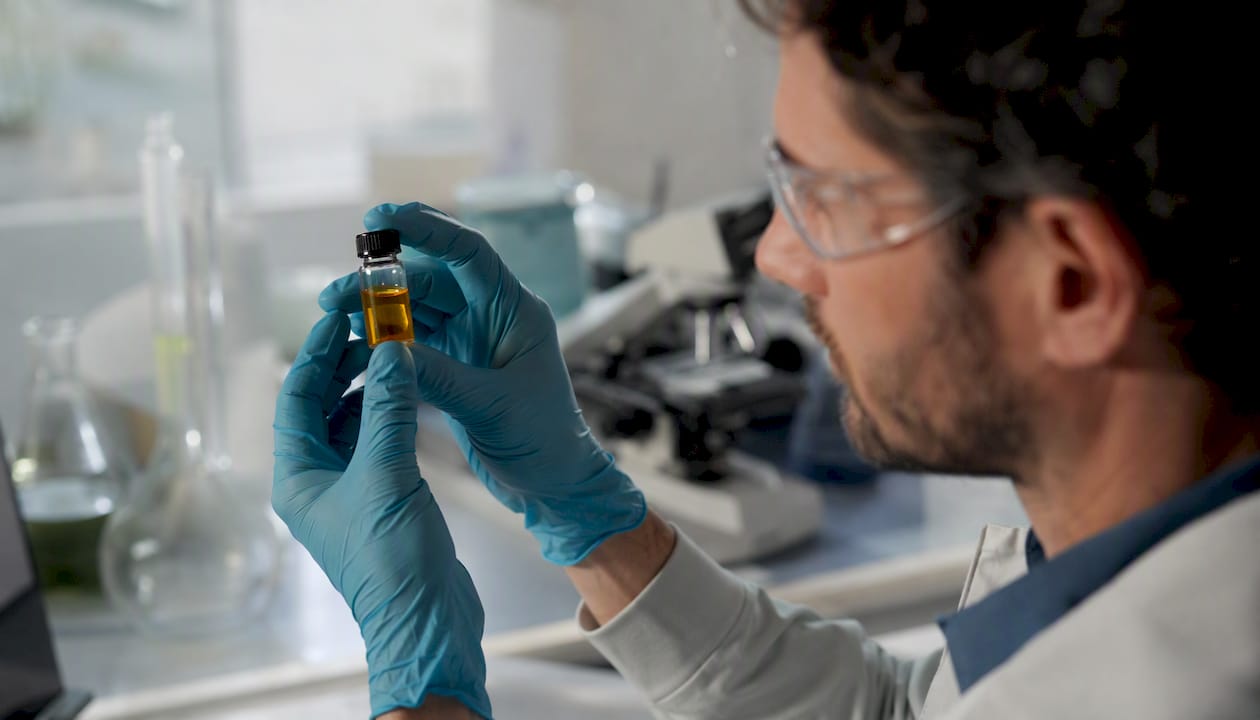
A study published in ACS Chemical Biology measured this difference under in vitro conditions: THCP exhibits much lower Ki values (an inverse measure of affinity) than Δ9-THC, indicating a much stronger binding to the receptor at equal concentrations (ACS Chemical Biology). In practical terms, this means that a significantly smaller amount of THCP can produce activation comparable to, or even greater than, that of conventional THC.
This high affinity has two direct practical consequences. On the one hand, the active doses reported for THCP are generally lower than those for THC, which explains why many users underestimate its potency when trying it for the first time. On the other hand, several user reports suggest that its effects last longer than those of conventional THC, although no robust clinical study has yet quantified this parameter in humans. THCP also remains extremely rare in its natural state: virtually all commercial products containing it are synthesized or converted in a laboratory, which makes the issue of purity all the more critical.
What is HHC?
HHC, or hexahydrocannabinol, does not occur naturally in the plant in usable quantities. It is obtained through a hydrogenation process—the same type of chemical reaction used to convert vegetable oil into margarine—in which hydrogen atoms are added to the THC or CBD molecule, saturating some of its chemical bonds. This industrial choice is not insignificant: hydrogenation makes the molecule more stable against oxidation, heat, and light—a chemical principle already documented for other hydrogenated compounds (PMC study on the stability of hydrogenated compounds).

This reaction actually produces a mixture of two forms, known as epimers: 9R-HHC and 9S-HHC. Only the 9R form binds effectively to the CB1 receptor and produces a marked psychoactive effect; the 9S form, on the other hand, remains largely inactive in this regard.
In terms of effects, users often describe HHC as being closer to traditional Δ9-THC than THCP, with a high considered “milder” or more gradual by some consumers (HHC vs. THCP: Novel Cannabinoids Head-to-Head). To explore this profile further, our article on the effects of HHC details the most frequently reported sensations. HHC’s chemical stability also offers a tangible commercial advantage: products have a longer shelf life, with a slower rate of degradation into cannabinol (CBN)—a significantly less active compound—than in non-hydrogenated extracts.
THCP and HHC: A Comparative Chart
| Dimension | THCP | HHC |
|---|---|---|
| Relative potency (vs. Δ9-THC) | Significantly higher CB1 affinity in the laboratory | Similar to Δ9-THC; the perceived effects are often considered milder |
| Onset of effects | Varies depending on the mode; is sometimes perceived as delayed and underestimated | Similar to traditional THC; takes effect fairly quickly when inhaled |
| Duration of effects | Often reported as being longer | Similar to that of THC, generally moderate |
| Dominant Subjective Profile | Intense euphoria; increased risk of anxiety at high doses | More linear effect; moderate sedation possible |
| Common Risks | Overdose facilitated by high affinity; dizziness | Power Variability Related to the Epimer Ratio |
| Production | Synthesis or laboratory conversion (naturally rare) | Hydrogenation of THC or CBD |
| Stability / Shelf Life | As susceptible to oxidation as conventional THC | Greater stability thanks to chemical saturation |
| Legal status | Uncertain status, varying by country | Banned in several jurisdictions; a changing situation |
| Business Forms | Infused flowers, resins, vapes, oils | Vapes, oils, resins, edibles |
Two points should be noted when reading this table. The “relative potency” row should never be interpreted as a multiplier for the perceived effect: an in vitro affinity several dozen times greater than that of Δ9-THC means that a much lower dose of THCP is sufficient to activate the receptor, not that the experience will automatically be amplified in the same proportions (HHC vs. THCP: Novel Cannabinoids Head-to-Head). The “legal status” row changes as quickly as the regulations governing it: what you read today may no longer be accurate in a few months, which is why it’s important to check the current regulations directly before making any purchase.
How do the effects of THCP and HHC actually differ?
The difference between THCP and HHC goes beyond just an affinity score. When inhaled (via vape, flower, or resin), both cannabinoids take effect within a few minutes, allowing users to adjust the dose gradually. When consumed in edibles, absorption occurs through the liver, where part of the compound is converted into active metabolites. The onset of effects then takes one to two hours, and the total duration can exceed six to eight hours—a timeframe that prompts some impatient users to take another dose before the first one has fully taken effect, creating a risk of accumulation.
The subjective experience also varies. THCP, due to its high affinity, appears to be more closely associated with peaks of intense euphoria, but also with an increased risk of anxiety or feelings of derealization when the dose exceeds a person’s tolerance threshold. HHC is more often described as producing gradual sedation, with a so-called “couch-lock” effect (a sensation of physical heaviness that makes one want to stay seated) reported by some users at high doses, without the same initial peak in intensity as THCP.
Dosage, individual tolerance, and interactions with other substances play a major role in this equation. Alcohol enhances sedation and impairs judgment regarding one’s own consumption, which increases the risk of unintentionally exceeding a safe threshold. Psychotropic medications, particularly anxiolytics or antidepressants, can also interact unpredictably with these cannabinoids; it is best to consult a healthcare professional before combining them.
Why Production Quality Makes All the Difference
The molecule itself is often not the main danger. The real risk frequently stems from byproducts generated during synthesis or chemical conversion—a finding supported by several analyses on the safety of processed cannabinoids (PMC article on the safety of processed cannabinoid products). The hydrogenation of HHC, like the synthesis of THCP, can leave traces of metal catalysts, residual solvents, or partially converted intermediates if the industrial process is not rigorously controlled.
A reliable certificate of analysis (COA) must cover several specific parameters, not just the cannabinoid content listed on the label:
- The complete cannabinoid profile, including the isomers and epimers present—not just the main compound.
- Testing for heavy metals and residues from catalysts used in hydrogenation or synthesis.
- Monitoring residual solvents resulting from extraction or purification.
- The absence of pesticides and microbiological contaminants is now a standard requirement for all hemp extracts.
- Specifically for HHC, the ratio of 9R to 9S epimers, which directly determines the product's actual potency.
A transparent manufacturer publishes these test results in an accessible format; the tests are conducted by an independent third-party laboratory, not by the manufacturer’s own staff. Our article on HHC-P clearly illustrates how these families of derivative molecules require a similar level of caution when purchasing them.
Pro tip: Always store your THCP- or HHC-based products in opaque containers, away from light and heat. Even HHC, which is more stable than THCP due to hydrogenation, gradually breaks down into cannabinol if left in direct light for several weeks.
Are THCP and HHC legal?
The legal status of THCP and HHC varies by country and is changing rapidly. In France, the go-to resource remains Legifrance, which publishes the laws and decrees related to the classification of substances. HHC has been banned in France, a decision that our guide on HHC in France details along with the regulatory context that led to it. THCP, on the other hand, is in a more uncertain legal gray area; while there is no blanket ban on it as of now, health authorities are exercising increased vigilance regarding all synthetic cannabinoids.
To verify a decree or regulatory text on Legifrance, look for the publication date, the issuing authority (often the National Agency for Medicines and Health Products Safety, or ANSM, for psychoactive substances), and the exact scope of the measure: a ban may target a specific molecule without covering its derivatives or close analogs. Our article on cannabinoids classified as narcotics in France includes this updated list, which is useful for an initial overview before consulting the official text.
In any case, it’s wise to follow three simple guidelines: check the product’s COA before purchasing, ensure that the seller accurately lists the specific compound contained in the product rather than using a vague label, and avoid importing from jurisdictions where the legal framework differs from your own. To understand how these products are actually regulated, our article on the regulation of CBD products in France provides useful insight, even though psychoactive cannabinoids such as THCP and HHC are subject to distinct regulatory frameworks.
What is the best way to take it, and what is the recommended dosage?
The choice of consumption method directly affects your ability to control the dose, a particularly sensitive factor when it comes to THCP.
- Inhalation (vaping, flower, resin): The effects are noticeable within a few minutes, allowing you to adjust your intake in small, successive increments and stop as soon as the desired effect is achieved.
- Edible: Onset delayed by one to two hours; total duration often exceeds six hours, with a real risk of taking another dose before the first one has taken full effect.
- Sublingual route (oil, tincture): intermediate onset, generally between 15 and 45 minutes, with greater predictability than traditional edibles.
The precautionary principle most often cited by professionals is simple to state: start with the lowest possible dose, then wait for the effects to fully set in before considering taking another dose. This advice applies to any psychoactive cannabinoid, but it takes on particular importance with THCP, whose high affinity means that typical doses based on standard THC can produce a disproportionate effect.
Signs that a threshold has been exceeded include nausea, dizziness, an increased heart rate, severe anxiety, or a feeling of derealization. Minors, pregnant or breastfeeding women, and individuals taking psychotropic medications should avoid these substances, as there is insufficient safety data for these populations.
What are the real risks of THCP and HHC?
The most commonly reported side effects for these two cannabinoids include anxiety, derealization, vomiting, and, in the most severe cases, what users refer to as a “bad trip”—an episode of intense anxiety accompanied by a temporary loss of orientation. These reactions most often occur during an overdose, a situation that is all the more likely with THCP given its high affinity for the CB1 receptor.
From a scientific standpoint, the available evidence remains incomplete. Data on binding affinity come from in vitro and animal studies; human clinical trials on THCP and HHC are virtually nonexistent to date, a gap highlighted in the literature on cannabinoid pharmacology (PMC article). A study published on PubMed, examining early cannabis use among adolescents, links this exposure to long-lasting effects on certain cognitive functions—a warning that calls for increased caution regarding more potent cannabinoids such as THCP, even in the absence of specific studies on this molecule (PubMed).
Dr. Xavier Laqueille, head of the addiction medicine department, links THCP to risks of cognitive impairment, nausea, and anxiety, and urges caution regarding these new cannabis derivatives, whose long-term effects remain poorly documented.
This warning, reported by Allodocteurs, aligns with a broader observation: the risk stems not only from the active compound but also from impurities resulting from its manufacturing process. People taking medication, particularly psychotropic drugs, should consult a doctor before consuming THCP or HHC, as should those with a personal or family history of anxiety or psychotic disorders—a group for whom the utmost caution is warranted.
Are there any legal alternatives that involve less risk?
For light recreational use, stress management, or sleep aid, it is not always necessary to use a cannabinoid with high CB1 affinity. Several options offer a more predictable profile and a more stable legal framework.
- CBD, which is non-psychoactive, remains the best-documented and most widely authorized option in Europe; it is particularly well-suited for managing mild stress and promoting sleep, without altering consciousness.
- H4CBD, a hydrogenated form of CBD, offers an attractive compromise: a more pronounced relaxing effect than standard CBD, while maintaining a regulatory status distinct from that of highly psychoactive cannabinoids.
- THCA, a natural precursor to THC found in the raw plant, becomes psychoactive only after decarboxylation (heating); in its raw form, it falls into a different category than already-activated cannabinoids such as THCP or HHC.
Our comparison of CBD and THC details the mechanisms that distinguish these two categories. These alternatives also offer a practical advantage: their traceability is generally better established, with extraction processes that are older and more tightly controlled than those used for newer synthetic cannabinoids. When making your choice, always check the COA, the type of spectrum listed (broad or full spectrum), and the exact concentration of the active cannabinoid, expressed as a percentage or in milligrams per milliliter. Our article on 10-OH-HHC provides an example of how a related compound should be evaluated before purchase.
What the THCP vs. HHC Debate Really Reveals
The way people often talk about THCP and HHC seems to me to miss the point. They compare the two molecules as if they were choosing between two car brands, forgetting that the factor that most determines your experience is neither THCP nor HHC in and of themselves, but the quality of the process used to produce them.
Poorly synthesized THCP, contaminated with solvent residues, will always be more dangerous than clean, thoroughly tested HHC, regardless of each compound’s theoretical affinity for the CB1 receptor. This, in my view, is where most consumer comparisons fall short: they pit lab numbers against each other without ever questioning the actual traceability of the product you’re holding in your hands.
Transparency regarding certificates of analysis should not be just another marketing pitch. It should be the primary selection criterion, even before the advertised potency or price. A seller who displays their certificates of analysis without being asked, who specifies the epimer ratio in an HHC product, and who indicates whether a THCP is synthetic or natural, takes a radically different approach than one who merely provides a vague percentage on the label. It is this level of rigor—more than any claim about potency—that should guide your choice.
Where can you find tested and transparent CBD and cannabinoid products?
Given the uncertainties surrounding THCP and HHC, a more stable alternative deserves serious consideration: CBD-based products, for which the legal framework is now well established in France and Europe. Pure-extract-cbd offers a range of products including broad-spectrum CBD/CBG oils, organic hemp flowers, and resins, each accompanied by a certificate of analysis issued by an independent third-party laboratory.

Each product page on Pure-extract-cbd lists the exact ingredients and provides access to lab results, so you can verify for yourself that there are no unwanted residues before making a purchase. If you’re looking for a wellness product without significant psychoactive effects,the 20% broad-spectrum CBD/CBG oil offers a concentration suitable for regular use, while the fresh-frozen CBD resin is ideal for those who prefer a more artisanal extract, with the same high standards of traceability. Check out the product page of your choice, review the attached COA, and place your order with full confidence.
Sources
The studies and official documents cited in this article allow readers to verify each claim made about THCP and HHC, from laboratory data to the legal framework.
- ACS Chemical Biology (doi:10.1021/acschembio.3c00254)
- Legifrance
- HHC Banned: What Are H4CBD and THCP? — Allodocteurs
- PMC Article (Cannabinoid Pharmacology)
To read a decree on Legifrance, first locate its publication date and the signing authority, then verify the exact scope of the substances covered: a ban targeting a specific molecule does not necessarily cover its closely related derivatives.
This article is intended to provide general information and is not a substitute for the advice of a qualified healthcare professional. Consult a qualified healthcare professional about your specific situation before taking any action based on this content.



