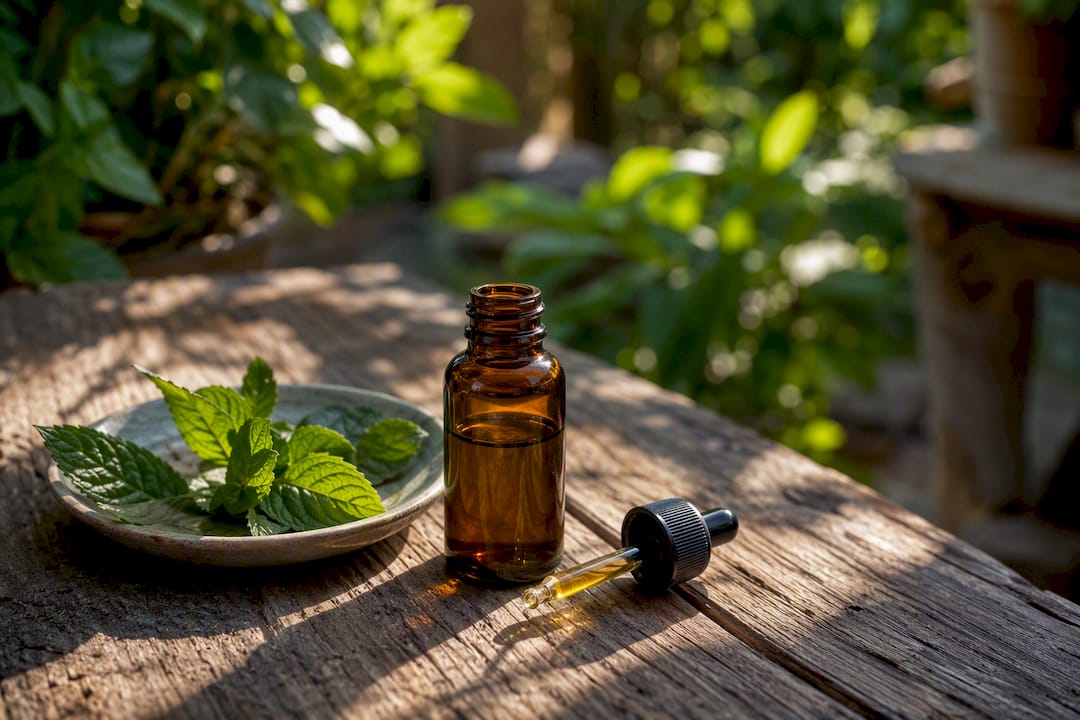
CBD can reduce certain markers of stress response and emotional exhaustion, as confirmed by several controlled trials. However, this effect depends heavily on the dose, the duration of use, and the quality of the product chosen. Before starting any regular use—especially if you are currently taking medication—it is essential to consult a doctor or pharmacist, particularly to monitor liver function.
In short:
- A daily dose of 300 mg of CBD taken over the course of a month can significantly reduce burnout, but requires medical supervision to avoid potential effects on the liver.
- The response to CBD varies greatly depending on the dose, the quality of the product, and individual sensitivity, making it essential to start slowly to minimize risks.
- Dosage forms such as sublingual oil or capsules offer a good balance between rapid onset of action and stability, making them suitable for regular use to combat stress.
- Product quality must always be verified by an independent lab report confirming the CBD content and the absence of THC and contaminants to ensure safety.
- CBD has a solid body of evidence supporting its use in treating certain indicators of emotional exhaustion, but it is not a substitute for psychological counseling or medication when necessary.
Table of Contents
- What scientific evidence supports the use of CBD for stress relief?
- Dosage: What the Studies Say and How to Get Started Safely
- Oil, capsules, gummies, or inhalation: Which form should you choose to combat stress?
- Side Effects, Liver Enzymes, and Drug Interactions: What to Watch For
- How can you tell if a CBD product is reliable and has been thoroughly tested?
- How can you incorporate CBD into your daily stress management routine?
- Why Trust Our Recommendations on CBD and Stress
- Where to Buy Reliable CBD to Help Manage Your Stress
- A Responsible Approach to Using CBD for Stress Relief
- Sources
What scientific evidence supports the use of CBD for stress relief?
The data exist, and they are more robust than is often thought. A meta-analysis combining several controlled trials involving several dozen participants highlighted significant anti-stress effects, with efficacy in some cases comparable to that of certain conventional anxiolytics, according to a review on the endocannabinoid regulation of stress by CBD. The proposed mechanism involves both a modulation of endocannabinoid tone and activation of 5-HT1A serotonergic receptors, two pathways directly involved in the regulation of anxiety.
Key takeaway: A randomized study involving just over 100 frontline healthcare professionals showed that a daily dose of 300 mg (divided into two doses) for about one month significantly reduced emotional exhaustion scores associated with burnout, with a measurable improvement as early as the 14th day, according tothe trial published in JAMA Network Open.
However, that same study reported a few cases of elevated liver enzymes among participants, an issue that is frequently mentioned in the literature on the safety of high-dose CBD.
We need to qualify what these studies actually measure. Burnout among healthcare workers is not the same as social anxiety or ordinary work-related stress, and the populations studied (hospital staff in 2026, athletes, laboratory subjects) cannot be automatically extrapolated to all aspects of daily life. Another limitation to keep in mind is the placebo effect. Psycho-experimental studies show that a person’s pre-existing beliefs about CBD strongly influence the improvement they experience, according to research on the placebo effects associated with cannabidiol. This does not discredit the clinical results, but it serves as a reminder that some of the perceived benefit in everyday life may be due to a placebo effect.
For the average user, the practical conclusion can be summed up in one sentence: CBD has a solid body of evidence supporting its use for emotional exhaustion and certain forms of stress, but it is not a substitute for prescribed treatment or psychological counseling when the situation warrants it.
- Seven controlled trials (232 participants) show a measurable anti-stress effect.
- A clinical trial established a clear link between 300 mg/day and a reduction in burnout.
- The results vary depending on the type of stress studied and the population tested.
- The anticipation effect can amplify the perceived benefit without invalidating it.
Dosage: What the Studies Say and How to Get Started Safely
The most common dose reported in rigorous clinical trials is 300 mg per day, divided into two doses, taken over a 28-day period. Other, smaller studies suggest that full-spectrum extracts may provide relief from anxiety at much lower doses—around 30 mg per day for four to six weeks—based on open-label trials of low-dose full-spectrum products. This discrepancy highlights a reality that manufacturers often fail to mention: the response to CBD varies greatly from person to person, and there is no one-size-fits-all dose.
Key point: Some clinical data suggest a U-shaped response curve, in which maximum efficacy occurs within a specific dose range—neither too low nor too high.
Given this variability, the best approach is a gradual one rather than a theoretical one.
- Start with a low dose: 5 to 10 mg per day during the first week, regardless of the form you choose.
- Increase the dose gradually: add 5 mg every three to four days if the effect is still insufficient.
- Spread out your doses: taking two doses a day helps minimize the peaks and troughs you experience.
- Set a trial period: two to four weeks are usually enough to determine whether there is a real effect.
- Follow the self-medication guidelines: do not exceed one month without consulting a doctor—a recommendation echoed by several French specialists in herbal medicine.
Pro tip: Keep a simple journal noting the time, dose, form, stressful situation, and a subjective rating on a scale of one to ten. This is often the most reliable way to determine, in practice, whether CBD is providing you with tangible benefits rather than just a vague sense of well-being.
Oil, capsules, gummies, or inhalation: Which form should you choose to combat stress?
The method of administration affects how quickly the medication takes effect, the accuracy of the dosage, and its convenience in daily life. There is no single form that is universally superior; rather, certain formats are better suited to specific situations.
- Sublingual oil: Absorbed under the tongue, it takes effect in about 15 to 45 minutes and allows for precise dosing thanks to the dropper. It’s often the best place to start when testing your sensitivity to CBD.
- Capsules and oral supplements: Absorption occurs through the digestive system, which is slower (one to two hours), but the effect lasts longer. This form is well-suited for a consistent daily dose, without having to think about it several times a day.
- Gummies and edibles: Similar to capsules in terms of absorption kinetics, they are popular for their discretion and taste, though they have the drawback of sometimes having less consistent dosages depending on the brand.
- Inhalation or vaporization: The effects are almost immediate—within a few minutes—which can be appealing during an acute anxiety episode. However, this method carries respiratory risks and involves less controlled consumption practices than oral forms.
- Topical treatments (creams, balms): While they are useful for localized muscle or joint pain, they have no proven benefit in treating systemic stress, since their effect is limited to the area of application.
For long-term stress relief, oil and capsules remain the most well-documented forms in the clinical trials mentioned above. Our article on CBD oil for stress details the practical ways to use this form in daily life.
Side Effects, Liver Enzymes, and Drug Interactions: What to Watch For
CBD is generally well tolerated, but “well tolerated” does not mean “without side effects.” Clinical feedback and safety reviews point to a range of recurring side effects, especially at high doses or at the start of treatment.
- Drowsiness and fatigue, which are particularly common during the first few days of treatment.
- Mild digestive problems: diarrhea, nausea, and sometimes a change in appetite.
- Dry mouth: a minor but common side effect.
- Elevated liver enzymes at high doses—a finding reported both in the burnout study and in reviews on the pharmacokinetics and safety of CBD.
The issue most often overlooked by users is drug interactions. CBD is metabolized by the cytochrome P450 enzymes in the liver, the same family of enzymes that processes many common medications, including anticoagulants, certain antipsychotics, antiepileptics, and heart medications. Taking them together can alter the blood levels of these substances, either increasing or decreasing them, without the user immediately realizing it.
Pro tip: If you’re taking any kind of long-term medication, talk to your pharmacist before starting CBD. A simple cross-check is often enough to rule out any risk of interaction.
Our guide to the possible side effects of CBD details the precautions to take based on individual profiles, while another article takes a broader look at CBD-related side effects in everyday life.
How can you tell if a CBD product is reliable and has been thoroughly tested?
The quality of a CBD product is not determined by its marketing claims, but by verifiable, documented, and publicly available criteria.
- Insist on an independent analysis report (COA) that specifies the exact CBD content, the absence of THC or only trace amounts, and the absence of heavy metals, residual solvents, or microorganisms.
- Choose the type of extract based on your tolerance: a pure CBD isolate is suitable for those who want to avoid any other cannabinoids, while a broad-spectrum or full-spectrum extract harnesses the entourage effect—the synergy between cannabinoids and terpenes that several mechanistic studies on CBD and stress-related disorders associate with improved modulation of the endocannabinoid system.
- Check the source of the hemp and the extraction method; supercritical CO2 extraction is considered the cleanest and most traceable method.
- Check the labeling: dosage per serving, production date, lot number, and verifiable manufacturer contact information.
This level of oversight is consistent with the traceability and pharmacovigilance recommendations issued by French authorities, which emphasize the need for enhanced quality control in the CBD market, according to the MILDECA report on CBD. To understand the legal distinctions between cannabinoids, our article on CBD and THC explains what French law actually permits.
How can you incorporate CBD into your daily stress management routine?
Two approaches to use coexist, and they are not mutually exclusive. The first involves taking CBD on an as-needed basis—during a specific, identifiable spike in anxiety—preferably in a fast-acting form. The second approach involves regular, daily use, intended as a long-term supplement to stress management, more in line with the approach taken in clinical trials on burnout.
CBD works best as a supplement rather than as a standalone solution. When combined with quality sleep, a balanced diet, and behavioral techniques such as cardiac coherence or progressive muscle relaxation, its perceived effect tends to improve significantly compared to taking it on its own, without a supporting routine.
- Rate your stress level before you begin, on a simple scale from one to ten.
- Try a specific dosage form and dose for at least two to four weeks.
- Then reassess: sleep, irritability, muscle tension, and concentration.
- Adjust the dose or dosage form if no change is noticeable after this period.
A specialized partner offers additional reading on the effects and overall safety of CBD, which is useful for comparing North American and European approaches to the issue.
Why Trust Our Recommendations on CBD and Stress
Pure-extract-cbd bases each product page on an independent lab report, guaranteeing the actual CBD content and the absence of contaminants. This transparency directly addresses the traceability requirements mandated by clinical trials and French health authorities for this market.
No product can replace medical advice, and self-medication has its limitations, particularly when taken continuously for more than a month. Our internal guides on medical claims to avoid and our customer service team are available to help you narrow down your product choices based on your personal situation.
Where to Buy Reliable CBD to Help Manage Your Stress
Given the widespread daily use of CBD for stress relief, the challenge isn’t finding a product—it’s finding one where every batch is truly verified. Pure-extract-cbd meets this specific need: each product has an independent lab report available for review, which spares the reader from having to guess the reliability of an oil or flower based solely on a label.

For a consistent daily dose, a precisely measured oil is often the simplest option, while those who prefer a natural form can opt for a flower like Northern Light small buds, which is also lab-tested. The entire catalog, available on the “All Products” page, is delivered quickly anywhere in France, with customer service ready to answer questions about dosage or the form best suited to your situation. Before placing an order, check the labeling of your chosen product and don’t hesitate to ask for personalized advice if you’re currently undergoing medical treatment.
A Responsible Approach to Using CBD for Stress Relief
CBD is not a miracle cure for stress, but the available clinical trials show a real effect on certain markers of emotional exhaustion, provided the dosage is appropriate and the product is of high quality. My conclusion, based on an analysis of this data, is that the real risk isn’t CBD itself, but rather the lack of proper guidance: incorrect dosing, untested products, and a lack of follow-up. If you have any concerns about your situation, contact a healthcare professional or our team for personalized advice.
— Steven
This article is intended to provide general information and is not a substitute for the advice of a qualified healthcare professional. Consult a qualified healthcare professional about your specific situation before taking any action based on this content.
Sources
This article draws on randomized clinical trials published in JAMA Network Open, a mechanistic review on the endocannabinoid regulation of stress, a safety and pharmacokinetic analysis, and practical recommendations published by Santé Magazine. These sources cover the efficacy, mechanisms, and practical limitations of CBD for stress.
- Enhancing Endocannabinoid Regulation of Stress with Cannabidiol
- Efficacy and Safety of Cannabidiol Plus Standard Care Versus Standard Care Alone for the Treatment of Emotional Exhaustion and Burnout Among Frontline Health Care Workers
- CBD (cannabidiol): Benefits, Risks, and Forms | Santé Magazine