

To start, choose an e-liquid with a nicotine concentration between 100 and 300 mg per 10 ml, or 10 to 30 mg/ml. This is the safest starting point for experiencing the initial effects without overdoing it.
In short:
- Concentration in mg/mL is the only reliable metric for comparing different CBD e-liquids, as it remains constant regardless of volume or total quantity.
- Common concentration levels are 10, 30, 50, and 100 mg/mL, suitable for various applications ranging from discovery to established use.
- Vaping equipment influences the choice of nicotine strength: indirect inhalation often requires low- to medium-strength nicotine, while direct-inhalation devices may require a lower concentration to avoid overdose.
- A personalized dosage is determined by gradually testing a concentration between 10 and 30 mg/mL over several days, noting the response to fine-tune the dosage.
- Before purchasing, it is crucial to check for a certificate of analysis confirming that the THC content is less than 0.3% and to avoid e-liquids containing harmful additives such as vitamin E acetate.
Table of Contents
- Understanding CBD E-Liquid Concentration Labels: mg, mg/ml, and Percentage
- Which concentration levels should you choose based on your intended use?
- How do you adjust the nicotine strength to suit your device and vaping style?
- How can you calculate CBD concentration on your own?
- What safety criteria should you check before buying CBD e-liquid?
- Pure Extract CBD's Quality Guarantees for E-Liquids
- How to Create Your Own Personal Dosage Chart
- E-liquids and boosters tested to turn theoretical concepts into the right bottle
- Sources
- Frequently Asked Questions
Understanding CBD E-Liquid Concentration Labels: mg, mg/ml, and Percentage
A bottle may display three different types of information, and that’s where the confusion begins. Some manufacturers list the total amount in milligrams (“300 mg”), others list the concentration in mg/ml, and still others list a percentage. These three ways of presenting the CBD concentration in e-liquid cannot be directly compared without performing a simple calculation.
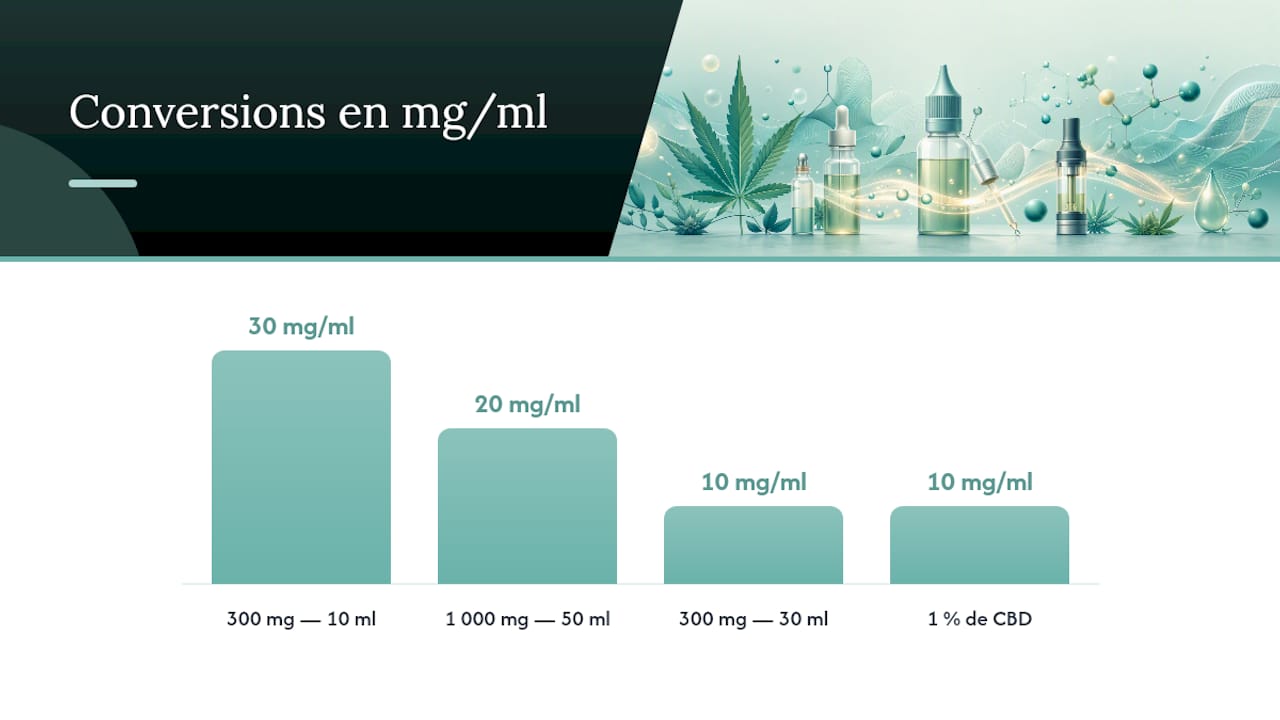
The rule to remember is this: when comparing two products, always convert everything to the same unit—concentration in mg/mL. This is the only measurement that remains constant, regardless of the bottle’s volume.
How to convert a total amount to a concentration:
- A bottle containing 300 mg per 10 ml is equivalent to 30 mg/ml (300 ÷ 10).
- A 300 mg bottle containing 30 ml is equivalent to 10 mg/ml (300 ÷ 30), a much lower concentration despite the total amount being the same.
- A bottle containing 1,000 mg in 50 ml is equivalent to 20 mg/ml, a figure that falls midway between the two previous examples.
- A percentage is easy to convert: 1% CBD is equal to 10 mg/ml.
The most common mistake is precisely to confuse the total amount of CBD in the bottle with its actual concentration. Two “300 mg” bottles are not comparable if one is 10 ml and the other is 30 ml: the first is three times more concentrated. This confusion explains why some vapers consider a product “ineffective” when they have simply purchased an e-liquid with a dosage three times lower than the one they tried before. Before making any purchase, look for the figure in mg/ml on the label or calculate it yourself. This is the only reliable way to adjust your CBD e-liquid dosage from one product to another.
Which concentration levels should you choose based on your intended use?
The market has standardized around a few common concentrations: 100, 300, 500, and 1,000 mg per 10 ml, or approximately 10, 30, 50, and 100 mg/ml. These levels form the basis for most product lines sold in France, as noted in the CigaretteElectroniques.org guide on CBD concentrations.
- Low concentration, around 10 mg/ml. Suitable for daily use and for beginners who are just discovering their sensitivity to CBD. You vape more often, but with a lower margin of error.
- Intermediate strength, around 30 mg/ml. Suitable for occasional or moderate use, for those looking for a more pronounced effect without increasing the number of sessions throughout the day.
- High nicotine concentration, around 50 mg/mL. Designed to provide a more pronounced effect during short sessions; often chosen by experienced vapers who already know their comfort threshold.
- Boosters, starting at 100 mg/ml. These concentrates should never be vaped undiluted. They are intended solely for use in making your own e-liquid by diluting them in a neutral base—a practice endorsed by manufacturers specializing in CBD dosage calculations.
The optimal CBD concentration in e-liquid is therefore never an absolute number; it also depends on the product’s overall composition and what is known as the entourage effect.
How do you adjust the nicotine strength to suit your device and vaping style?
The choice of nicotine strength cannot be made independently of the device used. An MTL (mouth-to-lung) e-cigarette (indirect inhalation similar to a traditional cigarette) operates at low power and is well-suited for low to medium nicotine strengths, between 10 and 30 mg/ml. The amount of vapor produced is reduced, which naturally limits the dose inhaled per puff.
Conversely, a DL (“direct-to-lung”) device produces much more vapor per puff. With this type of device, the same dosage delivers more CBD in a single inhalation, which often leads users to lower their concentration so as not to exceed their comfort threshold.
A few practical tips to keep in mind:
- Low-power coils (approximately 10 to 20 W) better preserve CBD molecules, which partially degrade when exposed to excessive heat.
- The PG/VG base directly affects the flavor profile: CBD dissolves more easily in propylene glycol (PG), which explains why many formulations opt for PG-dominant ratios, as Taffe-Elec explains in its guide to CBD dosing.
- A base that is too high in VG (vegetable glycerin) can produce a denser vapor but slightly dilute the perception of CBD in the mouth.
Pro tip: Test each new cadence during short sessions of three to five puffs, at the same power settings, and note how it feels before increasing it. Changing two parameters at once (power and cadence) makes it impossible to identify what actually caused the observed effect.
How can you calculate CBD concentration on your own?
Making your own CBD e-liquid with a custom dosage requires a simple formula: the concentration in mg/ml is calculated by dividing the total amount of CBD (in mg) by the total volume of the bottle (in ml). This method, detailed by Taffe-Elec in its calculation guide, allows you to precisely adjust the dosage rather than being limited to the standard strengths available on the market.
Specific examples:
- To obtain 300 mg in a 10-ml vial, the concentration must be 30 mg/ml.
- For a 50-ml bottle with the same concentration of 30 mg/ml, a total of 1,500 mg of CBD is required.
- A 1,000 mg booster diluted in 20 ml of neutral base yields a final e-liquid with a concentration of 50 mg/ml.
- The same 1,000 mg booster diluted in 50 ml yields an e-liquid with a concentration of 20 mg/ml, which is much milder.
The most common boosters range from 500 to 2,000 mg, and when diluting them, you must always consider two factors: the desired final volume and the compatibility of the base with your equipment. Never vape an undiluted booster; its concentration is far too high for direct use.
To avoid calculation errors, several online CBD calculators allow you to verify the proportions before mixing. If you prefer a more hands-on approach, using isolated crystals is still an option for users comfortable with DIY projects using CBD crystals—a method that requires greater precision but offers total control over the final dosage.
What safety criteria should you check before buying CBD e-liquid?
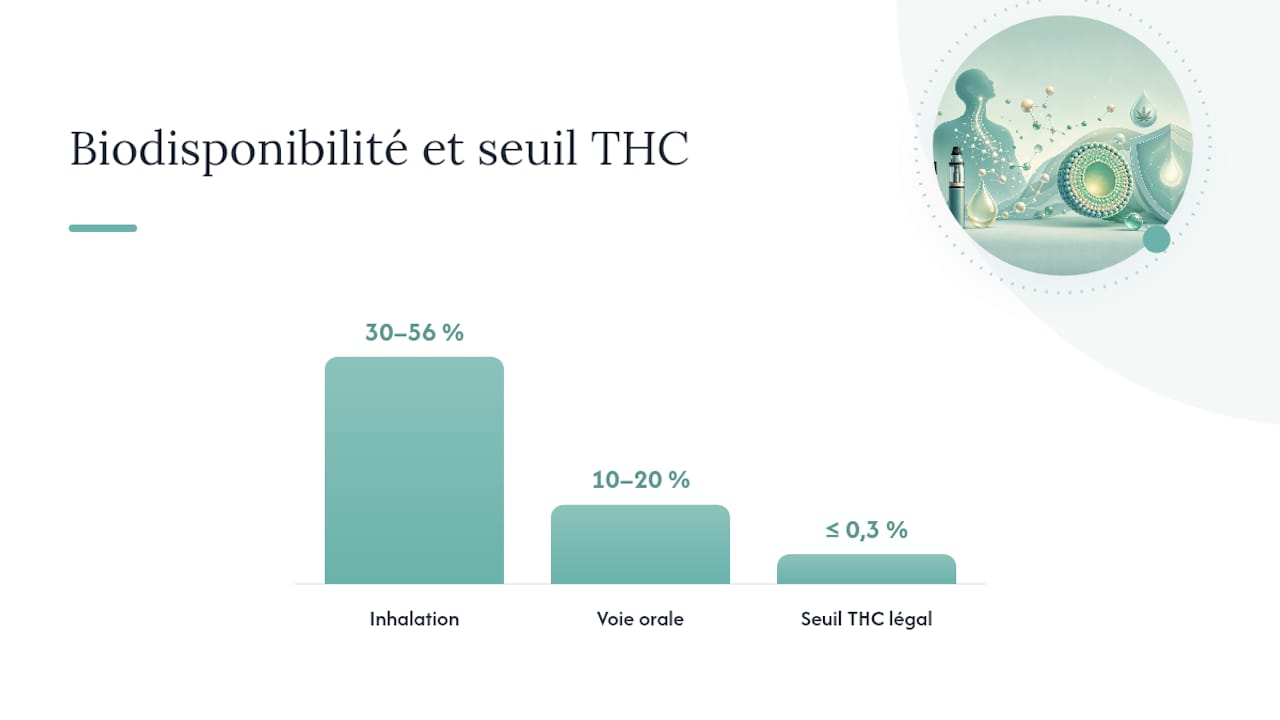
The rapid onset of action of inhaled CBD is a game-changer in terms of safety. Its bioavailability ranges from 30% to 56% according to studies published on PubMed, compared to only 10% to 20% when taken orally. The effects kick in within 5 to 15 minutes and generally last 1 to 3 hours. This rapid absorption calls for special caution: it’s best to wait until the full effects of one dose have worn off before taking a second one.
Things you should always check before making a purchase:
- The inclusion of a laboratory analysis (COA, certificate of analysis) indicating the actual CBD content and THC level.
- A total THC content of less than 0.3%, the threshold set by applicable regulations in France and Europe, as specified by the legal framework governing THCa and THC, which distinguishes them from other cannabinoids. Our article on the legal differences between CBD and THC explores this framework in greater depth.
- The absence of additives that are problematic when inhaled—particularly vitamin E acetate, which has been linked to severe lung damage in a study by the Roswell Park Comprehensive Cancer Center.
- Store away from light and heat: a highly concentrated e-liquid generally degrades faster than a low-concentration product once the bottle is opened.
Bioavailability of up to 56% when inhaled, compared with a maximum of 20% when taken orally, explains why the same amount in milligrams produces a significantly stronger effect when vaped than when the oil is swallowed.
If you experience any unusual effects or difficulty breathing, stop using the product and consult a healthcare professional. Our page on possible side effects of CBD details the situations that warrant this precaution.
Pure Extract CBD's Quality Guarantees for E-Liquids
Choosing the right CBD concentration only makes sense if the product itself is reliable. Pure Extract CBD publishes lab reports for its product lines, allowing customers to verify that the concentration listed on the label matches the actual measured content, as well as ensuring compliance with the legal THC limit. This transparency is complemented by customer service that can answer questions about choosing the right dosage.
To learn more before making a purchase, two internal resources can help you establish your own guidelines: the guide on how much CBD to consume and the collection of product sheets available on the " All Our Products" page, where each product lists its exact concentration.
How to Create Your Own Personal Dosage Chart
The most reliable method is still the trial-and-error approach. Start low, between 10 and 30 mg, test that same dose for three to five consecutive days, then increase in gradual increments rather than in large jumps. Keep a simple log: time of intake, dose used, duration of the effect, and perceived intensity. These notes are more valuable than any generic guide, as they reflect your own sensitivity.
Reduce the dose or stop immediately in the event of an interaction with medication, a persistent adverse effect, or signs suggestive of an overdose, such as excessive drowsiness or unusual headaches. These signs carry more weight than any theoretical guideline.
— Steven
E-liquids and boosters tested to turn theoretical concepts into the right bottle
Once you’ve identified the correct THC level on paper, the most practical step remains: finding a product whose label actually matches its contents. This is precisely what a rigorous selection process guarantees, featuring e-liquids and boosters made from organic hemp, accompanied by lab reports that verify the consistency between the advertised and measured THC levels, as well as compliance with the legal THC threshold.

For first-time buyers, pre-measured e-liquids ranging from 100 to 300 mg/10 ml remain the simplest choice: no calculations, no dilution—just a bottle that’s ready to use. More experienced vapers, who already know their comfort level, can opt for boosters that they dilute themselves to create a custom nicotine strength.
If you come across other formats, sublingual oil remains an interesting alternative to explore on our page about how to use CBD oil.
Browse all available products—including their concentrations and analyses—in our comprehensive catalog, and choose the bottle that matches the criteria you just defined.
Sources
To learn more about the data cited in this article, consult the study on the bioavailability of CBD via inhalation, the regulatory text on THC guidelines, and the practical guide to calculating CBD dosages. These resources allow you to verify each figure presented and to interpret a COA on your own.
This article is intended to provide general information and is not a substitute for the advice of a qualified healthcare professional. Consult a qualified healthcare professional about your specific situation before taking any action based on this content.
- PubMed — Bioavailability of CBD via inhalation
- Taffe‑Elec — Calculate Your CBD Concentration in E-Liquid
- Roswell Park — Study and Article on Lung Risks Associated with Vaping
Frequently Asked Questions
What is the strongest CBD e-liquid?
The highest concentrations sold in pre-measured doses are around 1,000 mg/10 ml, or 100 mg/ml. Anything higher falls into the “booster” category, which must be diluted and should never be vaped undiluted.
Can CBD e-liquid be detected by a saliva test?
CBD itself is not typically detected by standard saliva tests, which target THC. The risk arises mainly if the product exceeds the legal threshold of 0.3% THC, which is why it’s important to check the certificate of analysis before purchasing.
Is it a good idea to vape CBD?
Vaping offers high bioavailability—between 30% and 56%—with effects noticeable within minutes. This benefit comes with the need to be cautious about product quality, avoiding any e-liquid containing additives such as vitamin E acetate.
What are people saying about CBD e-liquids?
Feedback varies greatly depending on the concentration chosen and the quality of the product, which explains why two vapers may have opposing opinions about the same type of bottle. Products that come with a verifiable COA and a THC concentration that meets standards generally receive more consistent feedback, since the actual dosage matches what is stated on the label.
How do you choose the right CBD concentration for your e-liquid when you're just starting out?
Start with a bottle containing between 100 and 300 mg per 10 ml—or 10 to 30 mg per ml—and see how you feel over several days before increasing the dose. This gradual approach remains the safest way to find your own comfort level without exceeding your actual needs.



