
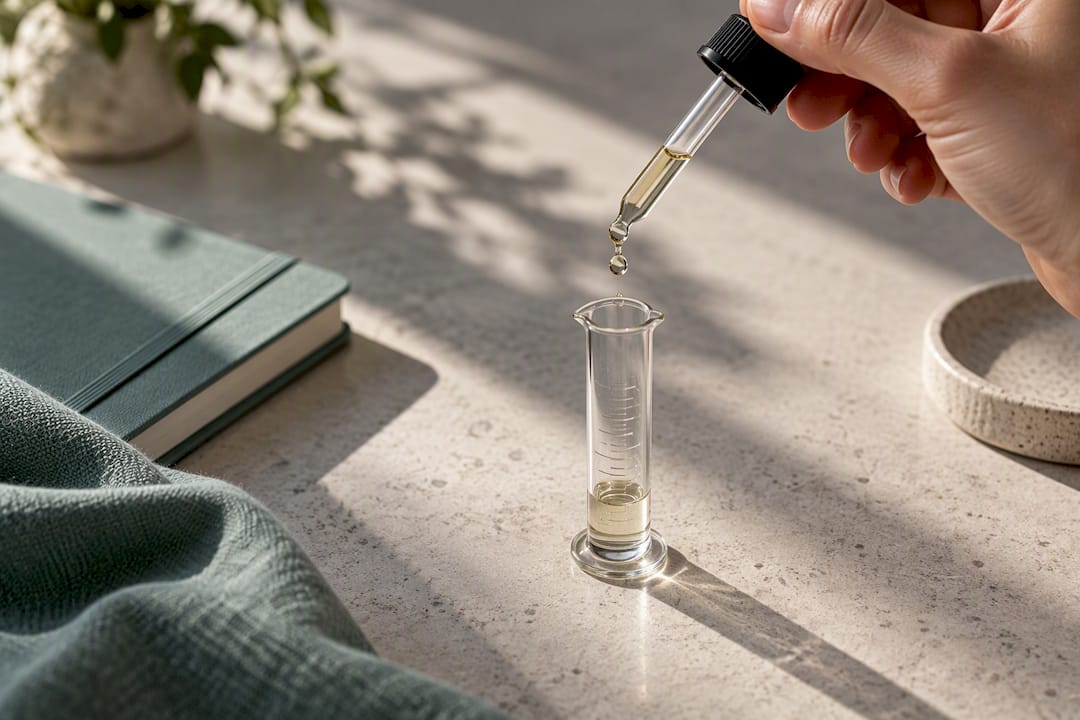
A milligram indicates an absolute amount of CBD, while a percentage expresses a proportion of the total product. A good rule of thumb is to convert this percentage to milligrams, then start with a conservative dose—often between 20 and 40 mg per day—before gradually adjusting it.
In short:
- To start, it is recommended to begin with a dose of 20 to 40 mg of CBD per day, gradually adjusting the dose based on your tolerance.
- The percentage concentration alone is not enough to determine the actual dose; it must be converted to milligrams based on the volume or mass of the product.
- The dose per drop ranges from about 5 mg for a 10% oil solution in 10 ml to about 10 mg for a 20% oil solution, based on an estimated 200 drops per bottle.
- It is essential to check the certificate of analysis to avoid discrepancies between the stated composition and the actual composition, particularly with regard to CBD or THC content.
- Bioavailability and the method of consumption have a significant impact on the effect, making the dosage in milligrams more reliable than the percentage listed on the packaging.
Table of Contents
- How to Read and Convert % ↔ mg: Formulas and Examples for Oil, Flowers, and Resin
- Practical Calculation: Milligrams per Drop and How to Measure Your Intake
- Choose a concentration and gradually adjust the dose
- Safety and Regulations: What the French Authorities Say
- Verifying a Product's Quality: The Role of the Certificate of Analysis
- Effects and Bioavailability Based on the Formulation Type
- Why the method of consumption affects the interpretation of the dosage
- The Three-Step Rule for Buying and Measuring Out the Right Amount Without Making a Mistake
- Useful links for further reading on this topic
- Sources
- Frequently Asked Questions
How to Read and Convert % ↔ mg: Formulas and Examples for Oil, Flowers, and Resin
The calculation is based on a simple principle: the CBD percentage listed on the label applies to the total mass or volume of the product. For oil, the standard formula is as follows: the percentage multiplied by the volume in milliliters, then multiplied by ten, gives the total number of milligrams.
The same logic applies to the resin, where the stated concentration is a mass percentage rather than a fixed dose per serving.
Here are some useful guidelines for identifying the most common concentrations:
- An oil that is 5% in 10 ml contains a certain total amount of CBD.
- An oil that is 10% concentrated in 10 ml contains a certain total amount of CBD.
- An oil that is 20% concentrated in 10 ml contains a certain total amount of CBD.
- A flower that is 40% contains a certain amount of CBD per gram.
The percentage alone does not indicate the dose received: it must always be considered in relation to the amount consumed, whether it is a drop, a gram of flower inhaled, or a lozenge.
Practical Calculation: Milligrams per Drop and How to Measure Your Intake
Once the total amount in milligrams is known, the next step is to determine how much each drop contains. The most commonly used method is based on an estimate frequently cited in practical guides: a 10-ml bottle contains approximately 200 drops, which allows for a simple calculation of the dosage per drop.
A significant proportion of recent cases of poisoning are linked to discrepancies between the label and the product’s actual composition—yet another reason to calculate the dose using reliable sources rather than a rough estimate of the number of drops, according to reports from the ANSM.
Here are the steps to follow to convert a bottle to a drop-by-drop dosage:
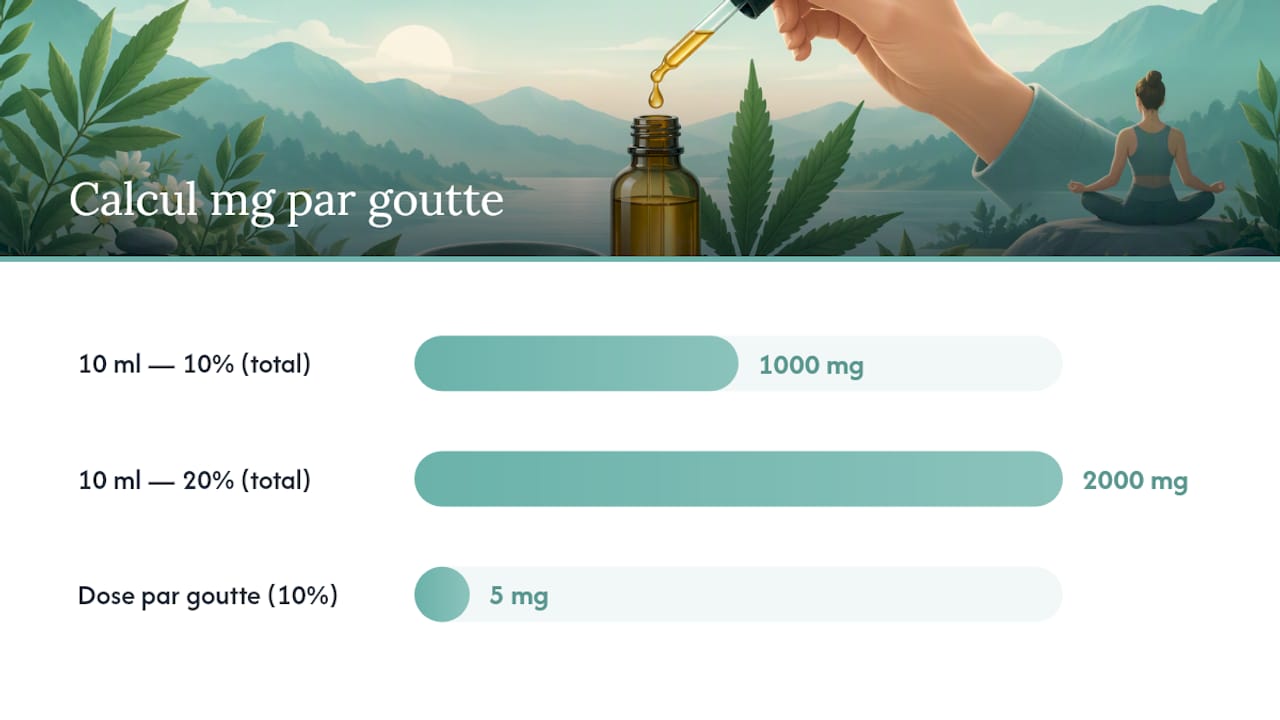
- Calculate the total in milligrams based on the percentage and volume; for example, 1,000 mg for a 10% oil solution in 10 mL.
- Divide this total by 200 drops to get the dose per drop, which is about 5 mg per drop for this 10% oil.
- Recalculate for an oil solution at 20% in 10 ml, which yields a total of 2,000 mg, or about 10 mg per drop.
- Adjust the number of drops taken based on the target daily dose; for example, four drops of 10% oil to reach 20 mg per day.
For accurate dosing, it is therefore better to think in terms of the cumulative milligrams over the course of the week rather than the number of drops taken at any one time.
Choose a concentration and gradually adjust the dose
The choice of concentration depends primarily on the target daily dose and the desired volume of consumption. A highly concentrated oil allows you to reach a high dose with just a few drops, while a lower concentration offers more flexibility for fine-tuning your intake.
In standard practice, many guidelines recommend starting with a dose of between 20 and 40 mg per day, then increasing it in increments of about 5 mg each week, depending on how well it is tolerated.
Here are a few guidelines for creating your own progression plan:
- Start with the lowest dose compatible with the concentration of the selected product.
- Wait at least one week before increasing the dose, in order to assess the actual effect.
- Keep a simple journal noting the dose taken and any sensations you experience each day.
- Reduce the dose if you experience digestive discomfort or excessive drowsiness.
Pro tip: Write down the dose in milligrams rather than the number of drops—this helps prevent mistakes when you switch bottles or concentrations.
This principle of gradual progression applies equally to occasional use and more regular use, and no medical claims can be associated with any specific use. If you are currently taking medication, consulting a doctor remains the only way to assess the risk of interaction before starting regular use.
Safety and Regulations: What the French Authorities Say
French health authorities have issued several warnings that you should be aware of before making any purchases. ANSES has proposed classifying CBD as a substance suspected of being toxic to reproduction—a classification that specifically addresses risks to fertility and to infants during breastfeeding.
For its part, the ANSM reports an increase in cases of poisoning linked to CBD products whose actual composition differs from what is advertised.
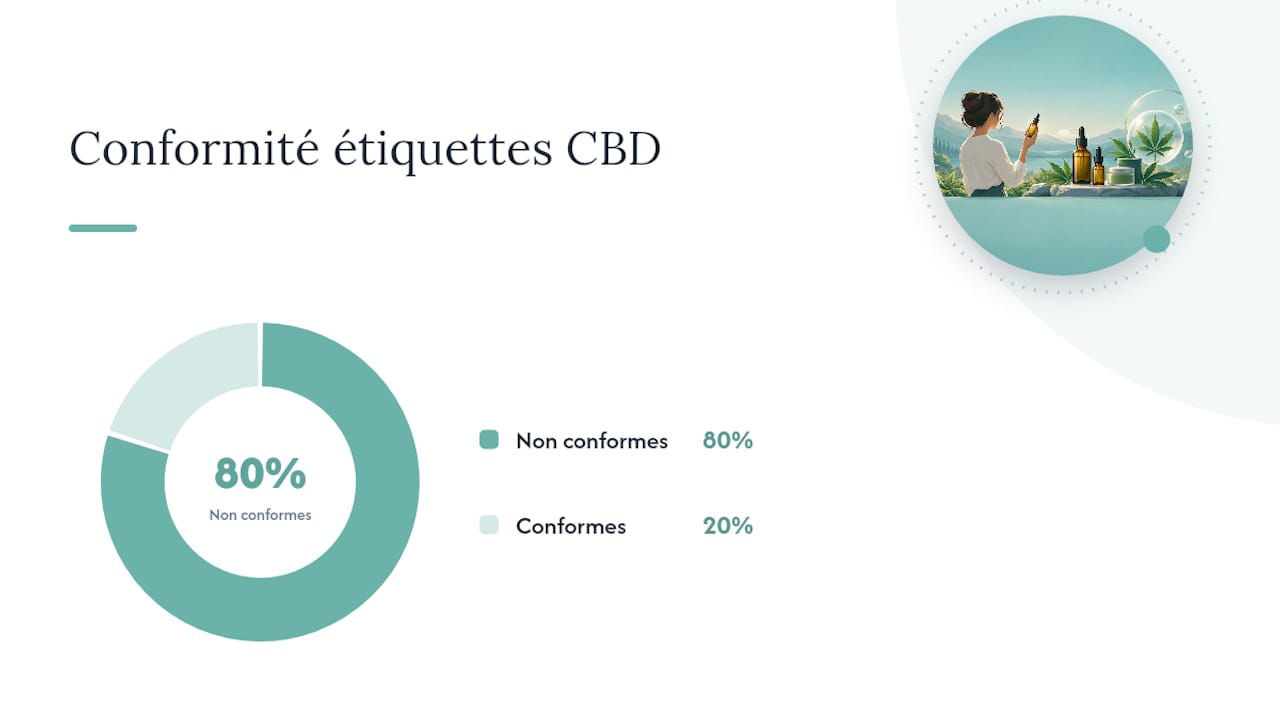
A study conducted by a center for the evaluation and information on drug dependence showed that eight out of ten products analyzed had a CBD content that differed from what was indicated on the label.
Source: ANSM, 2024
CBD also interacts with liver enzymes in the CYP450 group, which can alter the metabolism of many common medications, including certain heart and cholesterol medications, as noted in a recent scientific publication.
A few things to keep in mind before making a purchase:
- Verify that the stated THC content complies with the current legal limit.
- Tell a healthcare professional about any medications you are currently taking before using CBD.
- Be wary of products that do not have an available certificate of analysis.
To learn more about the regulations governing the sale of CBD, our article on the liability of online CBD sellers details the framework applicable to professionals in the industry.
Verifying a Product's Quality: The Role of the Certificate of Analysis
A certificate of analysis, often referred to as a COA, remains the most reliable way to verify that a product actually matches what is stated on its label. This document must indicate the total CBD content, the THC content, and confirm the absence of residual solvents, heavy metals, and undesirable microorganisms.
A reputable product makes it easy to access this certificate, whether through a QR code on the packaging or a dedicated page on the seller’s website. It’s also important to verify that the laboratory that conducted the analysis is independent of the brand, as this ensures an objective evaluation.
There are a few red flags to watch out for before making a purchase:
- There are absolutely no specific figures regarding the CBD or THC content.
- Explicit therapeutic claims, which are not permitted for this type of product.
- A price significantly below the market average with no apparent justification.
- It is not possible to view a recent, legible certificate of analysis.
Pro tip: Always compare the date on the certificate of analysis with the batch number of the product you purchased, because an old COA offers no guarantee regarding the current composition of the bottle.
This link between inaccurate labeling and reported cases of poisoning warrants particular vigilance, as authorities have documented discrepancies between the stated composition and the actual composition of products on the market. To understand how these inspections are conducted, our article on CBD product testing details the verification procedures currently in place.
Effects and Bioavailability Based on the Formulation Type
The milligrams and the percentage don’t tell the same story once the product has been consumed. The percentage indicates the concentration of the raw product, but the effect experienced depends mainly on the amount of CBD that actually reaches the bloodstream—a phenomenon known as bioavailability.
Clinical guidelines recommend titration increments of 5 to 10 mg at a time, precisely because the actual effective dose absorbed varies from person to person and from one dosage form to another, as highlighted in a recent review on CBD dosing. Two products with the same percentage of CBD can therefore produce different effects if one is taken sublingually and the other orally. This variability explains why the milligram remains the only unit that is comparable across products, while the percentage is used primarily to describe the concentration of the bottle itself.
Why the method of consumption affects the interpretation of the dosage
The relevance of milligrams versus percentages depends directly on how CBD is consumed. For oil taken sublingually, the percentage makes it easy to calculate a dose in milligrams per drop, making it a practical and immediately actionable unit.
For inhalation—whether from a flower or resin—the percentage listed corresponds to the concentration of the raw product, but the actual dose inhaled depends on the amount used and the combustion or vaporization temperature, two parameters that are never listed on the label. The calculation in milligrams is therefore approximate, although it remains useful for comparing two products.
For topical application, the percentage listed refers to the cream or balm as a whole, but the amount of CBD absorbed through the skin remains limited compared to oral or sublingual use. Our guide on how to use CBD oil details these practical differences depending on the form you choose.
The Three-Step Rule for Buying and Measuring Out the Right Amount Without Making a Mistake
Given the abundance of percentages listed on labels, a simple method is all it takes to make sense of them. The first step is to calculate the total in milligrams based on the percentage and the volume or mass of the product. The second step is to choose a conservative target daily dose, then the concentration that will allow you to reach that dose with a reasonable number of drops or doses. The third step is to increase this dose gradually, while systematically checking the certificate of analysis for the purchased product. This approach shifts the focus from the listed percentage to the actual amount consumed, which remains the only reliable benchmark for adjusting the dosage over time.
— Steven
Useful links for further reading on this topic
To verify the information presented here, several official sources remain directly available. ANSES’s opinion on CBD toxicity and the ANSM’s reports of poisoning cases detail current health concerns. The scientific publication on CYP450 interactions explains the mechanism of drug interactions, while a practical summary on CBD dosing provides recognized guidelines for titration.
This article is intended to provide general information and is not a substitute for the advice of a qualified healthcare professional. Consult a qualified healthcare professional about your specific situation before taking any action based on this content.
Sources
- ANSES proposes classifying cannabidiol (CBD) as suspected to be toxic to reproduction
- Increase in cases of poisoning caused by CBD products containing other substances
- CBD Dosage: How Much Should You Take?
- Scientific article on CBD and CYP450 interactions
Frequently Asked Questions
Is 20 mg of CBD per day a high dose?
No, 20 mg per day is actually on the lower end of the dose range specified in clinical practice guidelines, which often recommend starting with between 20 and 40 mg per day. Clinical studies use much wider ranges, which shows that this dose is a conservative starting point rather than a high threshold.
What is the highest CBD concentration available?
A high percentage primarily indicates a higher proportion of CBD in the total product, but the actual dose always depends on the volume or mass consumed.
What CBD concentration should you choose when you're just starting out?
The choice of percentage depends primarily on the target daily dose in milligrams rather than on the percentage itself.
How many drops of a 10% oil should you take each day?
Based on the standard estimate of about 200 drops per 10-ml bottle, a 10% oil contains about 5 mg of CBD per drop.



