
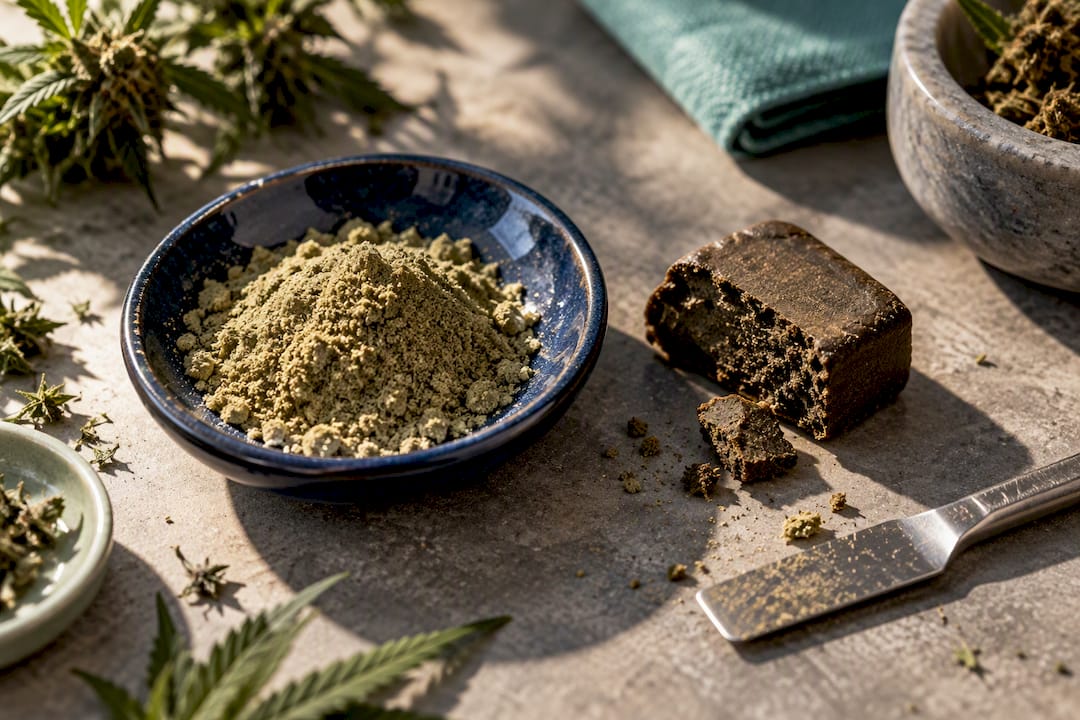
CBD pollen is not the botanical pollen collected by bees: it is trichome siftings, a powder obtained by separating the resinous glands from hemp flowers. This powder concentrates the plant’s CBD and terpenes, making it a significantly richer form than the raw flower.
In short:
- CBD pollen is a trichome sieve residue obtained by sifting hemp flowers, resulting in a highly concentrated source of CBD and terpenes.
- The quality of the pollen depends on traceability, compliance with THC regulations, and the absence of contaminants, as verified by an independent certificate of analysis.
- Use with caution, preferring vaporization or ingestion with a gradual increase in dosage, while remaining vigilant for drug interactions.
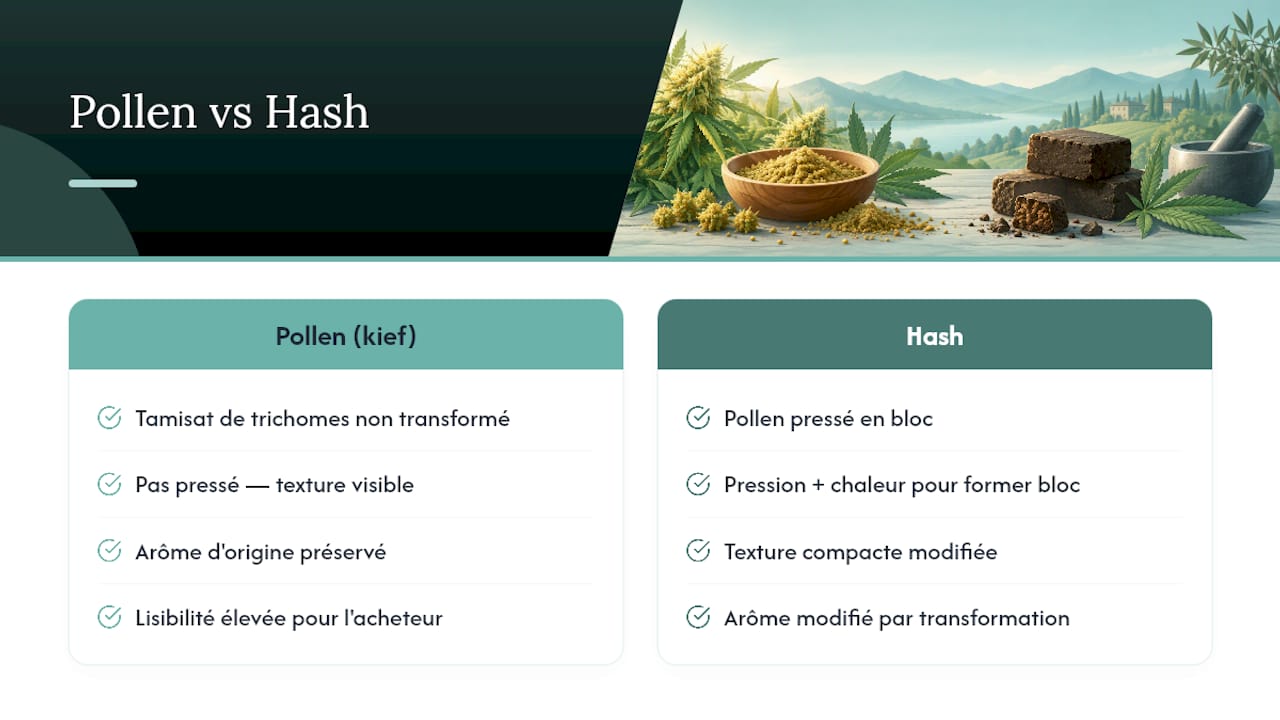
- Unpressed pollen retains its original texture, while hash is a pressed version that may conceal impurities or adulterants.
- The main effects of CBD include relaxation and drowsiness, but caution is advised, especially for people who are taking medication or are at risk for certain conditions.
Table of Contents
- Origin and Production: Trichome Sifting
- Pollen, kief, and hash: What's the difference?
- How is CBD pollen consumed, and what is the recommended dosage?
- What effects and risks should you expect from CBD pollen?
- How to Identify High-Quality CBD Pollen Before Buying
- What the EFSA and the ANSM Are Actually Saying
- What Pure-extract-cbd checks before selling pollen or resin
- Consuming CBD Pollen with Full Knowledge of the Facts
- Buy lab-tested CBD pollen and resin
- Sources
- Frequently Asked Questions
Origin and Production: Trichome Sifting
Trichomes are the small, shiny crystals visible on the surface of hemp flowers. They produce and store CBD, CBG, and the terpenes responsible for the plant’s aroma. Pollen is obtained by separating these trichomes from the plant material through sifting, a process that separates the resin from the rest of the plant without chemically altering it.
Dry sifting using fine mesh—typically between 80 and 150 microns—remains the most common method. Wet sifting is also an option, but it requires more equipment and is still rarely used by small-scale producers. The final result depends on several factors:
- The number of times the material is sieved, which increases purity but reduces yield.
- The fineness of the mesh, which determines the texture (fine powder or visible grains).
- The degree of compression: unpressed pollen retains its powdery form, while light compression produces denser flakes.
- The CBD content, which often far exceeds that of traditional flowers because the material is concentrated.
Pollen, kief, and hash: What's the difference?
In international cannabis terminology, the word “kief” refers to exactly the same thing as “pollen.” The two terms are used interchangeably to describe this unprocessed trichome residue.
Hash, on the other hand, is produced in a subsequent step: the pollen is pressed—often using a combination of heat and pressure—until it forms a compact block. This process alters the texture and aroma, but it also makes it harder for the buyer to assess the product’s quality. Unpressed pollen reveals its original texture and color, whereas a block of resin can more easily conceal impurities or admixtures of other substances. This is something to keep in mind when choosing between the two formats.
How is CBD pollen consumed, and what is the recommended dosage?
Three main uses are common among CBD pollen users, each with its own safety guidelines.
- Smoked or rolled with tobacco: This is the fastest way to feel the effects, but it’s also the harshest on the respiratory tract because of combustion.
- Vaporized: Heating the pollen without burning it limits the production of combustion byproducts and better preserves the terpenes. A moderate temperature range—generally around 160 to 190 °C, depending on the device—prevents the degradation of aromatic compounds.
- When consumed as food: pollen must first be decarboxylated—that is, gently heated to activate the CBD—before being infused into oil or a fatty substance. Be aware, however, that regulations governing CBD-infused food products remain strict in France, and not all uses are permitted in the same way.
In any case, it's best to start with a small amount and wait to see how you react before gradually increasing the amount.
Pro tip: To make your own infused oil, gently heat the decarboxylated pollen in a neutral oil (sunflower, olive) over low heat for about an hour, stirring regularly. Then strain it to obtain a smooth oil, which is easier to measure out than raw powder.
What effects and risks should you expect from CBD pollen?
The effects reported with CBD, regardless of its form, often include a feeling of relaxation, but can also sometimes include drowsiness, nausea, dizziness, or mild digestive issues. These effects vary from person to person and depend heavily on the dose and individual sensitivity.
Official guideline:In 2026, the EFSA established a provisional safe intake level of approximately 0.0275 mg per kilogram of body weight per day, which corresponds roughly to a low daily dose for a person of average weight. This threshold remains provisional due to a lack of sufficient data on the effects of long-term consumption.
CBD also interacts with many medications through the liver’s CYP enzymes, which can alter the effectiveness or toxicity of a current treatment.The ANSM explicitly recommends informing your doctor or pharmacist of any CBD use, particularly for people undergoing long-term treatment. It is also important to be aware of the possible side effects of CBD before taking it for the first time, especially for older adults, pregnant or breastfeeding women, and people with liver disorders.
How to Identify High-Quality CBD Pollen Before Buying
You can identify a reliable pollen product by a few simple criteria, which are all too often overlooked by buyers in a hurry.
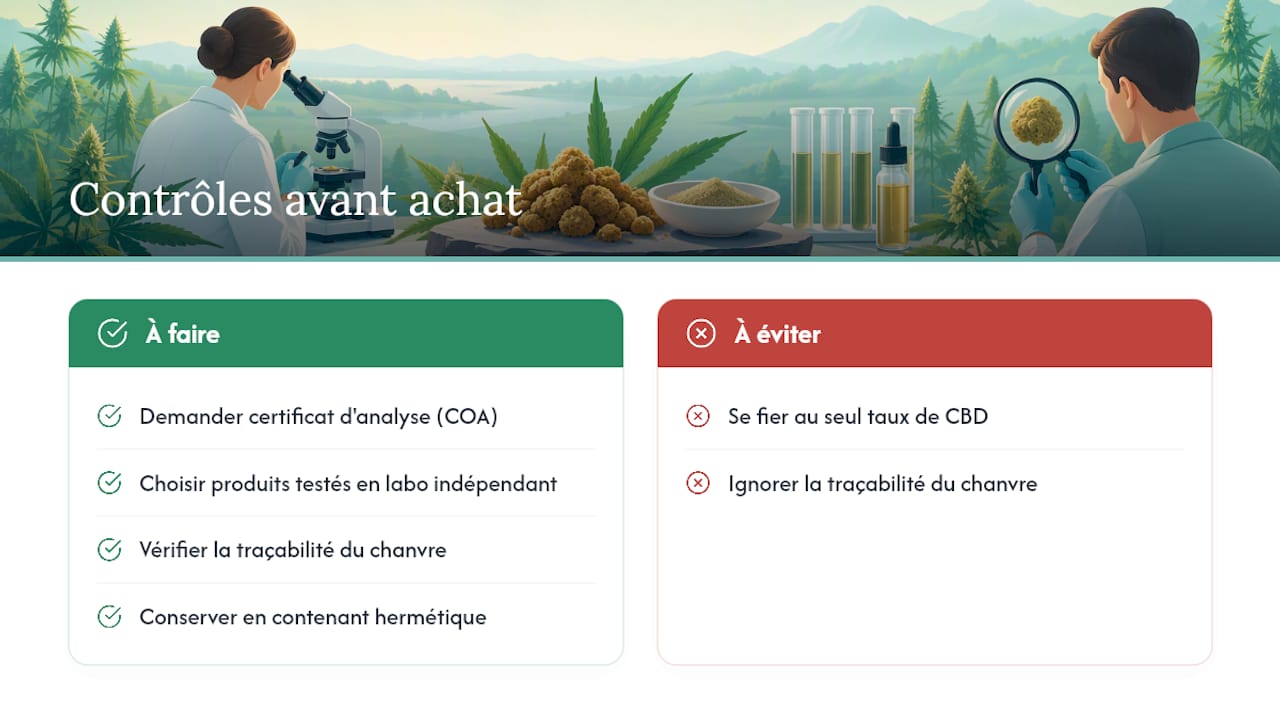
- Require an independent certificate of analysis (COA) issued by an accredited laboratory, specifying the CBD and THC levels and confirming the absence of synthetic cannabinoids.
- Verify that the THC level complies with current regulations—a point discussed in detail in our comparison of the scientific and legal differences between CBD and THC.
- Examine the texture: a uniform powder with no visible plant debris indicates that it has been carefully sifted.
- Be wary of CBD levels advertised as exceptional without supporting analytical evidence.
- Give preference to sellers who consistently publish their analyses, including for contaminants such as pesticides, heavy metals, and solvents.
What the EFSA and the ANSM Are Actually Saying
Health authorities have not concluded that CBD is completely safe when consumed as food or inhaled.
This institutional caution is accompanied by a more concrete warning from the French side: since 2024, the ANSM has reported an increase in cases of poisoning linked to products marketed as CBD but that actually contain synthetic cannabinoids or THC levels exceeding 0.3%. In practical terms, this means that a cautious consumer should avoid products without clear traceability and consult a healthcare professional if in doubt or if currently taking medication.
What Pure-extract-cbd checks before selling pollen or resin
A responsible seller doesn’t just list a CBD percentage on the label. At Pure-extract-cbd, every batch of flowers, resin, or pollen undergoes independent laboratory testing, with full traceability maintained from the organic hemp to the finished product. Before making a purchase, always check the provided certificate of analysis and store your product in an airtight container, away from light and heat, to preserve the terpenes. Detailed product descriptions, such as the one for Strawberry Cake FTS resin, allow you to review this information before placing an order.
Consuming CBD Pollen with Full Knowledge of the Facts
CBD pollen is a concentrated product, so it should be chosen with care and consumed in moderation. Paying close attention to its origin and test results is more important than the promise of an impressive CBD concentration. If you are taking medication, the best course of action is to talk to your doctor or pharmacist before starting regular use.
— Steven
Buy lab-tested CBD pollen and resin
Choosing a CBD pollen or resin should never be based on blind trust in a label. A responsible seller prioritizes transparency: every product made from organic hemp is tested by an independent laboratory, with results available for review before purchase, fast shipping, and discreet packaging.

You can browse the entire catalog of CBD resins and flowers to compare cannabinoid profiles and concentrations, or view a specific product page—such as the Cali Mousseux HHX 30% resin—to see a concrete example of traceability. Before confirming your order, make it a habit to check the certificate of analysis associated with the batch, and don’t hesitate to contact customer service if you have any questions about a product or a potential drug interaction.
Sources
Health authorities’ positions on CBD are constantly evolving, which is why it’s important to rely on primary sources rather than marketing claims.
- EFSA — Provisional safe level for cannabidiol (CBD) as a novel food
- ANSM — Increase in cases of poisoning caused by CBD-based products containing other substances
This article is intended to provide general information and is not a substitute for the advice of a qualified healthcare professional. Consult a qualified healthcare professional about your specific situation before taking any action based on this content.
Frequently Asked Questions
What are the effects of CBD pollen on the body?
CBD pollen can induce a feeling of relaxation, but may also sometimes cause drowsiness, nausea, or dizziness, depending on the dose and individual sensitivity. These effects are similar to those observed with other forms of CBD, as detailed in our article on CBD-related side effects.
Can CBD help with sciatica?
Some people use CBD for its potential relaxing effect on muscle tension associated with nerve pain, but there is no official data to support its proven effectiveness against sciatica. Medical advice is essential before considering CBD as a supplement in this context.
What is the difference between CBD pollen and regular plant pollen?
Plant pollen is produced by flowers for plant reproduction, whereas commercial CBD pollen is a sieved extract of trichomes rich in cannabinoids and terpenes. The two products therefore have nothing in common except their name.
Do CBD flowers have the same effects as pollen?
Flowers and pollen have similar overall effects, but since pollen is more concentrated, its effects may be felt more quickly and more intensely when taken in equal amounts. That is why it is recommended to start with very small amounts when trying it for the first time.
Where can you buy CBD pollen with confidence?
Choose a seller that publishes independent analysis certificates for each batch, as is the case with the Pure-extract-cbd catalog. Checking these documents before making a purchase remains the best way to ensure you’re not buying mislabeled products or those containing undeclared substances.



